Jonathan Swift
Jonathan Swift was born in Dublin in 1667. His father, a lawyer, died before Swift’s birth, and his childhood was partly spent in the care of a nurse. He boarded at Kilkenny College between the ages of six and fourteen. In 1682, Swift entered Trinity College Dublin, then Ireland’s only university. There he studied Latin and Greek, added Hebrew, and deepened his knowledge of Aristotelian philosophy. After four years, he graduated with the degree of B.A. ex speciali gratia. He left Trinity College in 1686. Swift’s first known composition was a Pindaric ode published in 1691.
Dateline
Jonathan Swift was born in Dublin in 1667. His father, a lawyer, died before Swift’s birth, and his childhood was partly spent in the care of a nurse. He boarded at Kilkenny College between the ages of six and fourteen.
Education Years
In 1682, Swift entered Trinity College Dublin, then Ireland’s only university. There he studied Latin and Greek, added Hebrew, and deepened his knowledge of Aristotelian philosophy. After four years, he graduated with the degree of B.A. ex speciali gratia. He left Trinity College in 1686.
Early Writing
Swift’s first known composition was a Pindaric ode published in 1691. He also wrote The Battle of the Books, written in 1697 and published in 1704. A Tale of a Tub appeared in 1704 alongside The Battle of the Books and A Discourse on the Mechanical Operation of the Spirit. These works belong to the body of prose and verse for which he is remembered as poet, satirist, essayist, and political pamphleteer.
Church Service
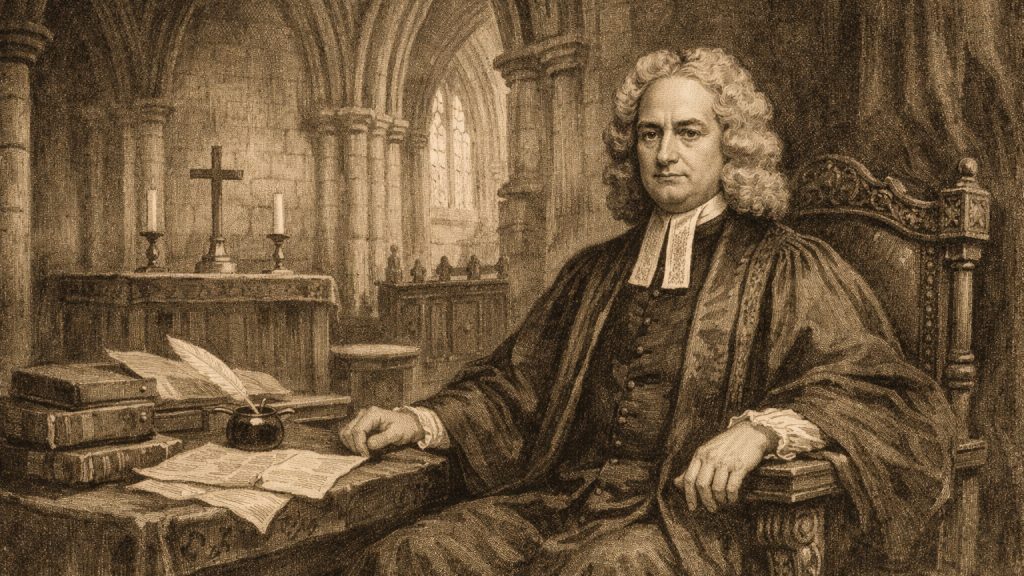
Swift earned an M.A. at Hart Hall, in the University of Oxford, in 1692. He became a deacon in late 1694 and a priest in January 1695. Within a fortnight, he was appointed to the living of Kilroot, near Carrickfergus. He left Kilroot and returned to act as secretary to Temple in England. He was appointed Dean of St. Patrick’s Cathedral, Dublin, between 1713 and his death in 1745.
Final Years
Swift’s later writings included Gulliver’s Travels in 1726 and A Modest Proposal in 1729. He suffered a stroke in 1742, leaving him unable to speak. He died three years later and was buried at St. Patrick’s Cathedral, Dublin.
Source References
Hover over a number to see the source. Select it to open the source.