Francis Ledwidge
Ledwidge gained a patron in Lord Dunsany. Dunsany helped bring his poems to a wider audience, and also acted as a mentor by giving him access to his library and editing his work. In 1912, Dunsany helped publish “Behind the Closed Eye” in the Saturday Review. Dunsany later gathered Ledwidge’s poems into a first collection, Songs of the Fields, which was published in 1916 after being postponed from an earlier planned release in 1914. It contained 50 poems and its first printing sold out rapidly. In 1914, Ledwidge enlisted in the Royal Inniskilling Fusiliers, in the same unit where Dunsany served as captain.
Dateline
Early Work
Patronage Circle
Ledwidge gained a patron in Lord Dunsany. Dunsany helped bring his poems to a wider audience, and also acted as a mentor by giving him access to his library and editing his work. In 1912, Dunsany helped publish “Behind the Closed Eye” in the Saturday Review. Dunsany later gathered Ledwidge’s poems into a first collection, Songs of the Fields, which was published in 1916 after being postponed from an earlier planned release in 1914. It contained 50 poems and its first printing sold out rapidly.
War Service
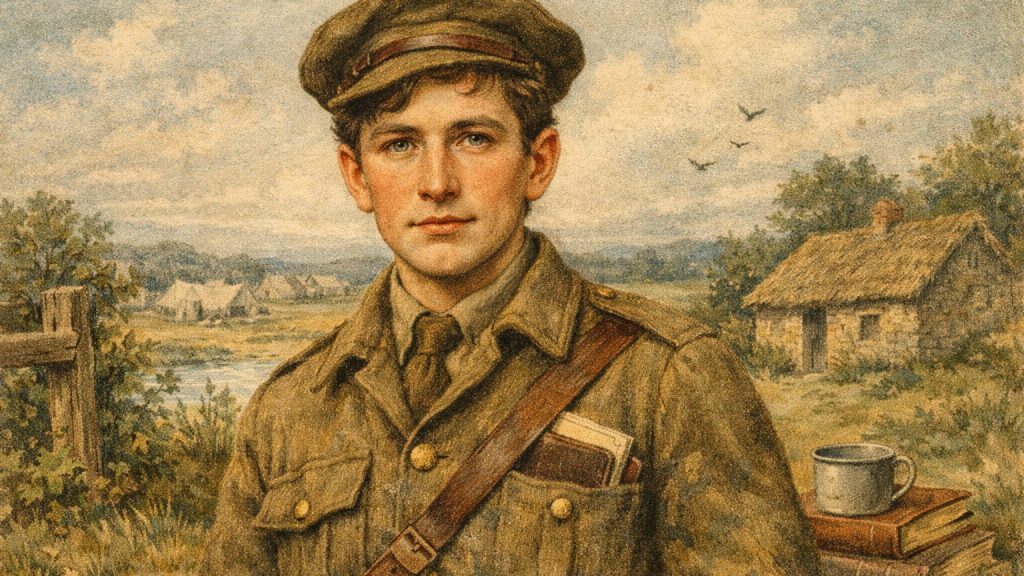
In 1914, Ledwidge enlisted in the Royal Inniskilling Fusiliers, in the same unit where Dunsany served as captain. After training, he was stationed in England and found time to write. He endured harsh conditions in Gallipoli in 1915, though he produced no works during that period. The following winter he fell ill with rheumatism, and in spring 1916 he was given leave to recuperate. While at home, he heard news of the Easter Uprising and wrote an elegy for Thomas McDonagh.
Final Years
After returning to duty in the summer of 1916, Ledwidge and Dunsany selected and edited poems for Songs of Peace, published in 1917.
Source References
Hover over a number to see the source. Select it to open the source.