Archived: 9 October 2026
Abstract
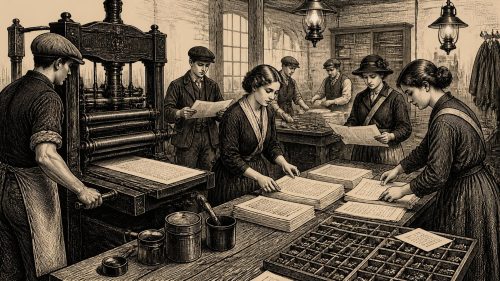
In 1916, Ireland was transformed by the Easter Rising, launched in Dublin after plans for German arms support failed and Eoin MacNeill’s countermand limited mobilisation. Rebels proclaimed a republic from the GPO, but British artillery, street fighting and fires devastated the city, killing many civilians. Pearse surrendered on 29 April; martial law, secret courts martial, executions, arrests and internment subsequently increased republican sympathy and organisation. Casement was executed in August. Meanwhile, Irish soldiers fought and died at the Somme, while Home Rule negotiations between Redmond, Carson and Lloyd George collapsed. Changes reflected a divided society with an altered political future.
Read Article

Archived: 10 October 2026
Abstract
In 1875, Irish politics exposed emerging strains within constitutional nationalism. John Mitchel’s two Tipperary victories, followed by parliamentary disqualification and his death, made elections vehicles for protest. Charles Stewart Parnell entered Parliament for Meath, while Joseph Biggar’s resistance to coercion foreshadowed new Westminster tactics. Thomas Croke became archbishop of Cashel, initially concentrating on diocesan affairs. Population decline, emigration and livestock dependence reflected post-Famine economic change, while Dublin’s whiskey fire revealed urban industrial danger. Railway expansion, Ireland’s first rugby international, and Hibernian Football Club’s foundation demonstrated widening commercial, sporting and migrant connections, anticipating later political and agrarian conflicts across Irish society.
Read Article
Archived: 11 October 2026
Abstract
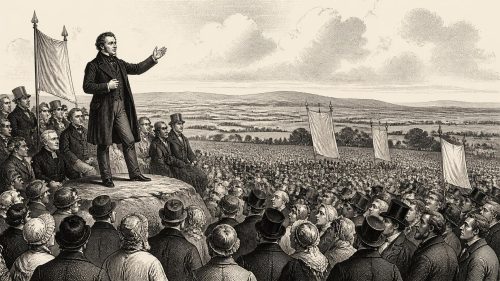
In 1843 Daniel O’Connell’s Repeal campaign sought restoration of an Irish parliament while retaining the Crown. Organised by the Repeal Association, enormous peaceful monster meetings at Trim, Tara and Mullaghmast mobilised supporters and linked self-government to Ireland’s nationhood, poverty, land insecurity and development. Thomas Davis and The Nation broadened its cultural nationalism, while clergy played organisational roles. Beneath pageantry, agricultural dependence, insecure tenancies and harsh Poor Law relief revealed social vulnerability. The prohibited Clontarf meeting marked the campaign’s defeat: O’Connell cancelled it to avert violence, after which government prosecutions began. Repeal failed, but 1843 shaped nationalism and highlighted Ireland’s crisis.
Read Article
Archived: 12 October 2026
Abstract
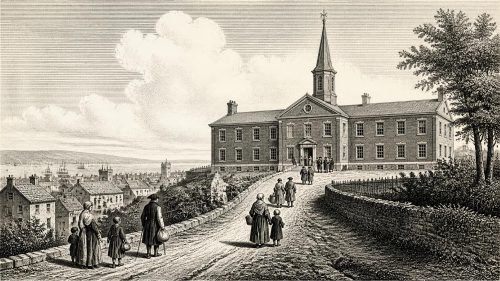
In 1774, Ireland saw developments reflecting urban growth, religious inequality and economic ambition. Belfast’s Charitable Society was incorporated, opened its Poor House and Infirmary, later Clifton House, and began admitting residents, providing elite-supervised relief amid poverty generated by commercial expansion. Parliament allowed Catholics to swear allegiance instead of supremacy, but preserved penal restrictions on property, education and political participation. In Armagh, Archbishop Richard Robinson’s infirmary and Royal School extended an Anglican institutional landscape. Legislation promoted Lagan navigation to link Belfast with inland trade, despite difficulties. Cultural landmarks included Thomas Leland’s History of Ireland, Oliver Goldsmith’s death, and Francis Beaufort’s birth.
Read Article
Archived: 12 October 2026
Abstract
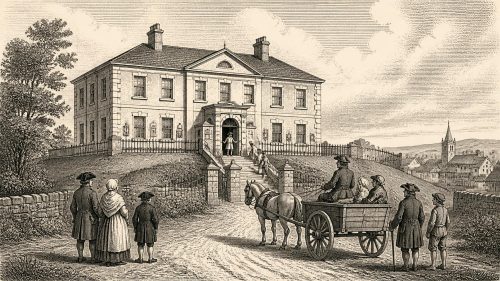
In 1754, Ireland’s unresolved dispute over public revenue sharpened conflict between the Irish Commons, Dublin Castle and Britain, despite Parliament’s restricted Protestant character. At Dublin’s Smock Alley Theatre, a performance of Mahomet provoked a political riot, damaging the theatre and forcing manager Thomas Sheridan’s departure. Days later, Dillon, Ferrall and Company failed, exposing the fragility of private banking and commercial credit. At Navan, the County of Meath Infirmary, supported by subscription, began providing modest organised care for poor patients. The year also saw notable improvement projects, historical and commercial print, and the death of Irish-language poet Seán Clárach Mac Domhnaill.
Read Article

Archived: 13 October 2026
Abstract
In 1736, Ireland’s Protestant ruling order was tested and displayed through disputes, legislation, commemoration and print. The Commons opposed tithe on agistment, favouring landed interests against Church of Ireland clergy; Jonathan Swift attacked legislators in The Legion Club. Cork’s new civic arrangements combined cathedral rebuilding with a workhouse providing relief, discipline and compulsory labour. Dorset founded the Boyne obelisk, affirming a Protestant interpretation of Williamite victory. Catholic bishop James Gallagher published Irish-language sermons in Dublin, demonstrating resilient Catholic culture under penal restrictions. James Hamilton’s Dublin Daily Advertiser, the city’s first daily newspaper, reflected expanding commercial communication under unequal Protestant rule.
Read Article
Archived: 13 October 2026
Abstract
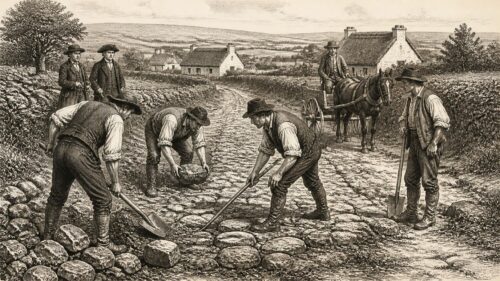
In 1710, Ireland’s Protestant parliament, operating under Queen Anne amid changing Whig and Tory influence, passed measures affecting revenue, property, trade and local administration. Its roads act required rural householders and tenants to provide up to six days’ unpaid labour, reflecting reliance on communal maintenance rather than modern infrastructure. Legislators promoted linen, regulated cattle, rents and timber, and imposed duties on consumer goods. Dublin Castle also suppressed Catholic assemblies in Meath, punished damage to William III’s statue, pursued tobacco thieves, and managed Palatine refugee settlement. Quarantine regulations for Baltic shipping showed Ireland’s exposure to continental war, migration, commerce and disease.
Read Article

Archived: 14 October 2026
Abstract
In 1681, Ireland’s most memorable event was the London execution of Oliver Plunkett, Catholic archbishop of Armagh, after a flawed Popish Plot treason trial. His death exposed Catholic insecurity under Restoration rule. Governed by the duke of Ormond, Ireland lacked a parliament and relied on proclamations, courts and armed institutions. A November order required militia and army officers to receive Church of Ireland communion, affirming confessional loyalty. A July ban on grain exports reflected concern over provisioning, without proving famine. In September, Quakers led by William Bates sailed from Dublin for West Jersey, demonstrating Ireland’s Atlantic religious and migratory connections.
Read Article
Archived: 15 October 2026
Abstract
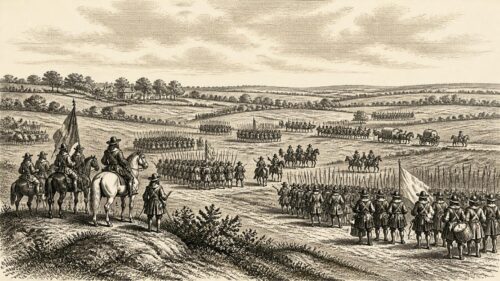
In 1647, the Catholic Confederation’s position collapsed after political division, logistical weakness and military reverses. Parliament gained Dublin when Ormond transferred the city in June, providing a strategic base. Michael Jones destroyed Thomas Preston’s Leinster army at Dungan’s Hill in August, ending any prospect of taking Dublin. In Munster, Inchiquin’s forces devastated communities and stormed Cashel, killing defenders and civilians, plundering the religious complex and deepening Catholic fears. In November, Inchiquin defeated Taaffe’s army at Knocknanuss, killing Alasdair MacColla. Although Kilkenny and O’Neill’s Ulster army survived, these disasters encouraged royalist negotiation and transformed Confederate ambitions into a struggle for survival.
Read Article
Archived: 17 October 2026
Abstract
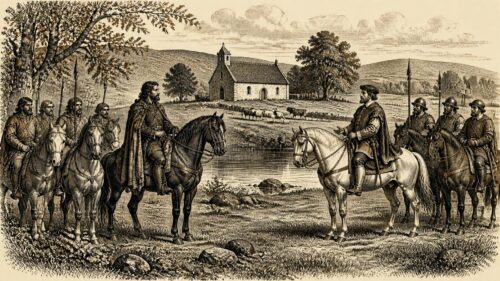
In 1563, Sussex’s Ulster campaign against Shane O’Neill faltered through inadequate supplies, difficult terrain and limited Pale support. His forces reached Armagh, crossed the Blackwater and seized cattle, but failed to force battle or diminish O’Neill’s authority. Negotiations led by Thomas Cusack produced September’s Drumcree Compact, recognising O’Neill as lord O’Neill, promising conditional confirmation of Tyrone, accepting customary leadership claims and removing Armagh’s garrison. Yet parliamentary obstacles and English reservations made it temporary. The settlement demonstrated Tudor dependence on accommodation with Gaelic power. Conflict, rural disruption and uncertainty over Ulster’s governance persisted, while Christopher Nugent’s Cambridge matriculation reflected cultural connections.
Read Article
Archived: 19 October 2026
Abstract
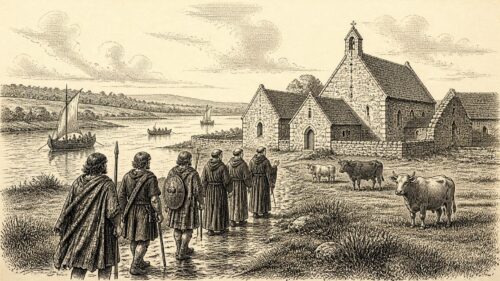
In 1479, Ireland’s diverse political and religious worlds were marked by reform, conflict and administrative adjustment. At Meelick, O’Madden patronage supported a Franciscan Observant renewal, strengthening dynastic commemoration and regional religious links. In Ulster, warfare between Tír Chonaill and Tír Eóghain involved raids, cattle seizures, ransom and hostages, burdening local communities. Obituaries around Lough Erne reveal clergy, artisans and hospitality networks underpinning lordship. In Dublin, Edward IV appointed Gerald FitzGerald, eighth earl of Kildare, deputy lieutenant, acknowledging dependence on local power. Statutes concerning merchants, civic privileges and Gaelic subjects exposed the English lordship’s porous, contested frontiers and commercial regulation alike.
Read Article
Archived: 20 October 2026
Abstract
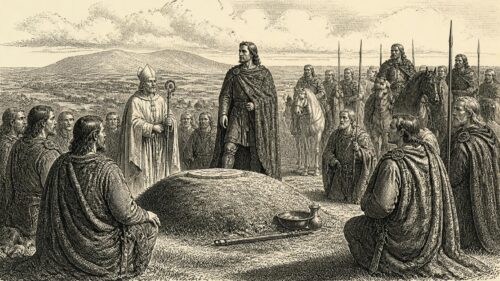
In 1455 Henry O’Neill was inaugurated at Tullyhogue as king over Ulster, backed by allied lords and Armagh’s ecclesiastical leader, although his father remained alive and dynastic conflict persisted. Elsewhere, Philip Maguire’s forces raided east Breifne, burning settlements, killing rivals and capturing a crannog, demonstrating mobile lordly warfare. Annals also recorded deaths among ruling, clerical and learned families, revealing networks of status, hospitality and service. At Navan, Abbot John Bole granted a Pentecost indulgence supporting religious observance and monastic repair. In Connacht, a lord was killed by his own men. These events illustrate Ireland’s multiple, localised and precarious political worlds.
Read Article
Archived: 20 October 2026
Abstract
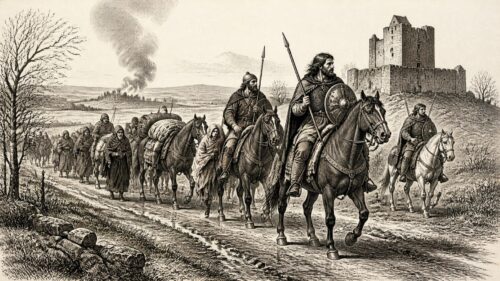
In 1434, Eóghan Ó Néill of Tír Eóghain and Niall Garbh Ó Domhnaill of Tír Chonaill, recently rivals, led a broad Ulster coalition into the English lordship. They exacted tribute at Sradbaile, burned Sliabh Breagh and Oriel, and attacked Nobber Castle. Thomas Stanley’s mounted response allowed Ó Néill’s sons to withdraw safely but trapped Ó Domhnaill’s separated party seeking cattle. His heir Toirdhealbhach and other leaders died, while Niall Garbh was captured, enabling his brother Neachtan to rule. Annals also recorded deaths among churchmen and learned families. Late in the year, severe frost froze major lakes, disrupting life and travel.
Read Article
Archived: 21 October 2026
Abstract
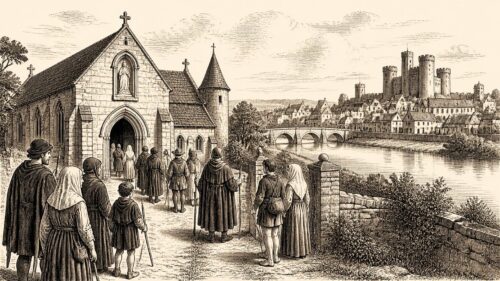
The surviving evidence for 1412 presents Ireland not as a single political unit but as a country of intensely local powers, connected by warfare, kinship, devotion and movement. Annalists recorded raids and counter-raids from the Moy to Fermanagh, the escape of a high-status captive from Dublin, a campaign across Connacht involving Gaelic and Anglo-Irish forces, and reports of miracles at a Marian shrine in Trim. These were not episodes on a national stage directed from one centre. They reveal overlapping lordships, towns and ecclesiastical institutions, each vulnerable to events beyond its own boundaries. A Violent Night in Tullyhunco The sharpest
Read Article
Archived: 21 October 2026
Abstract
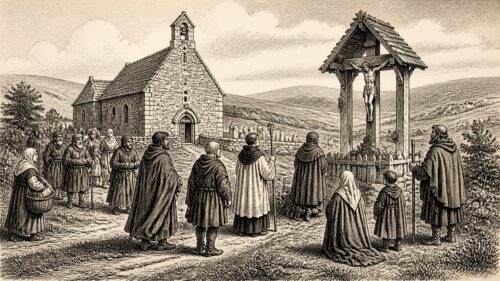
Annals for 1411 portray Ireland as a patchwork of competing lordships, where succession disputes, captivity and violence shaped political life. In Munster, heirs and rivals among the Ó Briains, FitzGeralds, Mac Cárthaighs and Ó Súilleabháins were killed, expelled, blinded or displaced. Ó Conchobhair Fáilghe captured Meath’s sheriff for ransom, illustrating frontier insecurity, while Ó Domhnaill imprisoned Mulmhaire Mac Suibhne amid internal complaints. Annaghdown monastery burned, and church land officers, an historian and Thomond’s master poet died. The annals also report that Raphoe’s crucifix bled and healed illnesses, a medieval miracle claim reflecting devotion, pilgrimage and hopes for relief amid instability.
Read Article
Archived: 21 October 2026
Abstract
In 1385, Ireland comprised overlapping Gaelic and Anglo-Irish jurisdictions, where warfare shaped authority, movement and livelihoods. Murchadh Ó Conchobair of Uí Fhailghe and Cenél Fiachach defeated the English of Meath at Tóchar Cruacháin Brí Eile, killing the sheriff and many others, though lasting consequences remain unknown. Dublin appointed Alexander de Balscot chancellor, while appeals for Richard II’s intervention and Robert de Vere’s lordship grant exposed administrative weakness. Connacht endured organised burnings, cattle raids, crop destruction, killings, captivity and hostage-taking before a negotiated partition and peace. The year also recorded deaths of notable clerics, rulers, women and scholar Tanaide Ó Maolconaire.
Read Article
Archived: 21 October 2026
Abstract
In 1373, Irish annals record violence across contested lordships rather than a national campaign. Meath raiders killed Ruaidrí Ó Fergail, his son and followers in Annaly; Donnchad Ó Fergail pursued them, inflicted losses, but was slain by an arrow and his men defeated. Elsewhere, William Dalton and Meath’s sheriff were killed, while Connacht disputes brought treachery, hostage killing and injury. Dynastic murders affected Maguire and de Burgh figures. Deaths of noblewomen, churchmen, historians and poets reveal interconnected elites and learning. A destructive wind damaged churches. These entries portray overlapping Gaelic, settler and administrative powers, with chronology sometimes uncertain in places.
Read Article
Archived: 22 October 2026
Abstract
In 1368, Irish authority remained fragmented and precarious. Aed Ó Conchobair, king of Connacht, died at Roscommon and Ruaidri Ó Conchobair succeeded amid partition, contested claims, disease and the killing of Tadc Ó Conchobair, which deepened dynastic hostility. In Oriel, Niall Ó Néill accepted Brian Mac Mathghamhna’s submission, but unauthorised allies attacked and were defeated with heavy losses. In Kildare, Berminghams captured royal chancellor Thomas de Burley and other officials, securing his exchange for an imprisoned kinsman and ransoms. On 17 October, fire destroyed St Mary’s monastic church at Trim. Together, these events show institutions dependent on unstable personal alliances.
Read Article
Archived: 22 October 2026
Abstract
In 1362, Ireland was divided among competing Gaelic and English authorities. Cathal Óg Ó Conchobair and King Aodh of Connacht captured Ballintober Castle, an important former de Burgh stronghold, then led a major raid into Meath, burning churches and causing extensive damage before returning safely. Meanwhile, Lionel of Antwerp held parliament in Dublin, oversaw administration, including the exchequer’s move to Carlow, and received the title duke of Clarence. Cathal Óg later died of plague at Sligo. Annals also recorded deaths among churchmen and learned families, revealing continuing religious, legal and scholarly institutions amid warfare, epidemic and unstable regional power relations.
Read Article

Archived: 23 October 2026
Abstract
In 1330, violent storms and flooding devastated parts of Ireland, sweeping away nearly all Boyne bridges, damaging Trim and Drogheda, delaying harvests and raising grain prices. These disruptions hindered trade, travel, government and military movement. Meanwhile, Roger Outlaw’s Kilkenny parliament sought support against Brian Bán Ó Briain in Munster, exposing rival magnates’ uncertain loyalties. Edward III warned the earls of Ulster and Desmond against private warfare, while Adam de Lymbergh became chancellor. Violence afflicted Meath, although Wexford fighting is uncertainly dated. Gilla Ísu Ruad Ó Ragallaig died at Cavan’s Franciscan friary, illustrating the links between Gaelic lordship and religious patronage.
Read Article
Archived: 24 October 2026
Abstract
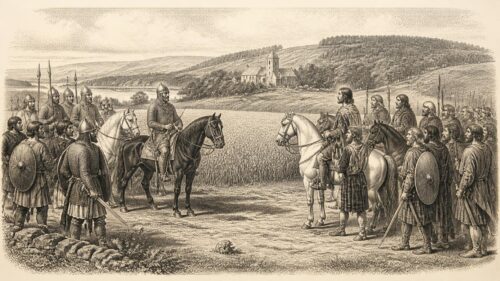
In 1309, Áed mac Éogain Ó Conchobair, king of Connacht, was killed at Coill an Chlocháin by Áed Brefnech, triggering wider conflict among rival dynasties and allies. Elite casualties included legal scholar Gilla na Naem Mac Aodhagáin, illustrating the political importance of learned service. Competing claimants sought submissions, tribute, royal jewels and military support, while raids damaged grain and monasteries served strategic roles. Elsewhere, violence involved Leinster magnates and Thomond rivals; Cathal Ó Conchobair became bishop of Elphin. Roger Mortimer and Joan de Geneville assumed Meath's lordship, while Dublin received murage for bridge-tower repairs, revealing Ireland's interconnected local politics clearly.
Read Article

Archived: 24 October 2026
Abstract
In 1297, John Wogan’s Dublin parliament introduced elected knightly representatives from counties and liberties of the English lordship, seeking consent for measures on defence, policing, road clearance and collective military contributions. It also advanced royal administration through the creation of counties Kildare and Meath, while preserving powerful private liberties. These reforms responded to persistent insecurity: Slieve Margy forces burned Leighlin, while leading Orior figures were killed near Dundalk. Elsewhere, annals recorded the deaths of Moylurg’s lord, chiefs and bishops, and disputes over Elphin. Edward I’s wars constrained affairs. The year revealed authority as selective, contested and dependent on local institutions.
Read Article
Archived: 24 October 2026
Abstract
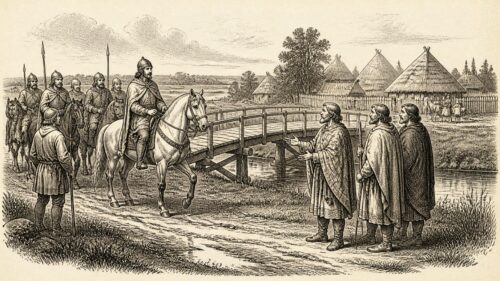
In 1289, Ireland’s overlapping lordships were tested by warfare, alliance and royal intervention. Richard Tuite led Meath settlers and Connacht’s king Maghnus against Uí Máel Sechlainn, but was killed when their coalition lost at Crois-Shliabh. Fiachra Ó Flainn was murdered while seeking a marriage alliance with settlers, while Mac Muiris and Mac Feorais suffered defeat against Leinster princes, losing Meyler de Exeter, horses and spoils. John fitz Thomas FitzGerald secured Peter Bermingham’s lifetime military service. Archbishop John of Sandford, keeper of Ireland, campaigned in Laois, enforcing the king’s peace. Annalistic deaths also reveal active ecclesiastical and learned institutions amid instability.
Read Article
Archived: 26 October 2026
Abstract
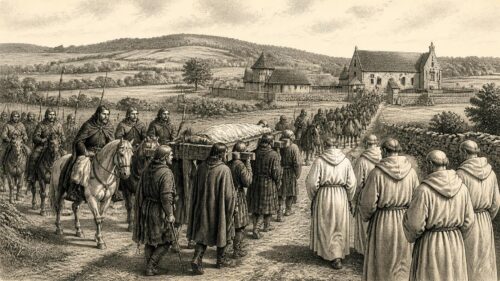
In 1224, Cathal Crobhderg Ua Conchobair’s death at Knockmoy ended a Connacht reign and enabled his son Áed’s swift, but contested, succession. Cathal had combined authority with diplomacy towards Henry III, seeking security for Connacht and recognition of Áed. Meanwhile William Marshal suppressed Hugh de Lacy’s rebellion, retaking Trim Castle through campaigning supported by Anglo-Norman and Gaelic allies. Áed joined these wider struggles, attacking castles and resisting rivals backed by Áed Ua Néill. Church life included Cathal’s Cistercian burial, learned clerics, and the arrival of Dominicans. War, weather and livestock disease disrupted agriculture, exposing dependence on cattle, supplies and alliances.
Read Article

Archived: 26 September 2026
Abstract
In 1217, Ireland was a fragile lordship governed for the child Henry III from Dublin, alongside powerful Anglo-Norman magnates and resilient Irish kingdoms. Royal orders promised liberties to loyal subjects, promoted markets, Waterford settlement, land claims, engineers, castle defence and exchequer control. Strategic tensions surrounded the Lacys, Carrickfergus and Carlingford. Government policy sought English dominance in senior church appointments, despite continuing local influence. Annals record Irish fishermen killed on Man, Anglo-Norman raiding near Armagh, retaliatory cattle seizures and a favourable harvest. Marriage, commerce, ecclesiastical links and maritime travel connected communities, but coercion, exclusion and contested authority exposed the Crown’s reach.
Read Article

Archived: 26 September 2026
Abstract
In 1215, Ireland remained politically fragmented: King John controlled ports, towns, castles and lordships, while Irish kings and kindreds retained power. Magna Carta concerned England, but John’s crisis affected Ireland, prompting efforts to raise revenue and reconcile magnates, notably Walter de Lacy. Royal rule relied on fines, hostages, castles and negotiated claims, while frontier insecurity persisted. Geoffrey de Marisco became justiciar. Irish forces under Áed Ua Néill defeated Ulster’s settlers. New Ross gained limited shipping rights, Cratloe was granted, and Armagh’s archbishop attended Lateran IV. Warfare, commerce, church reform and regional rivalries showed Ireland connected to John’s dominions yet divided.
Read Article

Archived: 26 September 2026
Abstract
In 1212, royal efforts to extend King John’s Irish lordship through castles, taxation and military campaigns met persistent resistance. John de Gray’s northern offensive built Clones and Cáel Uisce castles, but forces associated with Áed Méith Ua Néill and other Gaelic leaders defeated raiders and destroyed both strongholds. Seaborne warriors from Galloway and the Isles ravaged Derry and Inishowen, aided by Cenél Conaill. In Meath, Cormac Ua Máel Sechlainn defeated English forces, while Munster and Desmond saw fort-building and dynastic conflict. Administrative records reveal expanding royal finance, yet authority remained uneven, shaped by alliances, tribute, churches, raids and regional rivalries.
Read Article
Archived: 26 September 2026
Abstract
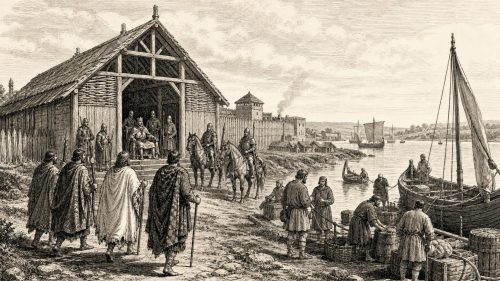
In 1172 Henry II held a winter court at Dublin, asserting royal control over Strongbow’s Anglo-Norman venture and receiving submissions from Irish rulers, though Ruaidrí Ua Conchobair remained independent. He secured Dublin, Waterford and Wexford, encouraged Bristol settlement, and linked conquest to commerce. The Council of Cashel promoted ecclesiastical order, building upon Irish reforms, while Gaelic church and political authority persisted elsewhere. Henry departed in April, granting Meath and Dublin’s custody to Hugh de Lacy. His forces devastated communities, and Tigernán Ua Ruairc was killed. Papal backing strengthened Henry’s claims, but Ireland remained divided between competing Gaelic and Angevin lordships.
Read Article

Archived: 26 September 2026
Abstract
In 1168 Ruaidrí Ua Conchobair strengthened his contested kingship of Ireland through military interventions, hostages, tribute and public assembly. In Meath, he enforced heavy compensation for a protected king’s killing, contributing to political upheaval, and presided over the Óenach Tailten. In Munster, he arbitrated the Ua Briain succession, secured submissions and divided authority between Domnall Mór Ua Briain and Mac Carthaig. Diarmait Mac Murchada remained constrained in Leinster, although overseas alliances were developing. The deaths of Donnchad Ua Cerbaill, churchmen and cultural figures marked the year. Reported prosperity contrasted with divisions that made Ireland vulnerable to the landings of 1169.
Read Article

Archived: 26 September 2026
Abstract
In 1160, Ruaidrí Ua Conchobair exploited the assassination of Meath’s king, installing Diarmait Ua Máel Sechlainn and securing hostages from Meath and Tethbae. His subsequent Shannon expedition compelled Thomond’s rulers to acknowledge his authority, marking Connacht’s recovery against high-king claimant Muirchertach Mac Lochlainn. Rival armies confronted one another without settlement, while Mac Lochlainn’s instigated killings and broken guarantees fostered northern instability. Dublin’s king Brodar was slain amid conflict. Clerical and scholarly deaths reflected reform and learned culture, while institutions including Jerpoint emerged. Burnings, warfare and cattle exactions burdened communities. Ireland remained divided, but rivalry centred upon Ruaidrí and Mac Lochlainn.
Read Article

