Archived: 26 October 2026
Abstract
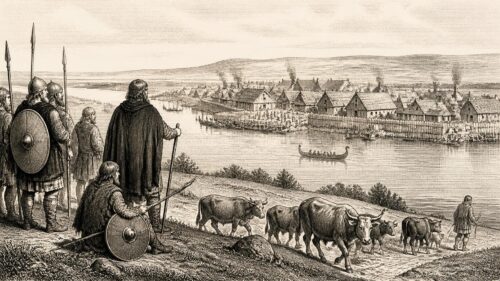
In 968, Domnall ua Néill, king of Tara, campaigned in Leinster, ravaged territory between the Barrow and the sea, exacted cattle tribute, and blockaded the Leinstermen and Dublin’s Scandinavian rulers for two months. The annals do not record Dublin’s capture. In Munster, Mathgamain son of Cennétig raided Uí Énna Áine, where Cathal son of Fogartach died, continuing Dál Cais expansion after successes against Limerick. Imlech Ibuir, or Emly, was plundered by unnamed forces. Deaths of prominent ecclesiastical successors and King Flaithbertach highlighted political and religious change. The records depict fragmented authority exercised through warfare, tribute, mobility and control of resources.
Read Article
Archived: 26 October 2026
Abstract
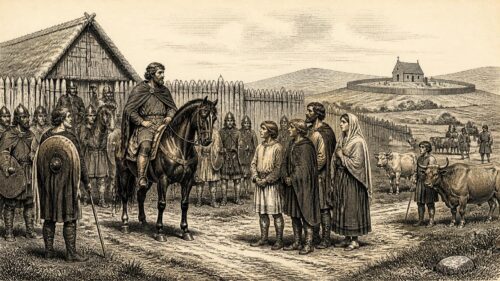
In 969, Ireland remained a fragmented political landscape of competing kingships, churches and Scandinavian towns. Mathgamain son of Cennétig demonstrated Dál Cais ambitions in Munster by leading a hosting against the son of Bran and taking hostages, converting military pressure into overlordship. Despite Limerick’s burning in 967, its ruler Ímar retained power, killing Beólán Litil and his son. Elsewhere, rulers were killed, while Ardgal of Ulaid and Donnocán of Airgialla died in conflict involving Dublin allies. Disputed dates complicate events around Domnall ua Néill’s struggle with Clann Cholmáin. Deaths and campaigning reveal power’s dependence on communities, resources, alliances and coercion.
Read Article
Archived: 26 October 2026
Abstract
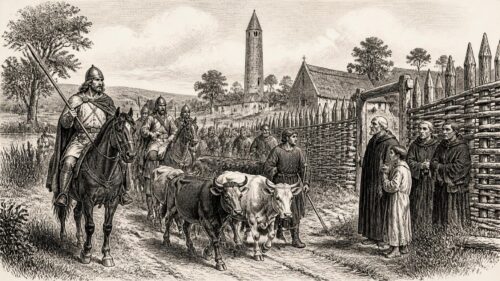
In 970, annalistic evidence records conflict across northern and midland Ireland. Amlaíb Cuarán of Dublin and Domnall mac Congalaig of Brega defeated Domnall ua Néill, king of Tara, at Cell Móna, where several regional kings died. Amlaíb had earlier raided Kells with foreigners and Leinster allies, seizing cattle and defeating Uí Néill forces. Campaigning also brought atrocities: Ardgar of Ulaid sacked Conaire, while Domnall ua Néill retaliated by attacking Louth monasteries, including Lann Léire, where hundreds were burned. The sources reveal shifting alliances, Dublin’s political influence, ecclesiastical wealth’s strategic importance, and warfare’s devastating effects on communities amid uncertain annalistic dating.
Read Article
Archived: 26 October 2026
Abstract
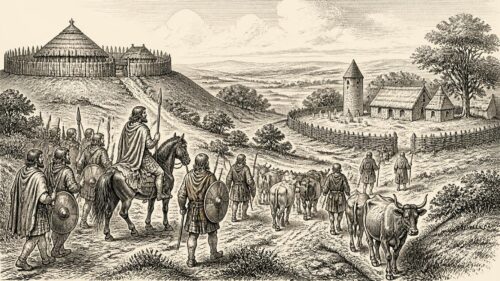
In 971, Domnall ua Néill, Northern Uí Néill king of Tara, was expelled from Mide by Clann Cholmáin, exposing the fragility of his claimed supremacy. He swiftly returned with an army, plundering churches, forts and communities in Mide and raiding Uí Fhailgi and Fotharta to punish resistance and display power. The year also saw the death of Niall son of Áed, king of Ulaid, amid eastern Ulster instability; ecclesiastical succession changes at Ciarán’s and Cainnech’s communities; and Cellach ua Nuadat’s killing by foreigners at a refectory. These entries reveal conflict affecting rural society, churches, dynastic politics and Irish Sea connections.
Read Article
Archived: 26 October 2026
Abstract
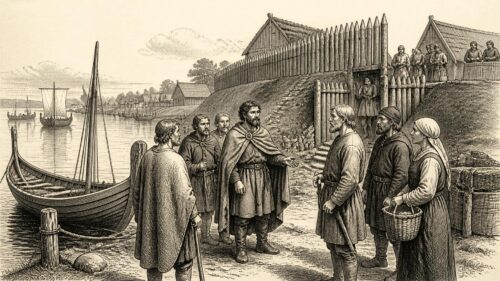
In 972, Mathgamain son of Cennétig led a Munster coalition that imposed three ordinances on Limerick: expelling Norse officials, driving foreigners from the town, and burning their fortress. The action transferred control of a strategic commercial centre without ending Scandinavian influence. Elsewhere, Domnall Claen treacherously killed Murchad, overking of Leinster; Áed of Ulaid died in battle against Dál nAraide; and Domnall Ua Néill burned and plundered major churches. Tuathal, abbot of Clonmacnoise, died. These events demonstrate Ireland’s fragmented politics, where dynastic rivalry, alliances, military force, resources, routes and ecclesiastical institutions shaped contested regional power, although annalistic dating requires careful interpretation.
Read Article
Archived: 26 October 2026
Abstract
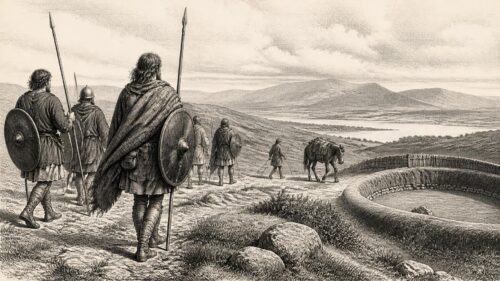
In 973, Conchobar son of Tadc, king of Connacht, died, and his kinsman Cathal was killed almost immediately after succeeding him at Céis Chorainn. Murchad ua Flaithbertaig of Ailech defeated Connacht forces, killing Géibennach of Uí Maine and others, then plundering the province. The chronology varies among annals, but Inisfallen assigns events to 973. In Munster, Dub dá Leithe of Armagh secured Patrick’s church’s levy after Mathgamain mediated with Emly’s coarb. Ecclesiastical deaths included leaders of Durrow, Clonard and Glendalough, and the anchorite Cinaed of Clonfert, demonstrating Ireland’s interconnected political and religious communities, while records leave ordinary people’s experiences unreported.
Read Article
Archived: 26 October 2026
Abstract
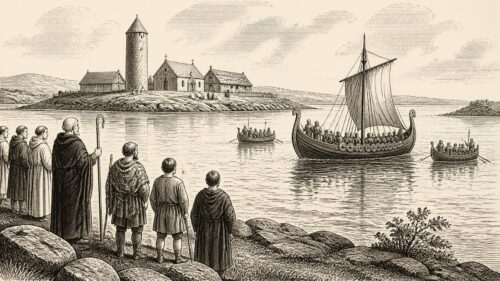
In 974, the son of Aralt led a large seaborne force to plunder Inis Cathaig in the Shannon estuary and capture Ímar, probably a Limerick Scandinavian leader. The island’s bishop and abbot, the learned Scandlán Ua hEirc, also died, though no link to the raid is recorded. The episode demonstrated the vulnerability and political importance of ecclesiastical centres. Meanwhile, Máel Muad challenged Mathgamain’s Munster authority through hostage-taking. Annals also report killings, expulsions and warfare in Ailech, Mide, Leinster and Osraige, revealing a politically fragmented Ireland where dynastic conflict, maritime power, churches and local communities were closely intertwined in this year.
Read Article
Archived: 26 October 2026
Abstract
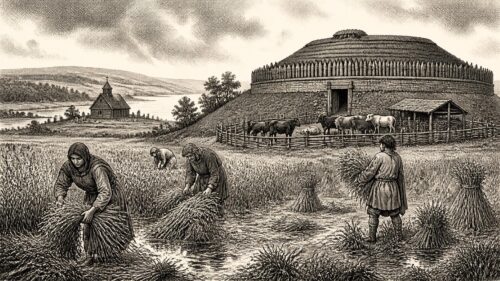
In 975, uneven annalistic evidence records a pressured Ireland where political, maritime, ecclesiastical, cultural and environmental concerns intersected. In Munster, Mathgamain mac Cennétig’s army killed Cormac son of Faelán, demonstrating his contested authority. Ímar escaped overseas while an island stronghold, possibly near Limerick, was retaken, confirming continuing Irish Sea rivalry. Cináed ua hArtacáin, renowned chief poet, died, depriving learned culture of an influential custodian of history and place-lore. Fogartach, abbot of Daire, died, and Ferdal of Rechru was killed by heathens. Exceptionally wet weather damaged crops, worsening vulnerability amid conflict, mobility and competition for resources across the island's linked communities.
Read Article
Archived: 26 October 2026
Abstract
In 976, Ireland experienced political upheaval marked by Mathgamain son of Cennétig’s treacherous killing after Donnubán of Uí Fidgente surrendered him to Máel Muad despite guarantees. His death disrupted Dál Cais ascendancy in Munster, leaving Brian’s future leadership uncertain. Donnchad of Osraige and Domnall of Brega also died, while Tadc of Cianachta and Máel Sechnaill of Gabair were killed. Ecclesiastical authority remained influential yet vulnerable: Conaing died, Colum Cille’s shrine was plundered, and Nendrum’s superior was burned. Annals depict fragmented, negotiated power, linking kingship, churches, warfare and Norse-Gaelic involvement across Ireland while stressing continuity in ordinary life beyond recorded events.
Read Article
Archived: 26 October 2026
Abstract
In 977, Amlaíb Cuarán, Scandinavian-Gaelic ruler of Dublin, killed Muirchertach son of Domnall ua Néill and Congalach son of Domnall, both designated royal heirs of Ireland. Their deaths weakened Domnall, king of Tara, amid contested Uí Néill succession, illustrating Dublin’s influence within intertwined Irish and Viking dynasties. Domnall also killed Gilla Coluim ua Canannáin, lord of Cenél Conaill. Annals record Conaing, successor of Moedóc, dying, while Chronicon Scotorum chronologically associates Domnall’s plundering of Adomnán’s shrine with 977. Irish sources also noted a Scottish royal killing, reflecting Irish Sea connections. Misdated records exclude Leinster and Kildare events from this calendar year.
Read Article

