
Archived: 19 September 2026
Abstract
Modern dating labels 31,228 BCE only approximately describe later Marine Isotope Stage 3 Ireland, lacking written or securely dated human evidence. Derryvree, County Fermanagh, preserves freshwater organic sediments between glacial tills, radiocarbon dated broadly to the mid- to low-30,000s calibrated years BP. Pollen, seeds, mosses and insects show a cold, exposed, largely treeless wetland of sedges, grasses, aquatic plants and pools during an ice-free interval. Cave faunas demonstrate wider Pleistocene animal diversity, but cannot establish species present locally then. Later glaciation and rising seas destroyed evidence. Ireland's earliest secure human trace dates only to 12,800–12,600 calibrated years BP, far later.
Read Article

Archived: 19 September 2026
Abstract
At the notional date 31,229 BCE, Ireland lay in the climatically unstable Late Pleistocene, approaching wider glaciation rather than wholly ice-covered. Derryvree in County Fermanagh preserves evidence of a cold, open, treeless wetland, later sealed beneath ice. Castlepook Cave, County Cork, contains Ireland’s richest Pleistocene fauna, including mammoth, reindeer, giant deer and spotted hyaena, though its deposits represent changing communities, not one moment. A possibly tool-marked reindeer bone suggests fleeting human presence, but remains unproven. No secure contemporary settlements, tools or social evidence exist. Environmental change, expanding ice and fragmented survival of evidence define this period in Ireland's prehistoric record.
Read Article
Archived: 19 September 2026
Abstract
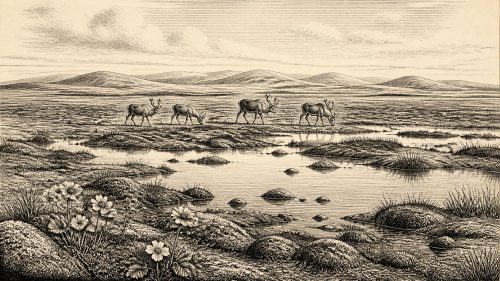
Circa 31,230 BCE, Ireland cannot be described through annual events or human history. At Derryvree near Maguiresbridge, Fermanagh, organic sediments between glacial tills, radiocarbon dated broadly to 36,900–31,700 calibrated BP, record an ice-free freshwater wetland during MIS 3. Plant and insect remains indicate cold, treeless, mossy tundra with pools, sedges, bogbean and mountain-avens. Elsewhere, deposits and cave calcite confirm varied conditions as ice advanced and retreated. Castlepook Cave fauna demonstrates Pleistocene mammals, although possible cut marks on reindeer provide only tentative evidence of people. The surviving record establishes ecological occupation, not human society, amid unstable ice, sea and land connections.
Read Article

Archived: 19 September 2026
Abstract
Around 31,231 BCE, Ireland lay in a volatile Late Pleistocene environment, before the Last Glacial Maximum. Calibrated dates cannot identify conditions in a single calendar year, but Fermanagh sediments indicate periods of ice-free, treeless tundra wetlands with mosses, sedges and grasses, later buried by advancing ice. Cave and fossil assemblages show reindeer and other cold-stage animals reached the island. A marked reindeer femur from Castlepook Cave may record Upper Palaeolithic butchery, although its context and interpretation remain disputed. No settlement or political history is known. The evidence instead suggests active landscapes, changing access routes, climate, and possible visits by hunter-gatherers.
Read Article

Archived: 19 September 2026
Abstract
31,232 BCE is a label within a broad Late Pleistocene range, not a datable Irish event. At Derryvree, County Fermanagh, freshwater silts between glacial tills record an ice-free interval, dated roughly 36,900–31,700 calibrated years before present. Plants, insects and sediments indicate cold, treeless tundra wetlands with pools, mosses and sedges, demonstrating ecosystems rather than uniform lifelessness. Castlepook Cave fauna shows that cold-stage mammals reached Ireland, although remains accumulated across periods. A cut-marked reindeer femur may indicate Upper Palaeolithic human activity, but proves neither settlement nor occupation. No evidence establishes polities, farming, monuments, trade or practices; climate shaped this Atlantic frontier.
Read Article

Archived: 18 September 2026
Abstract
Although 31,233 BCE cannot identify a specific Irish event, it falls within a Late Pleistocene interval represented by Derryvree, County Fermanagh. Organic freshwater sediments between glacial tills show an ice-free, treeless tundra muskeg, supporting sedges, mosses, insects and shallow pools amid cold. Radiocarbon dating provides a broad period, not annual precision. Castlepook Cave, County Cork, preserves remains of reindeer, mammoth, giant deer, predators and fauna, though its chronology is complex. A possibly cut-marked reindeer bone may indicate early human carcass processing, but proves neither settlement nor population. Together, these records show a variable, biologically active Ireland affected by advancing ice.
Read Article

Archived: 18 September 2026
Abstract
31,234 BCE is a modern chronological label rather than a recoverable Irish historical year. Evidence from Derryvree, County Fermanagh, records a cold, treeless, tundra-like freshwater wetland formed between glacial advances during Marine Isotope Stage 3. Plant and insect remains indicate severe, seasonal periglacial conditions, though local evidence cannot represent the entire island. Castlepook Cave, County Cork, preserves a diverse cold-stage fauna, including mammoth, reindeer and hyaena, demonstrating intermittent ecological connections but not a permanent land bridge. A possibly butchered reindeer bone may suggest human visitation, yet cannot prove settlement. No evidence supports contemporaneous politics, culture, trade or named human communities.
Read Article
Archived: 18 September 2026
Abstract
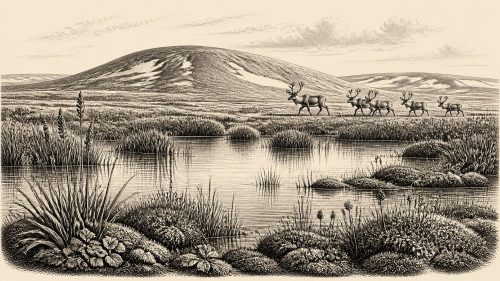
At approximately 31,235 BCE, Ireland lay within a variable Late Pleistocene glacial interval. At Derryvree, County Fermanagh, freshwater sediments and organic remains between two tills show that ice temporarily retreated or ceased occupying the locality. Fossils indicate cold, wetland tundra with low vegetation, aquatic plants and insects. Elsewhere, especially Castlepook Cave, animal remains demonstrate intermittent habitats for reindeer, giant deer, mammoths and predators. A possibly tool-marked reindeer bone suggests an early human visit, but securely dated settlement remains unproven. The date is a modern calibrated marker, not a year-specific event; evidence reveals shifting ice, water, ecosystems and uncertain human presence.
Read Article
Archived: 18 September 2026
Abstract
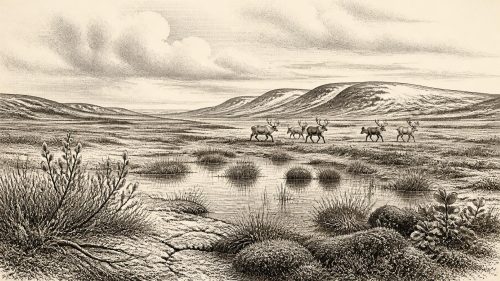
31,236 BCE is a label for broad Late Pleistocene MIS 3 horizon, not a recorded Irish year. Derryvree, County Fermanagh, preserves freshwater sands, silts and organic beds between tills, proving a non-glacial interval before renewed ice-sheet growth. Its bogbean, dwarf willow, mountain-avens, pollen and insects indicate treeless, cold, wet, ecologically varied tundra. Southern caves, especially Castlepook, contain MIS 3 remains of reindeer, mammoth and other cold-adapted fauna, demonstrating intermittent connectivity with north-west Europe. A cut-marked reindeer femur may indicate brief human activity, but cannot prove settlement. No evidence supports polities, continuous population or cultural ancestry; environmental change defines this period.
Read Article
Archived: 18 September 2026
Abstract
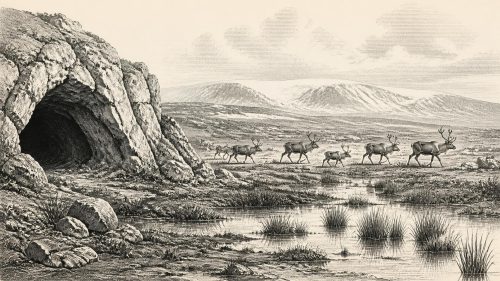
Around 31,237 BCE, a modern label rather than a recoverable Irish date, Ireland lay within the unstable cold conditions of Marine Isotope Stage 3. Lower sea levels altered routes and coasts, while local environments ranged from wetlands and open tundra to ice margins. Derryvree, County Fermanagh, preserves sediments, plants and insects showing cold, treeless wetland conditions between glacial episodes. Castlepook Cave, County Cork, yielded mixed and reworked remains of mammoth, reindeer, giant deer and other cold-adapted fauna. A possibly stone-cut reindeer femur may indicate brief Upper Palaeolithic human activity, but lacks corroborating artefacts or deposits. Later glaciation erased earlier evidence.
Read Article
