

Related Archive: 13th-century Ireland

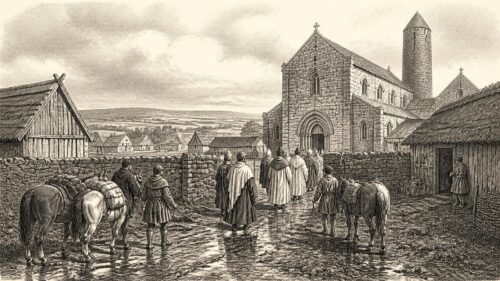
Tuam’s Great Synod

Tuam’s Great Synod

Archived: 25 October 2026

Abstract

In 1251, Ireland’s fragmented political order combined royal administration, Gaelic rivalry, ecclesiastical organisation and environmental disruption. John Fitz Geoffrey’s wardship purchase illustrated links between office, inheritance and lordship, while Henry III approved Hugh’s election to Ossory and authorised an Irish coinage exchange. Connacht clergy held a synod at Tuam under Archbishop Flann Mac Flainn, although its decisions are unknown. Annals record killings among Connacht and northern kindreds, clerical deaths and Archbishop Raighned’s journey to Rome. Grants of privileges expressed royal authority locally. Summer lightning and flooding, followed by severe winter frost, damaged people, cattle, travel and livelihoods without proving famine.


Read Article

Sligo’s Hanging Hostages

Sligo’s Hanging Hostages

Archived: 25 October 2026

Abstract

In 1246, newly built Sligo Castle became a focus of conflict between Maurice FitzGerald's expanding Anglo-Irish power and Máel Sechlainn Ó Domhnaill of Tír Chonaill. After attackers burned Sligo's enclosure but failed to seize the castle on 1 November, its garrison hanged two hostages, Ó Domhnaill's foster-father and foster-brother. FitzGerald also sought to reshape northern politics through Cormac Ó Conchobair and hostage-taking. Elsewhere during that turbulent year, John Fitz Geoffrey became justiciar; Connacht dynastic prisoners escaped, were recaptured, or were killed; bishops changed at Elphin and Armagh; Drumlane burned; Oriel suffered violence; and a stranded whale enriched coastal Sligo communities.

Read Article

