Archived: 3 November 2026
Abstract
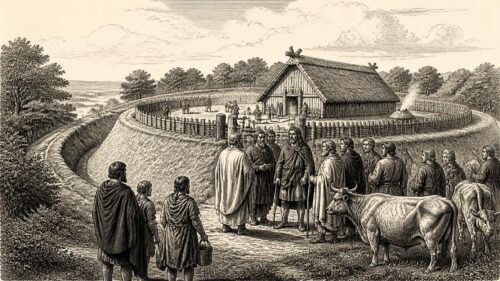
In 647 CE, Máel Cobo son of Fiachnae, overking of Ulaid, was killed by his nephew Congal Cennfhota son of Dúnchad. The notice is brief, but it preserves a decisive act of dynastic violence in north-east Ireland. Máel Cobo belonged to Dál Fiatach, one of the competing royal kindreds of Ulaid; Congal belonged to the same dynasty and was the son of Máel Cobo’s brother Dúnchad. This was not an invasion or a clash between distant peoples. It was a killing within the ruling family, at a point when possession of the overkingship of Ulaid could turn on the survival,
Read Article
Archived: 3 November 2026
Abstract
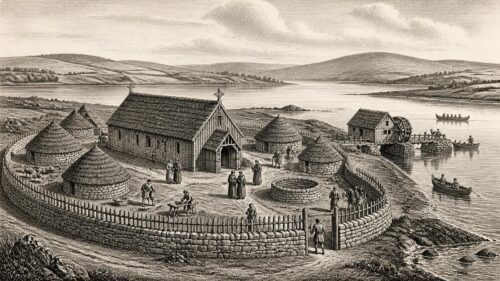
In 644 CE, Ireland’s surviving annalistic tradition presents a compact but revealing cluster of deaths, warfare and disputed royal authority. Yet the date must be handled with care. The notices now grouped under 644 were copied into chronicles centuries after the events, and the parallel annals do not always place them in the same numbered year. What can responsibly be said is that, around this calendar year, the political order was unsettled after the death of Domnall mac Áedo, a major northern Uí Néill ruler, while Leinster, Osraige, Munster and the north-east each appear in the record through named people
Read Article
Archived: 3 November 2026
Abstract
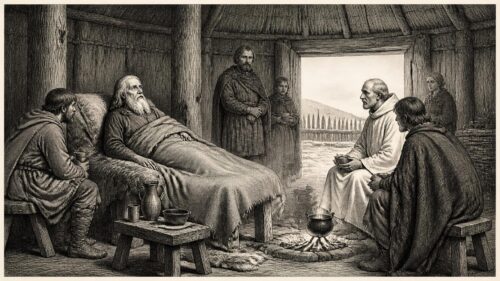
In 642 CE, the most consequential Irish event securely attached to the year was the death, at the end of January, of Domnall mac Áedo. The Annals of Ulster calls him rex Hiberniae, ‘king of Ireland’, an unusually emphatic title in an island divided among many kingships. Its notice is brief, yet its language makes Domnall’s death a landmark: a powerful overking had gone, and the political arrangements he had sustained were left to be tested. The same annal also records the killing of Ailill son of Colmán, king of Cenél Loegaire, a Uí Néill people of Brega. Thus the
Read Article
