
Archived: 26 September 2026
Abstract
In 1133, Toirdelbach Ua Conchobair’s disputed high-kingship faced a Munster invasion of Connacht, which killed an heir but secured no submission. He later agreed a year’s truce with Conchobar Ua Briain, while Mide and Bréifne destroyed his Athlone bridge and fort. Feuds in Mide, Leinster and Fine Gall brought assassinations, reprisals, raids and the burning of Lusk church. Regional conflicts, deaths and accidents continued. Armagh’s succession remained divided between reformer Malachy and Muirchertach mac Domnaill. Clerical visits, learned figures and burnings featured in the annals. A devastating cattle and pig murrain damaged Ireland’s economy; an August solar eclipse was recorded.
Read Article

Archived: 26 September 2026
Abstract
In 1115, severe frost and snow caused widespread hunger, livestock deaths and disruption across Ireland, particularly Leinster. Muirchertach Ua Briain recovered from illness, regained Munster after his brother Diarmait’s capture, and reasserted influence through campaigns in Brega and Dublin, where his son’s forces defeated Leinster leaders. Yet attacks on churches at Ardbraccan and Clonmacnoise exposed warfare’s damage to sacred centres. Tairdelbach Ua Conchobair raided Thomond, removed a Ua Briain claimant, survived internal opposition, deployed a Shannon fleet and allied with Mide. His gifts at Clonmacnoise combined piety and political display. Despite Muirchertach’s recovery, Connacht’s growing power signalled a shifting balance.
Read Article

Archived: 26 September 2026
Abstract
In 1111 Ireland remained divided among competing rulers, notably Muirchertach Ua Briain in the south and Domnall Ua Lochlainn in the north, while Tairdelbach Ua Conchobair extended Connacht’s influence. Raids, hostage-taking, dynastic conflict and attacks on churches, including Clonmacnoise, demonstrated political instability. The Synod of Ráith Bressail, attended by leading clerics and royal patrons, promoted ecclesiastical discipline and a territorial diocesan framework under Armagh and Cashel, though implementation was uneven. A Meath synod also negotiated church boundaries. Ulaid’s conflict with Cenél nÉogain, harsh winter conditions, and fires at several settlements further affected society, trade and rural livelihoods across Ireland broadly.
Read Article

Archived: 26 September 2026
Abstract
In 1095 Ireland endured severe snow and frost, causing human, bird and livestock deaths, though later woodland mast offered limited relief. Muirchertach Ua Briain campaigned extensively in Connacht and Mide, using fleets, sieges, hostages, tribute and dependent rulers to extend Munster’s influence. Ulaid experienced deposition, raids and defeats, while local dynastic violence continued. From August, a devastating, unidentified epidemic killed innumerable people, including prominent secular and ecclesiastical figures such as Dublin’s bishop and Godred Crovan. Fires and plunder damaged churches, books and communities, notably Clonmacnoise. Despite continuing political activity, warfare, displacement, environmental hardship and mortality exposed the limits of over-kingship.
Read Article

Archived: 26 September 2026
Abstract
In 1087, Ireland lacked an acknowledged high king after Tairdelbach Ua Briain’s death. His son Muirchertach, king of Munster, defeated a Leinster coalition at Ráith Étair near Dublin, including his exiled brother Diarmait. In Connacht, Ruaidrí Ua Conchobair killed Áed Ua Ruairc at Corann, aided by ecclesiastical authority symbolised by St Ciarán’s staff. Máel Sechlainn of Mide was assassinated, while Domnall Ua Lochlainn extended northern influence and an Ulster-led expedition reached Man. Regional rulers died or were killed. Despite abundant mast, cattle disease, dearth and destructive winds harmed communities. Warfare, urban maritime connections and rural dependence shaped unsettled competitive order.
Read Article

Archived: 26 September 2026
Abstract
In 1082, Connacht’s Ua Conchobair dynasty suffered a violent succession struggle: Cathal son of Áed treacherously killed heir-designate Domnall son of Tadc, before Ruaidrí, Cathal’s half-brother, defeated and killed him with a large force. Ruaidrí’s victory strengthened his claim but did not secure all Connacht, whose subordinate rulers remained autonomous. Annals also record several regional lords slain, illustrating political insecurity. Cinaed Ua Ruadáin, senior officer at Clonmacnoise, died, while Cenn Faelad Ua hÓcáin assumed Brendan’s coarbship. Later, less secure accounts describe fighting on Lough Ree and a fire at Clonmacnoise. Tairdelbach Ua Briain’s wider overlordship framed political conflict across Ireland.
Read Article

Archived: 26 September 2026
Abstract
In 1076, Ireland experienced fragile kingship, regional warfare, religious losses and food scarcity. Murchad Ua Mael Sechlainn claimed Tara’s supremacy at Kells but was killed after three days and nights by Amlaíb of Gailenga; Amlaíb was subsequently slain, reportedly through Colum Cille’s justice. Tairdelbach Ua Briain invaded Connacht, imprisoned Ruaidrí Ua Conchobair, then released him as a dependent ruler, demonstrating Munster’s limited ascendancy. Northern and midland rulers were killed in conflicts, including at Devenish. Churchmen, Gormlaith, queen of Munster, and scholars died. Scarcity threatened farming communities, while Ua Briain control of Dublin strengthened their power. The annals portray unstable authority.
Read Article

Archived: 26 September 2026
Abstract
In 1072 Diarmait mac Máel na mBó, dominant ruler of Leinster, Osraige and Dublin, was defeated and killed at Odba by Conchobar Ua Máelshechlainn of Mide, probably with Tairdelbach Ua Briain’s support. His death shattered a personal network of alliances rather than a unified kingdom. Tairdelbach swiftly raided and secured hostages in Leinster and Osraige, gained Dublin’s submission, and consolidated Munster authority. Annals also record killings among regional rulers and ecclesiastical leaders, illustrating pervasive conflict. Cattle-raiding, captives, hospitality obligations and Dublin’s trade reveal political power’s economic and social foundations. Odba initiated Tairdelbach’s contested pursuit of Irish overkingship in ensuing years.
Read Article

Archived: 26 September 2026
Abstract
In 1061, Ireland lacked a supreme king and regional rivalries intensified. Connacht’s Áed Ua Conchobair raided Munster, destroying Kincora and damaging Killaloe, thereby exposing Donnchad mac Briain’s weakening authority. Áed was briefly displaced by the Ua Flaithbertaig of western Connacht, but defeated them and killed Ruaidrí. Elsewhere, battles, killings and deaths reshaped northern and eastern lordships, while Diarmait mac Maíl na mBó pressed Munster and projected power towards Man. Severe epidemic disease afflicted Leinster, and Glendalough was burned. Deaths of churchmen highlighted ecclesiastical institutions’ importance. Differing annal dates complicate chronology, but collectively portray fragile power, violence, hardship and political change.
Read Article

Archived: 26 September 2026
Abstract
In 1053, Irish annals depict widespread warfare, raids and political murder rather than a decisive national conflict. Donnchad mac Briain of Munster faced his nephew Toirdelbach Ua Briain, supported by Connacht, while Diarmait mac Máel na mBó defended Dublin’s interests after yielding hostages to an opposing expedition. Diarmait retaliated in Brega and Mide, taking cattle and captives. Killings, betrayals and raids affected Fermanagh, Lurg, Airgialla and Ulster. Churchmen died and ecclesiastical sites suffered, yet churches sustained administration and learning. Rural cattle-based society and maritime towns endured insecurity. The year foreshadowed Donnchad’s eventual displacement from Munster amid continuing political fragmentation thereafter.
Read Article

Archived: 26 September 2026
Abstract
In 1050 Ireland remained politically fragmented, with Donnchad mac Briain of Munster pursuing overlordship through hostages, alliances and force, while rival rulers strengthened elsewhere. He proclaimed a law at Killaloe, intended to curb violence, protect agreements and demonstrate royal guardianship of Christian order amid scarcity. Clonmacnoise was repeatedly plundered by neighbouring Irish groups, while Kildare, Emly and Lann Léire suffered fires or attacks, revealing ecclesiastical centres’ wealth and vulnerability. Kings died violently, rivals were imprisoned, and churchmen continued teaching and collecting renders. Rural livelihoods depended on livestock and crops alongside trading towns. Muirchertach Ua Briain, a future king, was born.
Read Article
Archived: 26 September 2026
Abstract
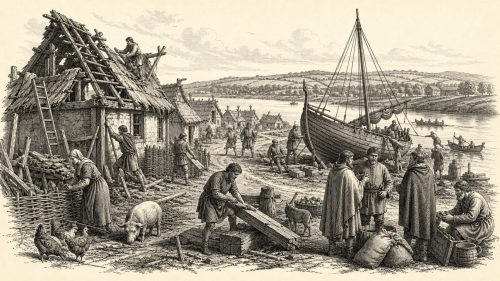
In 1037, Ireland remained a fragmented political landscape, where provincial kings, local dynasties and churches competed for power. Annals, despite differing dates and detail, record blinding, assassination, raiding and ecclesiastical violence across Leinster, Meath, Connacht and the north. Osraige’s Donnchad mac Gilla Pátraic displaced a Leinster rival, while Diarmait mac Máel na mBó strengthened his position and was linked to Waterford’s burning. Waterford’s ruler died amid internal and external conflict. Kings made pilgrimages, but churches were also plundered and sanctuary violated at Lorrha. Trade, farming and craft continued despite disorder. Exceptionally wet, stormy weather compounded an unstable year for communities.
Read Article
Archived: 26 September 2026
Abstract
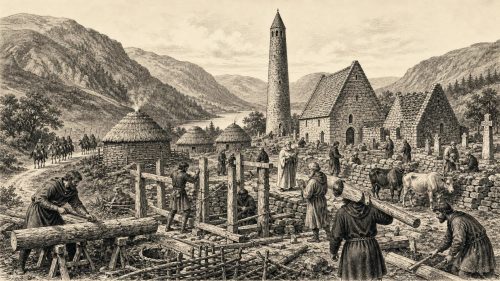
In 1017, three years after Clontarf, Ireland remained politically fragmented rather than settled under Máel Sechnaill mac Domnaill’s renewed overkingship. He defeated Dublin’s Hiberno-Scandinavian forces and Leinster men near Odhba, while dynastic killings eliminated several royal heirs and regional rulers in Ailech, Brega, Uí Méith and elsewhere. These internal conflicts reflected competitive succession among ruling kindreds. Church and learned communities also suffered: much of Glendalough burned, other ecclesiastical leaders died, and Inis Gaill Duib was destroyed as the scholar Anmchad drowned. Annals portray tense rebalancing, linking warfare, local lordship, monasteries, agriculture, and Dublin’s commercial power in post-Clontarf Ireland during 1017.
Read Article

Archived: 26 September 2026
Abstract
In 1016, two years after Clontarf, Máel Sechnaill mac Domnaill reasserted authority by taking Ulaid hostages, while Donnchad mac Briain raided Shannon islands, seized boats and consolidated Munster. Northern conflict between Ulaid and Dál Araide killed several rulers, and Osraige’s king slew Leinster and Uí Drona leaders at Leithglenn. Other regional dynastic deaths revealed fragmented power. Ecclesiastical life remained influential despite fires at Clonmacnoise, Clonfert, Kells and Downpatrick; church officers and the chief poet Mac Liag died. Raiding, hostage-taking and an autumn storm burdened communities. Annalistic peace meant relative stability after Clontarf, not an end to violence or political rivalry.
Read Article

Archived: 26 September 2026
Abstract
In 1013, Brian Bórama’s Irish overlordship faced coordinated resistance from Leinster and Hiberno-Norse Dublin under Máel Mórda and Sitriuc Silkbeard. Warfare spread across Mide, Brega, Leinster and Munster: Máel Sechnaill suffered losses near Dublin but countered raids, while northern rivals increased pressure. Brian and his son Murchad conducted prolonged campaigns, devastating Leinster, taking captives and advancing towards Dublin. Dublin’s fleet burned Cork, though Munster forces killed prominent Dubliners. Church relics, ecclesiastical authority, agriculture and fortifications featured in the conflict. Annals portray a Christian, literate yet violent society. No settlement emerged; 1013 established the conditions for Clontarf’s decisive battle in 1014.
Read Article

Archived: 26 September 2026
Abstract
In 1010 Brian Bóruma reinforced his contested supremacy by leading Munster forces north to Armagh and securing hostages from the northern Uí Néill, Ulaid and wider Leth Cuinn. The campaign demonstrated that overlordship required repeated negotiation, military display and guarantees. Connacht’s king Cathal mac Conchobair died penitently, while lesser rulers, an Ailech heir and other political figures also died or were killed. Church losses included Brian’s brother Marcán, senior cleric of Munster, Clonmacnoise bishop Conaing, and scholar-king Máel Suthain ua Cerbaill. An abbot suffered blinding. Annals also recorded a hot summer and fruitful autumn, underscoring rural resources sustaining political power.
Read Article
Archived: 26 September 2026
Abstract
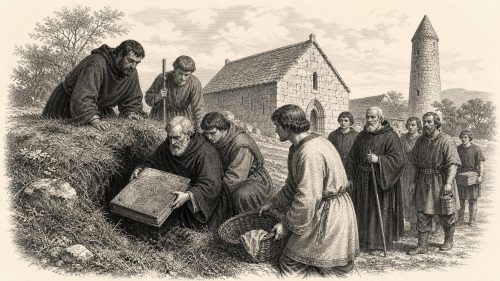
In 1007, Brian Bóruma reinforced his authority by campaigning towards Armagh, securing Ulaid hostages and involving Norse allies. Ulaid suffered rival killings, revenge and violations of church sanctuary, alongside intervention by Flaithbertach Ua Néill. In Mide, the displaced high king Máel Sechnaill revived Tailtiu’s assembly, installed a Columban successor and funded Clonmacnoise’s altar-front through local levies, asserting ceremonial kingship. At Kells, the Great Gospel of Colum Cille, probably the Book of Kells, was stolen for its precious cover but recovered. Ecclesiastical obits reveal religious networks. The annals depict Ireland as politically fragmented, wealthy, and shaped by power, sanctity and violence.
Read Article
Archived: 8 October 2026
Abstract
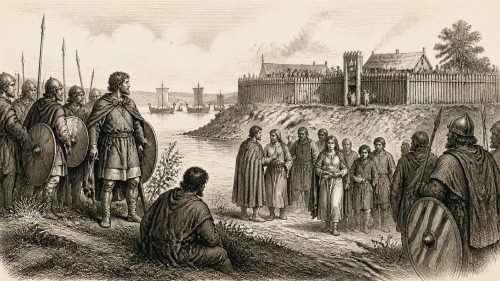
In 980, amid succession following Domnall ua Néill’s death, Máel Sechnaill mac Domnaill of Clann Cholmáin defeated Dublin and Isles forces at Tara. The victory, although not an expulsion of Norse power or unification of Ireland, enhanced his claim to wider supremacy. With Eochaid of Ulaid, he besieged Dublin for three days, securing hostages, tribute, release from Dublin’s exactions, and freedom for some Irish people held in bondage. Ragnall, Dublin’s heir, died in battle, while Amlaíb Cuarán retired penitently to Iona. Dublin’s commerce endured, but its political influence declined. Church deaths and regional killings exposed Ireland’s continuing fragmented, unstable kingship.
Read Article
Archived: 26 October 2026
Abstract
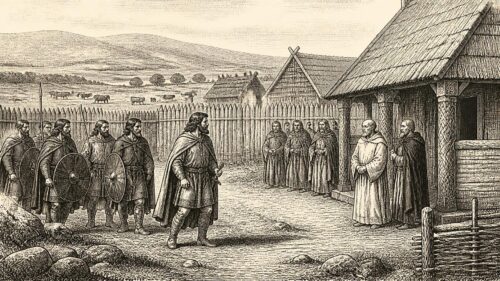
In 976, Ireland experienced political upheaval marked by Mathgamain son of Cennétig’s treacherous killing after Donnubán of Uí Fidgente surrendered him to Máel Muad despite guarantees. His death disrupted Dál Cais ascendancy in Munster, leaving Brian’s future leadership uncertain. Donnchad of Osraige and Domnall of Brega also died, while Tadc of Cianachta and Máel Sechnaill of Gabair were killed. Ecclesiastical authority remained influential yet vulnerable: Conaing died, Colum Cille’s shrine was plundered, and Nendrum’s superior was burned. Annals depict fragmented, negotiated power, linking kingship, churches, warfare and Norse-Gaelic involvement across Ireland while stressing continuity in ordinary life beyond recorded events.
Read Article
Archived: 26 October 2026
Abstract
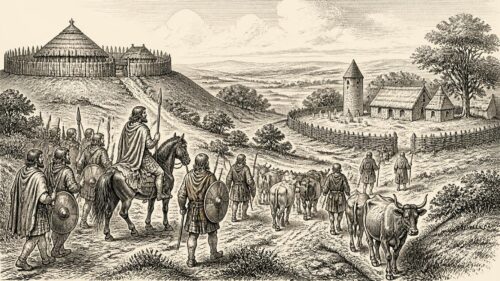
In 971, Domnall ua Néill, Northern Uí Néill king of Tara, was expelled from Mide by Clann Cholmáin, exposing the fragility of his claimed supremacy. He swiftly returned with an army, plundering churches, forts and communities in Mide and raiding Uí Fhailgi and Fotharta to punish resistance and display power. The year also saw the death of Niall son of Áed, king of Ulaid, amid eastern Ulster instability; ecclesiastical succession changes at Ciarán’s and Cainnech’s communities; and Cellach ua Nuadat’s killing by foreigners at a refectory. These entries reveal conflict affecting rural society, churches, dynastic politics and Irish Sea connections.
Read Article
Archived: 26 October 2026
Abstract
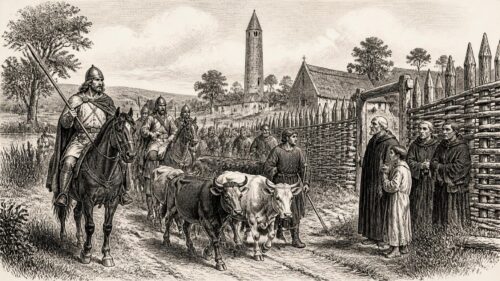
In 970, annalistic evidence records conflict across northern and midland Ireland. Amlaíb Cuarán of Dublin and Domnall mac Congalaig of Brega defeated Domnall ua Néill, king of Tara, at Cell Móna, where several regional kings died. Amlaíb had earlier raided Kells with foreigners and Leinster allies, seizing cattle and defeating Uí Néill forces. Campaigning also brought atrocities: Ardgar of Ulaid sacked Conaire, while Domnall ua Néill retaliated by attacking Louth monasteries, including Lann Léire, where hundreds were burned. The sources reveal shifting alliances, Dublin’s political influence, ecclesiastical wealth’s strategic importance, and warfare’s devastating effects on communities amid uncertain annalistic dating.
Read Article
Archived: 26 October 2026
Abstract
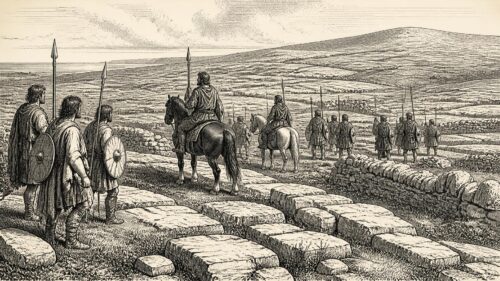
Annals for 966 record a major defeat of the Uí Ruairc alliance at Boirenn in north Clare by Comaltán Ua Cléirigh and Máel Sechnaill son of Arcda, with Taichlech Ua Gadhra among the dead. Fergal Ua Ruairc, king of Connacht, was killed by Domnall of Brega, exposing unstable regional kingship. Leinster also suffered disputed royal losses, while Armagh lost both Patrick’s successor Muiredach and its bishop, Cathasach. Conflicting chronicles complicate dating of Domnall Ua Néill’s campaigns against Leinster and Dublin. The records portray fragmented Ireland, where dynastic warfare, church offices, cattle wealth, famine’s shadow, and Dublin’s trade shaped political power.
Read Article
Archived: 26 October 2026
Abstract
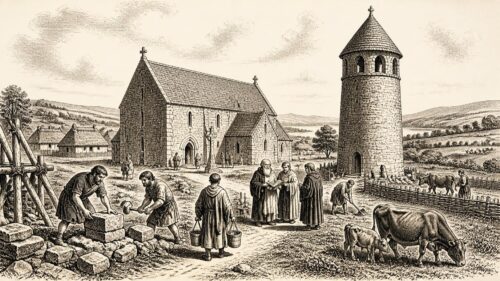
In 965 Ireland suffered a great famine, recorded by the Annals of Ulster as so severe that families reportedly sold children for food. Its causes and regional effects remain unknown, but scarcity threatened households, churches and political communities dependent on crops, cattle and stored resources. Domnall ua Néill, king of Tara, raided Connacht and took hostages from Ua Ruairc, while the Uí Channannáin won a battle killing Domnall. Ecclesiastical successions and deaths occurred at Tír dá Glas, Lismore and Armagh. Chronicon Scotorum associates bishop Cormac Ua Cillín with Tomgraney's church and bell-house, though its construction date and form remain uncertain.
Read Article




