
Archived: 26 September 2026
Abstract
In 1989, Ireland combined tentative recovery with enduring social and political strain. Fianna Fáil, short of a majority after June’s election, formed its first coalition, with the Progressive Democrats. Judicial separation legislation modernised family law without legalising divorce. Social partnership, European structural funding and Intel’s Leixlip investment signalled economic change, although unemployment and emigration remained severe. Northern Ireland endured killings, including Patrick Finucane’s murder and the IRA attack on two RUC officers, while Peter Brooke acknowledged military means alone could not end conflict. Three Irish UN soldiers died in Lebanon. Ireland’s football team qualified for its first World Cup finals.
Read Article

Archived: 26 September 2026
Abstract
In 1988, Ireland combined economic hardship, political change, cultural celebration and continuing conflict. Charles Haughey’s government implemented the first full year of the Programme for National Recovery, using fiscal restraint and social partnership, alongside tax and urban-renewal measures. Northern Ireland endured killings at Gibraltar, Milltown, Andersonstown, Ballygawley and Drumnakilly, while emergency powers persisted and Anglo-Irish relations remained strained. John Hume’s private talks with Gerry Adams opened a tentative nationalist channel. The European Court’s Norris judgment challenged criminalisation of homosexual acts; broadcasting laws reshaped media. Dublin’s millennium, Eurovision and Ireland’s Stuttgart victory provided civic and international optimism amid unresolved constitutional violence.
Read Article

Archived: 26 September 2026
Abstract
In 1987, Fianna Fáil returned under Charles Haughey as a minority government after the collapse of the Fine Gael–Labour coalition, amid severe unemployment, debt and emigration. Ray MacSharry’s budget imposed spending restraint, while the Programme for National Recovery inaugurated social partnership. In Crotty v An Taoiseach, the Supreme Court required popular approval for elements of the Single European Act; voters subsequently passed the Tenth Amendment. Northern Ireland remained scarred by conflict, including the Loughgall ambush and the IRA’s Enniskillen bombing, which killed eleven civilians. Johnny Logan’s Eurovision victory and Seamus Heaney’s The Haw Lantern provided notable cultural moments that year.
Read Article
Archived: 26 September 2026
Abstract
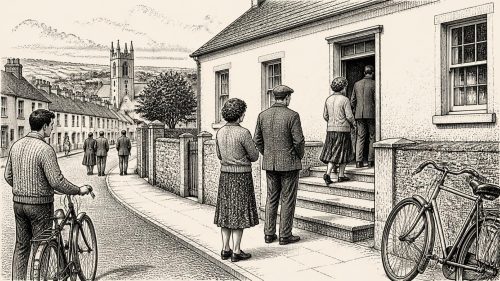
In 1986, Ireland faced economic hardship, social change and intensified Northern conflict. Garret FitzGerald’s coalition confronted debt, unemployment and emigration, while legislation addressed poverty, welfare and public archives. Voters decisively rejected a constitutional amendment permitting limited divorce, though separation and marital breakdown remained prominent realities. The census recorded 3,540,643 people; Self-Aid highlighted mass unemployment, and Knock airport symbolised regional aspiration. Chernobyl contamination fears and the Russborough art theft caused concern. The Anglo-Irish Agreement provoked unionist resistance, culminating in Peter Robinson’s loyalist incursion into Clontibret. Sinn Féin ended Dáil abstention, prompting a republican split, revealing deep enduring strains across Irish society.
Read Article
Archived: 26 September 2026
Abstract
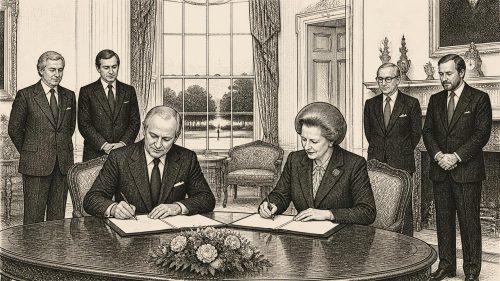
In 1985, the Anglo-Irish Agreement, signed by Garret FitzGerald and Margaret Thatcher at Hillsborough, created a permanent consultative role for Dublin in Northern Ireland affairs while confirming majority consent for constitutional change. It offered constitutional nationalists progress but provoked unionist protest and Fianna Fáil opposition. Violence continued, including major IRA attacks and the killing of a Garda officer. Sinn Féin advanced electorally and revised its Dáil abstention policy. The Republic faced severe unemployment and emigration, alongside the Progressive Democrats’ foundation and liberalised contraception law. Religious controversy, theatre, U2’s Croke Park concert and Cork 800 reflected changing national identities amid hardship.
Read Article




