

Related Archive: Aonach Tailteann

Harps, Hammers and Head-Races

Harps, Hammers and Head-Races

Archived: 9 October 2026

Abstract

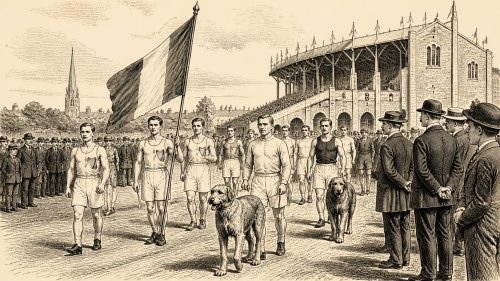
In 1928, the Irish Free State consolidated institutions after civil conflict through constitutional, administrative, economic and cultural measures. The Oireachtas abolished direct-democracy provisions, revised Seanad arrangements, increased old-age pensions and extended regulation of trade, agriculture, welfare, safety and forestry. New Saorstát banknotes and coinage displayed Irish symbols while retaining sterling parity. Construction of the Shannon hydroelectric scheme advertised modernisation before generation began. Major James Fitzmaurice joined the first east-to-west Atlantic flight, and Cosgrave signed the Kellogg–Briand Pact. Tailteann Games, Pat O’Callaghan’s Olympic victory, new Irish-language and cosmopolitan theatres, and gallery legislation promoted cultural visibility despite partition and deep political division.

Read Article

Tobin’s Ultimatum and Tailteann

Tobin’s Ultimatum and Tailteann

Archived: 9 October 2026

Abstract

In 1924, the Irish Free State strengthened its authority after civil war. Government resistance to Liam Tobin’s Army Crisis affirmed civilian control and led towards a smaller professional army. New courts, policing and administrative laws established regular state institutions, while prosecutions for Civil War acts ended. The Boundary Commission began work amid nationalist expectations. Fiscal retrenchment, notably reduced old-age pensions, caused hardship. Railway legislation sought economic integration. Ireland competed independently at the Paris Olympics and hosted the Tailteann Games, projecting cultural confidence despite republican boycott. Irish-language education expanded. The year combined constitutional consolidation, austerity, unresolved partition and contested national self-presentation.

Read Article

