Archived: 16 October 2026
Abstract
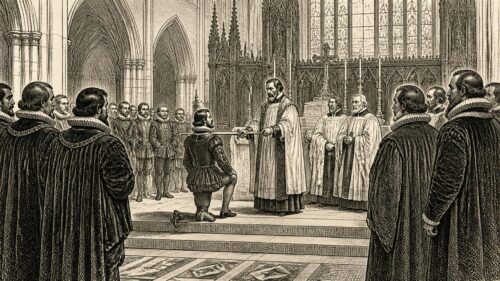
In 1616 Ireland was not at war, yet it was still being remade by the settlement that followed the Nine Years’ War. The disappearance of one old leader, the arrival of a new royal governor, and a civic confrontation in Waterford make the year unusually revealing. They show an Ireland governed from Dublin in the name of James I, but connected also to Rome, London, Spain, the Scottish west coast and the English border counties. They show, too, that conquest had not made questions of land, religion or political allegiance disappear. It had changed the institutions through which those questions
Read Article
Archived: 16 October 2026
Abstract
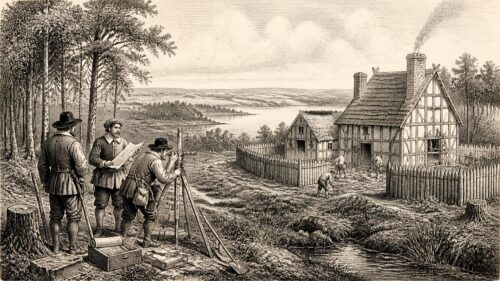
In 1613, the administration intensified its remaking of Ireland through Ulster plantation surveys, municipal charters and a contested parliament. Josias Bodley’s inspection exposed settlement, while London’s Irish Society incorporated Londonderry and developed its county; Belfast and Coleraine gained corporations and parliamentary representation. These boroughs promoted trade and security but supplied Protestant votes. When parliament met in Dublin, conflict over Sir John Davies’s election as Speaker revealed Catholic fears of engineered representation, religious coercion and dispossession. Petitions and a inquiry failed to secure accommodation. Henry Ussher’s death marked change amid conformity. New institutions reshaped land, faith and politics without achieving consent.
Read Article
Archived: 16 October 2026
Abstract
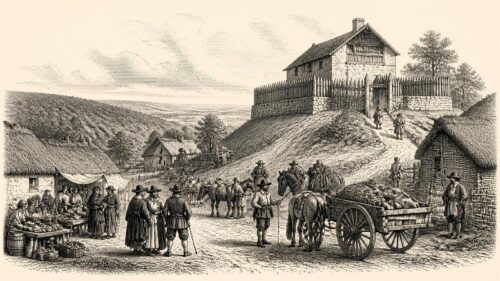
In 1612, Ireland’s post-conquest settlement advanced through coercion, plantation, incorporation and commerce. Catholic bishop Conor O’Devany and priest Patrick O’Loughran were executed in Dublin for treason, exposing official fears of Gaelic exile and foreign Catholic links, while Catholic practice endured. In Ulster, Arthur Chichester’s Plantation redistributed forfeited land, but inadequate building, settlement and defence prompted an inquiry. Dungannon’s charter began a drive creating boroughs to impose English institutions and secure Protestant parliamentary representation; Baltimore and Roscommon reflected its reach. New port books documented trade. John Davies defended conquest, law, property reform and Protestant governance as foundations of lasting English rule.
Read Article
Archived: 17 October 2026
Abstract
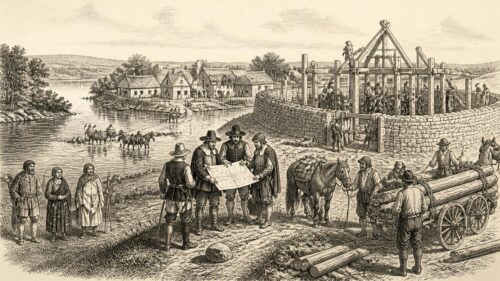
In 1610, James I’s government advanced the Plantation of Ulster, converting confiscated land into surveyed, conditional estates across Armagh, Cavan, Coleraine, Donegal, Fermanagh and Tyrone. English and Scottish undertakers, Crown servitors and selected Irish grantees received terms, while Gaelic communities endured dispossession, tenancy and presence. Building obligations required fortified houses and bawns, and new settlements depended upon labour, materials and commerce. In Cavan, William Bailie’s Tonergie grant and Belturbet’s plantation foundation illustrated emerging centres of authority and trade. Similar title-based policies reached Wexford. Protestant settlement expanded without rapid Catholic conversion, while writers Barnabe Rich and Geoffrey Keating represented contrasting voices.
Read Article
Archived: 17 October 2026
Abstract
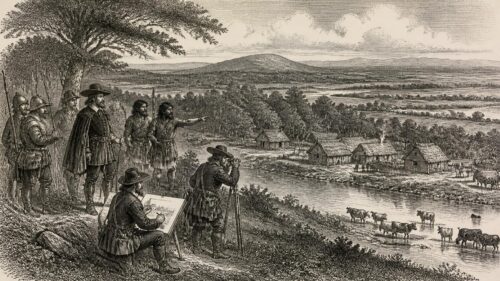
In 1609, following the Flight of the Earls and O’Doherty’s rising, James I’s government surveyed six Ulster counties to prepare their plantation. Sir Josias Bodley’s commissioners recorded townlands, resources, church lands and strategic sites, converting Gaelic territories into proposed estates. The scheme favoured English and Scottish undertakers, servitors and selected Irish proprietors, linking Protestant settlement, fortified building, common law and economic development to security. Most settlers and plantation towns arrived later, while native inhabitants remained but faced mounting insecurity. London was courted for north-western colonisation, Scottish migration encouraged, and soldiers removed. Kilkenny received a city charter, diocesan cathedrals gained status.
Read Article
Archived: 17 October 2026
Abstract
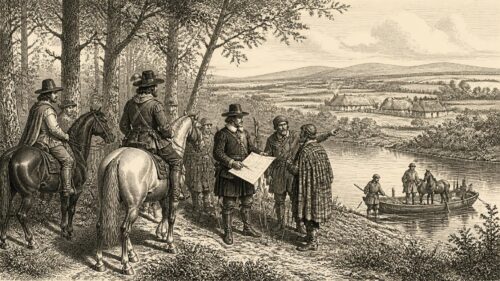
In 1608, Sir Cahir O’Doherty, formerly a Crown ally and lord of Inishowen, rebelled amid disputes over land, authority and Governor George Paulet’s conduct. His followers seized Culmore Fort, stormed, plundered and burned Derry, killing Paulet, but failed to create a wider Ulster coalition. Crown forces suppressed the rising after O’Doherty’s death near Kilmacrennan in July, followed by reprisals and executions. The revolt intensified official distrust of Gaelic landholders and expanded forfeitures. Surveys of six Ulster counties documented lands and resources for redistribution, while planning for plantation advanced. Deaths among exiled Gaelic leaders further weakened resistance, leaving Crown power strengthened.
Read Article
Archived: 17 October 2026
Abstract
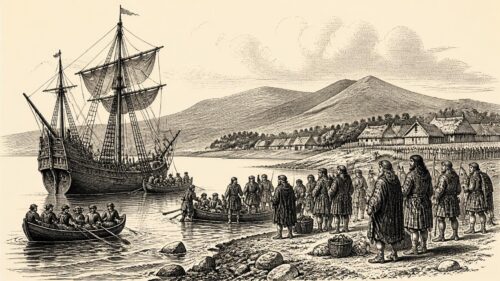
In September 1607, Hugh O’Neill, Ruaidhrí O’Donnell and Cúchonnacht Maguire left Rathmullan with families, followers and clerics, beginning the Flight of the Earls. Their departure reflected insecurity after the Nine Years’ War, as crown law, land investigations and rival Irish claimants undermined Gaelic lordship. Tadhg Ó Cianáin recorded the hazardous voyage: ninety-nine passengers sailed on a French ship, endured storms and shortages, and reached Normandy after twenty-one days. Continental Catholic communities welcomed them, but offered no assured military restoration. Their flight created an opening for stronger crown control in Ulster, preceding, rather than initiating, the later official Plantation of Ulster.
Read Article
Archived: 17 October 2026
Abstract
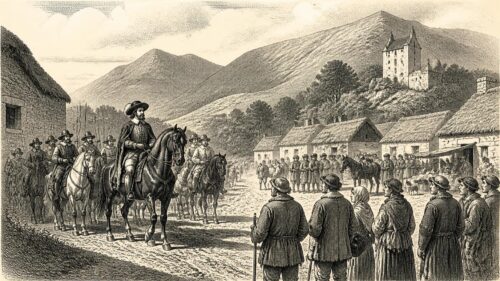
In 1606, the Irish kingdom was being remade less by one spectacular battle than by a series of administrative, legal and social interventions. Three years had passed since the end of the Nine Years’ War, but the settlement that followed remained insecure. Sir Arthur Chichester’s Dublin administration sought to make royal authority visible in places where it had been thin, contested or dependent on military force. A new county was set out in the Wicklow uplands; Scots began arriving in north Down under private landlords; courts travelled through Munster; Catholic townspeople met new pressure to attend Protestant worship; and Gaelic
Read Article
Archived: 17 October 2026
Abstract
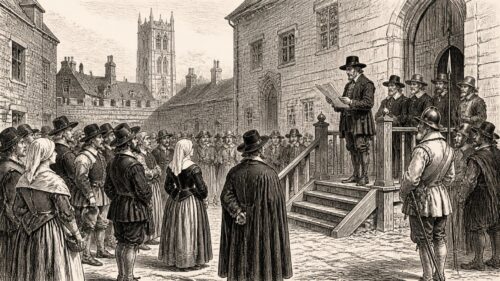
In 1605, Sir Arthur Chichester became lord deputy, seeking to convert victory in the Nine Years’ War into durable royal control through law, land reform, revenue and Protestant conformity. March’s proclamation declared Irish people direct subjects of James I, challenging Gaelic lordship and encouraging fixed rents and tenures. Hamilton’s November grant in County Down foreshadowed Scottish settlement, without constituting the later Ulster Plantation. July’s proclamation expelled Catholic clergy and demanded Church of Ireland attendance, while mandates targeted Dublin Catholics. Administrative changes strengthened Protestant authority. Continental Catholic education and military service across Europe also underscored an uneasy post-war settlement in Ireland.
Read Article
Archived: 17 October 2026
Abstract
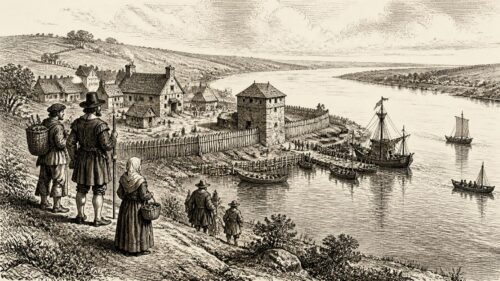
In 1604, after the Nine Years’ War, the crown sought to convert military victory in Ireland into durable administration. James I’s 11 July charter for Derry envisaged a fortified commercial town on the Foyle, combining garrison, trade, law and settlement, though it preceded the later Ulster Plantation. Recovery remained painful amid famine, displacement and contested land rights; Brian Óg O’Rourke’s death symbolised defeated resistance. Knighthoods, patents and territorial grants rewarded cooperative elites while reshaping Gaelic lordship and provoking rivalries. Anglo-Spanish peace reduced prospects of intervention. Arthur Chichester’s appointment and John Davies’s policies foreshadowed stronger crown government, surveys and planned settlement.
Read Article




