Archived: 8 October 2026
Abstract
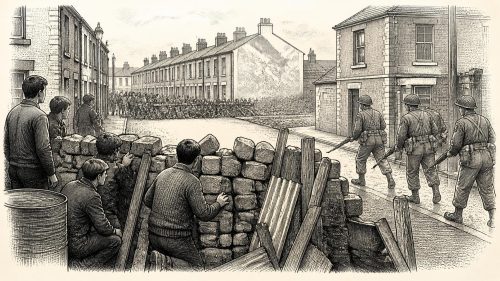
In 1969 civil-rights protests against discrimination in Northern Ireland escalated from the Burntollet attack into communal violence. Reform measures, including universal local-government suffrage, failed to restore confidence, while O’Neill resigned and Chichester-Clark succeeded him. August riots produced the Battle of the Bogside, killings, arson and displacement in Derry and Belfast. British troops deployed, initially welcomed by some Catholics, and Belfast’s peace line embodied deepening segregation. Inquiries urged policing reform and abolition of B-Specials, but loyalist resistance continued. Dublin, strengthened by Fianna Fáil’s election victory, addressed the crisis while pursuing development and EEC membership. The IRA split, confirming a political landscape.
Read Article
Archived: 8 October 2026
Abstract
In 1967, Jack Lynch’s government renewed Ireland’s application to join the European Economic Community, regarding integration as economically necessary despite dependence on Britain; Charles de Gaulle’s November veto of British entry again stalled progress. Free post-primary education began in September, widening access, particularly for rural pupils, while censorship law limited bans’ duration. Northern Ireland’s Civil Rights Association and Derry Housing Action Committee organised demands over discrimination and housing; Lynch nevertheless met Terence O’Neill in Belfast. Dublin hosted Rosc ’67, pairing international modern art with Irish treasures amid controversy over excluding Irish artists. Patrick Kavanagh died, marking transition in Irish culture.
Read Article
Archived: 8 October 2026
Abstract
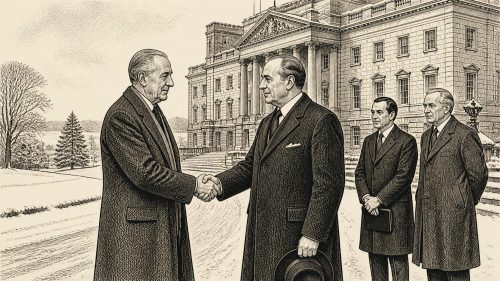
In 1965, Ireland cautiously embraced modernisation while enduring emigration, rural decline and cultural conservatism. Taoiseach Seán Lemass’s unprecedented Stormont meeting with Terence O’Neill opened limited North–South co-operation, followed by O’Neill’s Dublin visit. Casement’s repatriation symbolised improving Anglo-Irish relations. Fianna Fáil retained power in a television-covered election, while the Anglo-Irish Free Trade Area Agreement signalled departure from protectionism despite fears over employment. Legal reforms addressed land and inheritance; vernacular Mass and Galway Cathedral reflected changing Catholic life. Eurovision, the Young Scientist Exhibition and literary events demonstrated wider connections, although a newspaper strike and GAA restrictions exposed persistent constraints within Irish society.
Read Article
Archived: 14 October 2026
Abstract
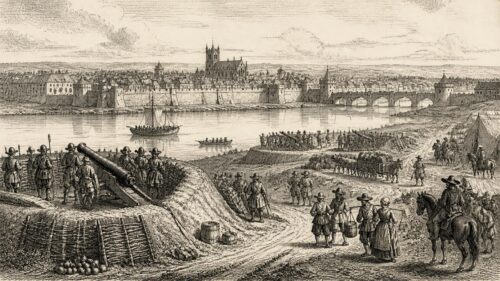
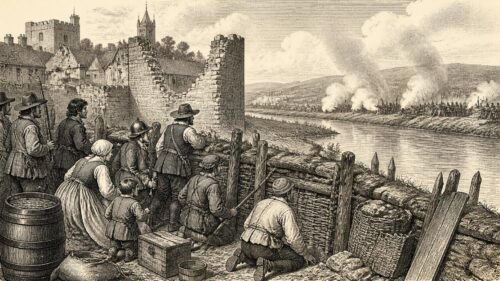
In 1651 Commonwealth forces tightened control of Ireland through campaigns in Munster and Connacht. Henry Ireton besieged Limerick, while Lord Broghill defeated Muskerry’s attempted relief army at Knocknaclashy, ending prospects of substantial support. Blockade, artillery, hunger and disease devastated Limerick’s inhabitants, provoking divisions between defenders, clergy and civilians seeking terms. The city surrendered on 27 October after internal betrayal opened key positions. Although many received quarter, leading military, civic and Catholic figures were excluded, imprisoned or executed. Ireton envisaged a more English, Protestant city. Meanwhile Galway came under blockade, becoming the remaining major centre of organised Catholic and royalist resistance.
Read Article
Archived: 14 October 2026
Abstract
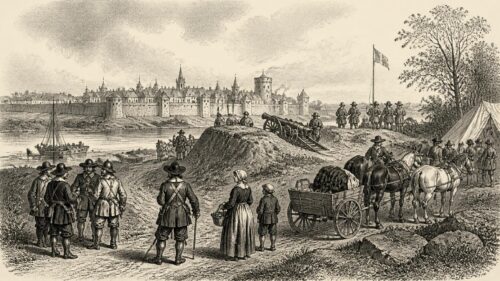
In 1650, the Cromwellian conquest advanced despite continuing resistance in Connacht, Limerick and Ulster. Cromwell’s agreement with Protestant royalists weakened Ormond’s Catholic–royalist coalition. At Clonmel, Hugh Dubh O’Neill’s improvised inner defence repelled a costly assault, although shortages enabled the garrison’s escape and the town’s surrender. Broghill defeated a relief force at Macroom, while Scarrifholis destroyed the Ulster Catholic army and led to Heber MacMahon’s execution. After Cromwell departed, Henry Ireton captured plague-stricken Waterford and Duncannon, pressured Athlone and failed before Limerick. Clergy repudiated Ormond; garrisons, blockade, disease and resource seizures established groundwork for further conquest and settlement in Ireland thereafter.
Read Article
Archived: 14 October 2026
Abstract
In 1649, the second Ormond peace united Confederate Catholics and royalists against the English Commonwealth, but exclusion of Owen Roe O’Neill exposed deep divisions. Ormond’s defeat by Michael Jones at Rathmines on 2 August secured Dublin for parliament, enabling Oliver Cromwell’s landing with the New Model Army and naval support. At Drogheda in September and Wexford in October, stormings produced exceptional killings, including civilians and clergy, and devastated resistance and trade. O’Neill’s death further weakened opposition. Cromwell failed to take Waterford before winter, but the year transformed the war, creating conditions for the later Cromwellian conquest and settlement in Ireland.
Read Article

Archived: 15 October 2026
Abstract
In 1648, the Catholic Confederation of Ireland fractured over the Dungarvan truce with Murrough O’Brien, Lord Inchiquin, newly aligned with Charles I. Exhaustion after 1647 defeats led moderates to seek a royalist coalition and negotiations with Ormond, despite Inchiquin’s destructive record. Papal nuncio Rinuccini condemned the truce, censuring supporters and joining Owen Roe O’Neill’s resistance. Rival Confederate armies campaigned without decisive battle, burdening civilians suffering requisition and scarcity. The Kilkenny assembly marginalised O’Neill, while Ormond’s return and Rome’s limited aid strengthened accommodation. O’Neill’s ceasefire with parliamentarian Michael Jones revealed division. Winter brought coalition, not peace, before the 1649 Ormond settlement.
Read Article
Archived: 15 October 2026
Abstract
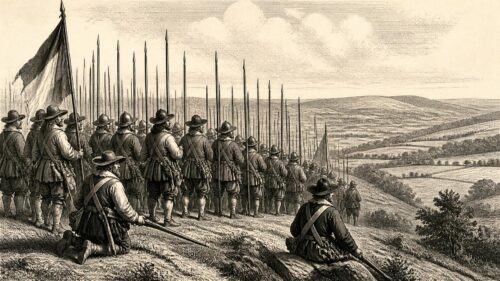
In 1646, the Catholic Confederation reached its military zenith but became divided over peace with Charles I. Owen Roe O’Neill’s victory over Scottish Covenanters at Benburb, Preston’s Connacht operations, and the capture of Bunratty strengthened hopes of securing Catholic religious and political guarantees. The First Ormond Peace, agreed secretly with the royalist lord lieutenant, offered insufficient protections and provoked clerical, military and popular resistance. Papal nuncio Giovanni Battista Rinuccini led opposition, overthrowing the agreement and remodelling Confederate government. A failed advance on Dublin exposed rivalries, weak supply and divided command. Kilkenny’s Catholic print culture also articulated suffering, rights and legitimacy.
Read Article

Archived: 15 October 2026
Abstract
In 1644, Confederate Ireland governed extensive territory from Kilkenny while negotiating with Charles I’s administration for Catholic worship, property, officeholding and parliamentary freedoms. Ormond pursued peace, but no settlement emerged. A major Confederate expedition under Castlehaven and Owen Roe O’Neill failed to dislodge Robert Monro’s Covenanter forces in Ulster, exposing divisions and supply weaknesses. Meanwhile, Alasdair MacColla’s troops crossed to Scotland to support royalists, prompting Westminster’s no-quarter ordinance. In Munster, Lord Inchiquin repudiated the cessation, joined Parliament, and expelled Catholics from Cork, Youghal and Kinsale. Trade continued amid war, but requisitioning, displacement and insecurity afflicted civilians deeply throughout the island.
Read Article

Archived: 15 October 2026
Abstract
In October 1641, Catholic grievances over plantation, exclusion and religious constraints combined with Stuart political instability to trigger rebellion in Ireland. A planned seizure of Dublin Castle failed, but Sir Phelim O’Neill’s Ulster rising captured Dungannon and Charlemont. His proclamation professed loyalty to Charles I and protection for Protestants, while a later forged royal commission fuelled confusion. The conflict brought flight, plunder, killings, dispossession and winter hardship, alongside retaliatory violence. Testimony in the 1641 Depositions records crisis but requires critical reading. Fighting spread towards Dublin, Leinster and Munster, intensified English and Scottish political conflict, and left Ireland fractured without settlement.
Read Article
Archived: 16 October 2026
Abstract
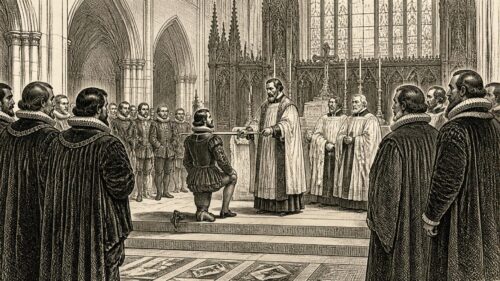
In 1616, Ireland remained shaped by the settlement following the Nine Years’ War despite the absence of nationwide warfare. Hugh O’Neill’s death in Rome on 20 July marked the passing of a figure in resistance and exile. A new royal governor and confrontation in Waterford illuminated continuing disputes over government, religion and civic authority. Ireland’s political life connected Dublin with Rome, London, Spain and Scotland, rather than operating within isolated borders. Conquest had altered the institutions through which allegiance and land were contested without settling those questions. The year demonstrates the persistence of uncertainty within an increasingly organised royal kingdom.
Read Article
Archived: 16 October 2026
Abstract
In 1615, Chichester’s government confronted the abortive Macosquin conspiracy amid Ulster Plantation’s insecure transformation. Alleged Gaelic plotters lacked arms, coordination and foreign support, yet officials feared renewed war and used torture, trials and executions; eleven of seventeen defendants were acquitted. Plantation surveys revealed incomplete settler obligations and continuing dependence on Irish tenants, while landholding and local life were nonetheless changing profoundly. The final 1613 parliament passed a highways measure before dissolution, as proclamations regulated markets and currency. Church convocation adopted 104 strongly Calvinist Irish Articles, probably shaped by James Ussher, while visitation exposed the established church’s weak reach. Coercion persisted.
Read Article
Archived: 17 October 2026
Abstract
In 1608, Sir Cahir O’Doherty, formerly a Crown ally and lord of Inishowen, rebelled amid disputes over land, authority and Governor George Paulet’s conduct. His followers seized Culmore Fort, stormed, plundered and burned Derry, killing Paulet, but failed to create a wider Ulster coalition. Crown forces suppressed the rising after O’Doherty’s death near Kilmacrennan in July, followed by reprisals and executions. The revolt intensified official distrust of Gaelic landholders and expanded forfeitures. Surveys of six Ulster counties documented lands and resources for redistribution, while planning for plantation advanced. Deaths among exiled Gaelic leaders further weakened resistance, leaving Crown power strengthened.
Read Article
Archived: 17 October 2026
Abstract
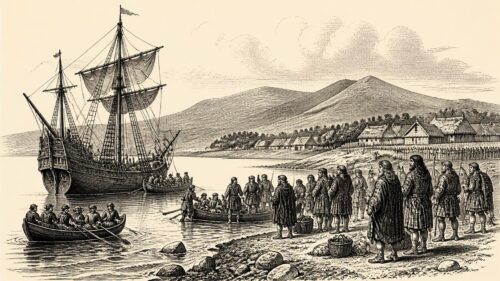
In September 1607, Hugh O’Neill, Ruaidhrí O’Donnell and Cúchonnacht Maguire left Rathmullan with families, followers and clerics, beginning the Flight of the Earls. Their departure reflected insecurity after the Nine Years’ War, as crown law, land investigations and rival Irish claimants undermined Gaelic lordship. Tadhg Ó Cianáin recorded the hazardous voyage: ninety-nine passengers sailed on a French ship, endured storms and shortages, and reached Normandy after twenty-one days. Continental Catholic communities welcomed them, but offered no assured military restoration. Their flight created an opening for stronger crown control in Ulster, preceding, rather than initiating, the later official Plantation of Ulster.
Read Article
Archived: 17 October 2026
Abstract
In 1605, Sir Arthur Chichester became lord deputy, seeking to convert victory in the Nine Years’ War into durable royal control through law, land reform, revenue and Protestant conformity. March’s proclamation declared Irish people direct subjects of James I, challenging Gaelic lordship and encouraging fixed rents and tenures. Hamilton’s November grant in County Down foreshadowed Scottish settlement, without constituting the later Ulster Plantation. July’s proclamation expelled Catholic clergy and demanded Church of Ireland attendance, while mandates targeted Dublin Catholics. Administrative changes strengthened Protestant authority. Continental Catholic education and military service across Europe also underscored an uneasy post-war settlement in Ireland.
Read Article
Archived: 17 October 2026
Abstract
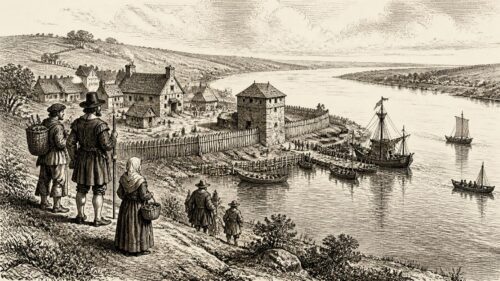
In 1604, after the Nine Years’ War, the crown sought to convert military victory in Ireland into durable administration. James I’s 11 July charter for Derry envisaged a fortified commercial town on the Foyle, combining garrison, trade, law and settlement, though it preceded the later Ulster Plantation. Recovery remained painful amid famine, displacement and contested land rights; Brian Óg O’Rourke’s death symbolised defeated resistance. Knighthoods, patents and territorial grants rewarded cooperative elites while reshaping Gaelic lordship and provoking rivalries. Anglo-Spanish peace reduced prospects of intervention. Arthur Chichester’s appointment and John Davies’s policies foreshadowed stronger crown government, surveys and planned settlement.
Read Article
Archived: 17 October 2026
Abstract
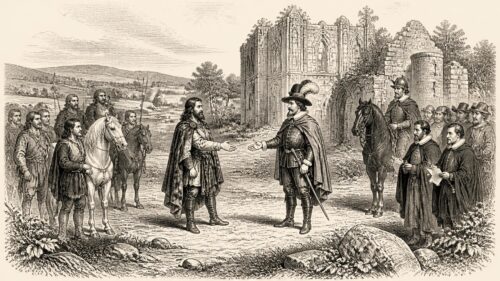
In 1603, Hugh O’Neill’s submission at Mellifont formally ended the Nine Years’ War, as James I succeeded Elizabeth I. O’Neill retained lands and title but surrendered key Gaelic powers, while Ulster faced recovery from severe military devastation and local rivalries. Southern and western Catholic towns, expecting religious toleration, resisted Protestant worship and delayed James’s proclamation; Crown forces compelled their submission without renewed general war. Royal patents in Ulster strengthened selected local lords directly under the Crown, weakening traditional overlordship. Trinity College’s expanding library reflected developing Protestant institutions. Peace ended major warfare but left land, religion, authority and political allegiance unresolved.
Read Article

Archived: 17 October 2026
Abstract
In 1601, Spain’s landing at Kinsale internationalised the Nine Years’ War, offering Hugh O’Neill and Hugh Roe O’Donnell support but far from their Ulster bases. Don Juan del Águila’s 3,300 troops fortified Kinsale and Rinncorran, while Mountjoy and Carew imposed a land and naval siege. Elsewhere, crown garrisons, allied Irish lords, arrests and campaigning weakened resistance, while civilians endured plunder, requisitioning and famine. O’Donnell and O’Neill marched south to relieve the town, threatening besiegers’ supplies. A poorly coordinated Christmas Eve attack collapsed in disorder on 24 December, routing the confederates. O’Donnell sailed for Spain; Mountjoy regained initiative, although war continued.
Read Article
Archived: 17 October 2026
Abstract
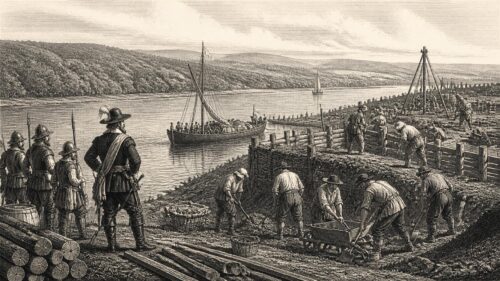
In 1600, the Nine Years’ War shifted strategically without decisive resolution. Lord Mountjoy and Sir George Carew restored English military organisation and recovered much of Munster through garrisons, raiding and coercion, while Ormond’s capture exposed continuing instability. Hugh O’Neill’s southern expedition demonstrated confederate reach but cost him Hugh Maguire and intensified internal disputes. Sir Henry Docwra’s landing at Lough Foyle created a vulnerable but enduring northern bridgehead, strengthened by Niall Garbh O’Donnell’s defection. At Moyry Pass, O’Neill blocked Mountjoy’s advance into Ulster. By year’s end, pressure on the confederacy had grown, making Spanish intervention at Kinsale increasingly urgent in 1601.
Read Article
Archived: 17 October 2026
Abstract
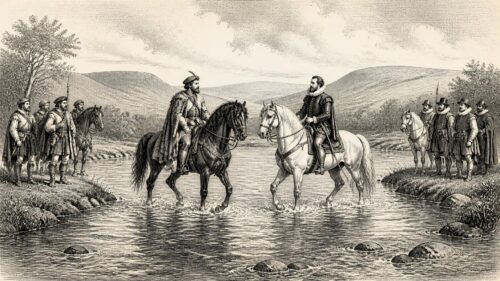
In 1599, Elizabeth I sent the earl of Essex to Ireland with an unprecedented army to suppress the Nine Years’ War. Despite capturing Cahir Castle and campaigning through Munster, his forces were weakened by supply difficulties, resistance, sickness and garrison demands. Sir Conyers Clifford’s defeat and death at Curlew Pass strengthened Hugh Roe O’Donnell’s confederates. Essex’s September river meeting with Hugh O’Neill at Bellaclinthe produced only a temporary truce. Essex then left Ireland without permission, provoking a court crisis. O’Neill subsequently appealed to Pale Catholics, while the year demonstrated that Tudor authority faced intertwined military, religious, political and economic challenges.
Read Article
Archived: 17 October 2026
Abstract
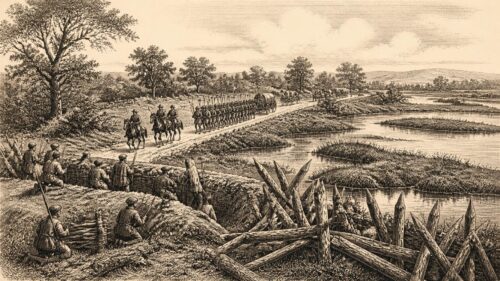
In 1598, the Battle of the Yellow Ford transformed the Nine Years’ War into a crisis for English government in Ireland. On 14 August, a crown army suffered devastating defeat near the River Blackwater in County Armagh. Confederates associated with Hugh O’Neill and Hugh Roe O’Donnell gained confidence, while royal forward positions became harder to maintain. Revolt widened beyond Ulster into Leinster and Munster. The outcome emerged from a year combining warfare, negotiation and political manoeuvre, rather than inevitable rebel victory. Yellow Ford’s significance lay in its consequences: weakened royal strategy, strengthened resistance and an expanding challenge to crown authority.
Read Article
Archived: 17 October 2026
Abstract
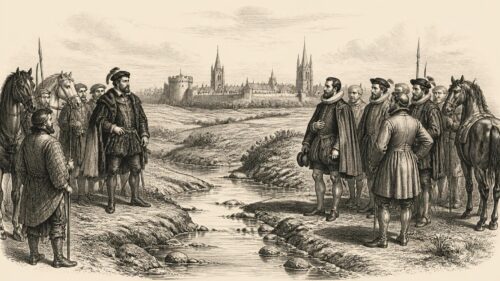
In 1597, Ireland’s war exposed the Tudor administration’s logistical and military weakness while Hugh O’Neill’s confederacy extended its influence. A gunpowder explosion in Dublin killed 126 people, damaged the capital’s supply system, and highlighted insecure wartime labour and logistics. The Crown killed Fiach MacHugh O’Byrne in Glenmalure, weakening but not pacifying Leinster. Hugh Roe O’Donnell raided Connacht, reaching Athenry and Galway. Lord Burgh’s Ulster offensive failed to unite royal forces, although Blackwater Fort was re-established; his death worsened the crisis. Irish victories near Carrickfergus and Daingean compelled talks outside Dundalk. O’Neill accepted a two-month cessation, gaining recognition without surrendering authority.
Read Article
Archived: 17 October 2026
Abstract
In 1596, attempts to settle the Ulster conflict through pardons and limited autonomy failed as Hugh O’Neill and Hugh Roe O’Donnell linked territorial claims with Catholic liberty. Spanish envoy Alonso de Cobos met them at Lifford, prompting an appeal to Philip II for troops and a Habsburg ruler, and tying Irish resistance to European war. In Connacht, Norreys’s large expedition stalled beside the River Robe when provisions ran out, revealing the importance of supply and alliances. Succession disputes, raids, coercive administration and religious tensions widened disorder across Ireland. Changes in Connacht’s government and continued local rivalries failed to restore stability.
Read Article
Archived: 17 October 2026
Abstract
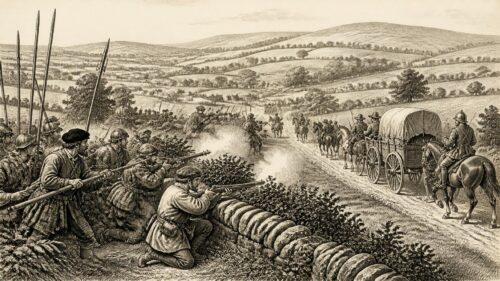
In 1595, the Nine Years’ War became an open challenge to Elizabeth I’s rule as Hugh O’Neill and Hugh Roe O’Donnell expanded resistance across Ulster and beyond. After the Blackwater fort’s seizure, Crown attempts to sustain exposed garrisons faltered. At Clontibret, O’Neill’s forces badly mauled Sir Henry Bagenal’s returning convoy through disciplined firearms, fieldworks and mobile warfare, though they did not destroy it. O’Donnell’s campaigns destabilised Connacht, using raids, hostages and alliances to extend influence. Fighting also ravaged Wicklow and civilian communities. Despite negotiation and continued Crown control of towns, 1595 established a broader, organised and destructive conflict in Ireland.
Read Article
Archived: 17 October 2026
Abstract
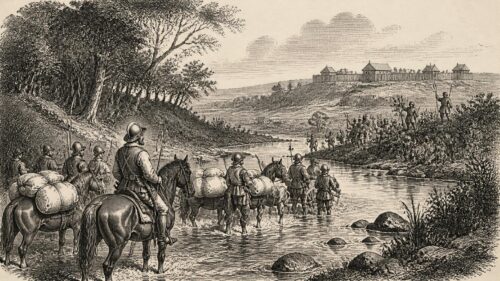
In 1594, fighting around Enniskillen demonstrated the dangers of extending crown government into Fermanagh through garrisons and military supply. Hugh Maguire resisted threats to his lordship from sheriffs, fortified positions and prospective land settlement. Allies included Hugh Roe O’Donnell and men associated with Hugh O’Neill, linking local resistance to Ulster networks. Crown capture of Enniskillen created a vulnerable position that required reinforcement. Irish success at the Arney River exposed the weaknesses of that strategy. Often treated as the opening year of the Nine Years’ War, 1594 reveals a conflict whose immediate causes remained rooted in regional power and contested jurisdiction.
Read Article

Archived: 17 October 2026
Abstract
In 1593, resistance to the English appointment of Captain Humphrey Willis as sheriff of Fermanagh brought Hugh Maguire into conflict with crown authority. Supported by Cormac MacBaron O’Neill, Hugh Roe O’Donnell and Brian Óg O’Rourke, Maguire’s rising spread through Ulster and Connacht amid disputes over rents, cattle and jurisdiction. Meanwhile, Hugh O’Neill assumed effective rule of Tír Eoghain while maintaining loyalty to Elizabeth I. Catholic hopes of Spanish intervention accompanied the unrest, although no force arrived. Sir Henry Bagenal’s October expedition defeated Maguire at Erne Ford and devastated Fermanagh, but failed to establish lasting control, foreshadowing the Nine Years’ War.
Read Article

Archived: 17 October 2026
Abstract
In 1592 Hugh Roe O’Donnell escaped Dublin Castle, where he had been held to restrain Ulster alliances, and returned to Tír Chonaill. Supported by his mother Iníon Dubh, Scottish connections and Hugh O’Neill, he became The O’Donnell, resisted garrisons and negotiated a fragile submission at Dundalk. His revival intensified conflicts within Ulster and exposed limits of crown authority. In Dublin, Elizabeth I chartered the College of the Holy and Undivided Trinity on the former All Hallows priory, to educate Protestant clergy and officials. Meanwhile, Catholic diplomacy with Spain heightened anxieties. These developments foreshadowed wider political, religious and military confrontation ahead.
Read Article

Archived: 17 October 2026
Abstract
In 1591, Tudor authority pressed unevenly upon Gaelic Ireland through military, legal and administrative measures. Brian na Múrtha O’Rourke, lord of West Bréifne, fled to Scotland after invasion, was surrendered to England, tried for treason and executed at Tyburn, demonstrating the crown’s expanding reach. Monaghan’s contested settlement and mass pardons revealed efforts to reorganise lordship and land. Hugh O’Neill’s marriage to Mabel Bagenal intensified Ulster rivalries. Catholic appointments and continental contacts sustained religious networks and official fears of foreign intervention. Annalistic deaths and praise for lords preserved Gaelic values. Although no rebellion began, distrust and dispossession sharpened conditions preceding war.
Read Article

Archived: 17 October 2026
Abstract
In 1590, Hugh Roe MacMahon’s execution after a manipulated Monaghan trial signalled the Tudor government’s determination to replace Gaelic lordship with courts, garrisons and Crown-controlled landholding. Sir Richard Bingham’s campaigns in Connacht and Breifne secured hostages, devastated O’Rourke territory and established a strategic fort, though resistance revived. In Tyrconnell, Donnell O’Donnell’s death at Doire Leathan strengthened Hugh Roe’s eventual claim while he remained imprisoned. Sorley Boy MacDonnell died, prompting renewed territorial conflict, and Hugh O’Neill eliminated a dynastic rival. Despite warfare, learned culture and commercial development persisted. Ireland remained politically fragmented, as Crown expansion encountered resilient local powers across Ireland.
Read Article
Archived: 17 October 2026
Abstract
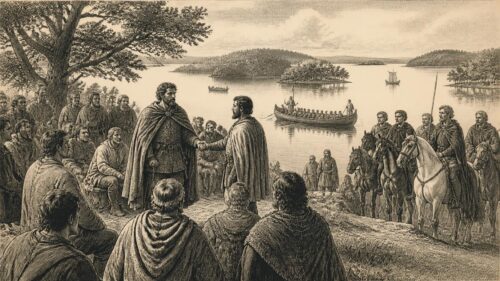
In 1589, Cú Chonnacht Óg Maguire’s death triggered a Fermanagh succession contest, resolved at Sciath Ghabhra when Donnell O’Donnell backed his son Hugh, reinforcing north-western alliances. MacMahon succession rivalry in Monaghan invited intervention by Lord Deputy Sir William Fitzwilliam, while Hugh O’Neill consolidated his position. In Connacht, opposition to Sir Richard Bingham’s Composition produced raids, government defeat, reprisals, an inquiry, Bingham’s acquittal and renewed campaigning. Munster commissioners assessed the incomplete plantation of confiscated Desmond lands. Ecclesiastical appointments and annalistic obituaries reflected enduring Catholic, Gaelic learned and social traditions. Together, these events exposed conflicts over lordship, land, royal administration and authority.
Read Article





