Archived: 12 October 2026
Abstract
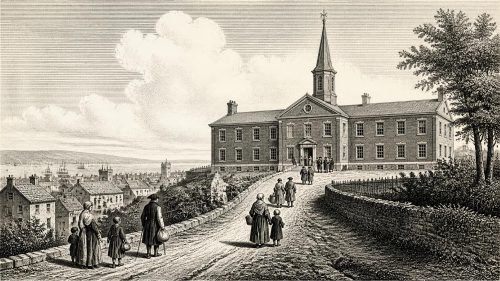
In 1774, Ireland saw developments reflecting urban growth, religious inequality and economic ambition. Belfast’s Charitable Society was incorporated, opened its Poor House and Infirmary, later Clifton House, and began admitting residents, providing elite-supervised relief amid poverty generated by commercial expansion. Parliament allowed Catholics to swear allegiance instead of supremacy, but preserved penal restrictions on property, education and political participation. In Armagh, Archbishop Richard Robinson’s infirmary and Royal School extended an Anglican institutional landscape. Legislation promoted Lagan navigation to link Belfast with inland trade, despite difficulties. Cultural landmarks included Thomas Leland’s History of Ireland, Oliver Goldsmith’s death, and Francis Beaufort’s birth.
Read Article

Archived: 12 October 2026
Abstract
In 1771, Edmund Sexten Pery’s election as Speaker signalled Dublin Castle’s growing ability under Lord Lieutenant George Townshend to organise parliamentary support, though alliances remained fragile. The session beginning that autumn introduced improvement measures, including limited Catholic leases of reclaimed bog, later enacted in 1772. Belfast began building its poor-house and infirmary, later Clifton House, reflecting commercial growth, charitable discipline and medical provision. Archbishop Richard Robinson founded Armagh Public Library, extending learning beyond Dublin while expressing Church of Ireland authority. Grain imports and proposals for canals, navigation, streets, hospitals and reclamation revealed an economy dependent on trade, labour, uneven improvement.
Read Article
Archived: 12 October 2026
Abstract
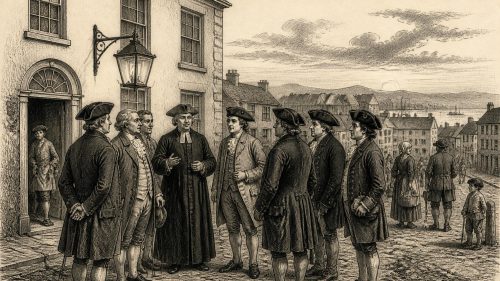
In 1752 Ireland adopted the Gregorian calendar, so Wednesday 2 September was followed by Thursday 14 September, while the civil year now began on 1 January. The reform affected administration, commerce, courts and worship, though no evidence supports later tales of calendar riots. Commissioners for inland navigation were incorporated, signalling ambitions to improve trade despite difficult travel. Dublin gained Ireland’s first purpose-built Methodist chapel; Killaloe and Kilfenora bishoprics were united. Belfast merchants founded the Charitable Society to address poverty amid commercial expansion tied to Atlantic slavery. Under Protestant political dominance, Catholics remained excluded and inequalities persisted deeply across Irish society.
Read Article




