

Related Archive: Cashel History
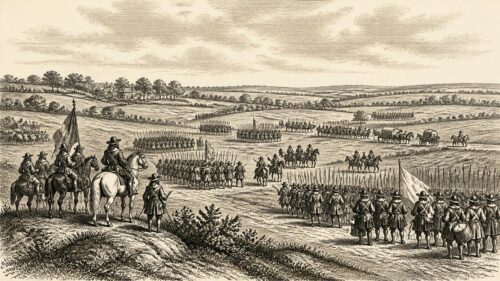
Dungan’s Hill and Cashel
In 1647, the Catholic Confederation’s position collapsed after political division, logistical weakness and military reverses. Parliament gained Dublin when Ormond transferred the city in June, providing a strategic base. Michael Jones destroyed Thomas Preston’s Leinster army at Dungan’s Hill in August, ending any prospect of taking Dublin. In Munster, Inchiquin’s forces devastated communities and stormed Cashel, killing defenders and civilians, plundering the religious complex and deepening Catholic fears. In November, Inchiquin defeated Taaffe’s army at Knocknanuss, killing Alasdair MacColla. Although Kilkenny and O’Neill’s Ulster army survived, these disasters encouraged royalist negotiation and transformed Confederate ambitions into a struggle for survival.
View Record
Hamilton’s Cashel and Ranelagh
In 1623, Lord Deputy Viscount Falkland sought to reduce Irish administration’s costs while reinforcing royal control over revenue, land and religion. Correspondence recorded poverty and efforts to improve customs income. June orders promoted Protestant conformity through oaths, regulated school staff and action against recusants, though obedience remained uneven. Malcolm Hamilton’s consecration as Church of Ireland archbishop of Cashel demonstrated reliance on Protestant networks shaped by Ulster settlement; James Ussher’s republished scholarship supported confessional claims. In October, commissioners investigated timber waste in crown-claimed Ranelagh, linking woodland, survey, law and income. These measures reveal tensions beneath apparent peace, not a settled kingdom.
View Record