

Related Archive: Clonmacnoise History

Clonmacnoise and Belfast

Clonmacnoise and Belfast

Archived: 18 October 2026

Abstract

In 1552 Tudor authority in Ireland expanded through military expeditions, administrative reforms, currency measures and ecclesiastical appointments, yet remained limited and contested. Soldiers from Athlone garrison plundered Clonmacnoise, stripping its churches of bells, books, images and valuables. In Ulster, Sir James Croft’s campaigns against O’Neill forces and Scottish allies reached Belfast, where a castle was fortified, but gained neither peace, hostages nor submission. Financial difficulties prompted currency reform and mining inquiries. Protestant nominees Hugh Goodacre and John Bale were selected for Armagh and Ossory, although religious change remained uneven. Croft’s departure brought joint rule by Thomas Cusack and Gerald Aylmer.
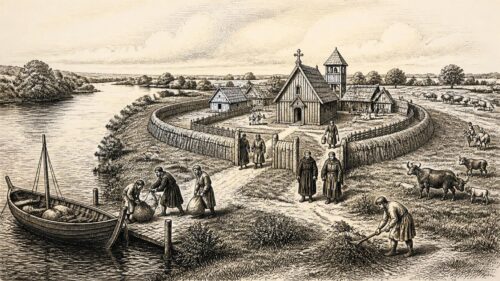

Read Article

Osséne of Clonmacnoise

Osséne of Clonmacnoise

Archived: 13 October 2026

Abstract

In 706, Irish annals recorded deaths rather than events, revealing ecclesiastical and political transitions amid uncertain chronology. Osséne son of Gallust, abbot of Clonmacnoise, died, affecting a Shannon monastery sustained by rural production, river movement and communities. Flann Febla, abbot of Armagh, also died, marking change at Ireland’s Patrician church. Conchobor, king of Cenél Cairpri, died or was killed, though sources conflict. Notices of Bruide son of Derile suggest Irish Sea connections, while Cellan son of Sechnusach, the learned, reflects valued scholarship despite disputed dating. The sparse record depicts rural, plural, Christian Ireland structured by kinship, churches and regional power.

Read Article

