Archived: 26 October 2026
Abstract
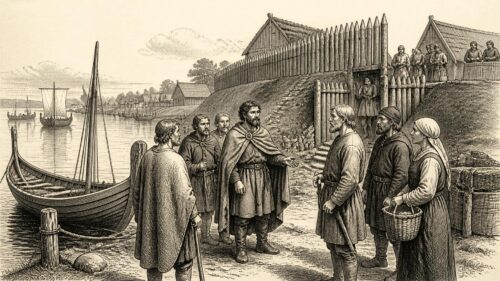
In 972, Mathgamain son of Cennétig led a Munster coalition that imposed three ordinances on Limerick: expelling Norse officials, driving foreigners from the town, and burning their fortress. The action transferred control of a strategic commercial centre without ending Scandinavian influence. Elsewhere, Domnall Claen treacherously killed Murchad, overking of Leinster; Áed of Ulaid died in battle against Dál nAraide; and Domnall Ua Néill burned and plundered major churches. Tuathal, abbot of Clonmacnoise, died. These events demonstrate Ireland’s fragmented politics, where dynastic rivalry, alliances, military force, resources, routes and ecclesiastical institutions shaped contested regional power, although annalistic dating requires careful interpretation.
Read Article
Archived: 26 October 2026
Abstract
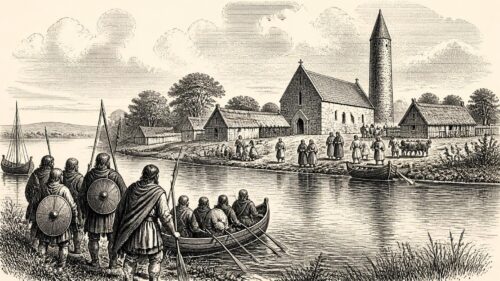
In 959, Irish annals record Munster men plundering Clonmacnoise, a wealthy ecclesiastical settlement strategically placed on the Shannon. The sources provide no commander, destruction or link to the killing of Dub dá Bairenn, king of Cashel, by his own people, but together indicate instability within Munster. In the north, Domnall son of Muirchertach led an expedition into Dál nAraidi and took hostages, demonstrating lordship through coercion. Deaths of senior churchmen, including successors of Caemgen and Colum Cille and Lismore's superior Maenach, marked important ecclesiastical successions. Differing annalistic dates require caution, although the evidence supports securely assigning these events to 959.
Read Article
Archived: 27 October 2026
Abstract
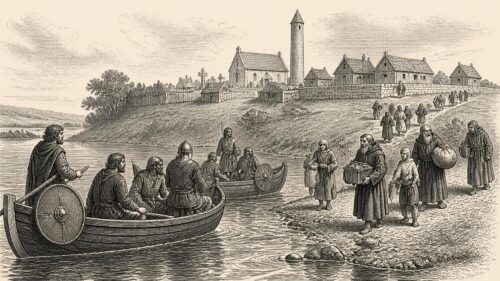
In 953, Clonmacnoise, a wealthy ecclesiastical settlement and strategic Shannon crossroads, was plundered by Munstermen accompanied by foreigners from Limerick. Although annals differ in dating and identify no commander, the raid demonstrates cooperation between Gaelic rulers and Norse-Gaelic urban forces, rather than a simple Irish-Viking division. It exposed the vulnerability of churches whose wealth, communications and prestige made them political targets. Congalach mac Máel Mithig’s high kingship provided precedence but limited practical control, while local conflict continued elsewhere. Annals also note dynastic and ecclesiastical deaths, including Congalach’s wife Eithne, illustrating interconnected political, religious and regional networks in tenth-century Ireland then.
Read Article
Archived: 28 October 2026
Abstract
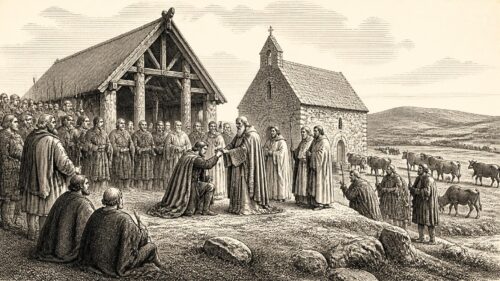
For Ireland, 861 is a year best approached through a small number of sharply focused annalistic notices rather than a continuous national narrative. The surviving records do not permit a day-by-day reconstruction, and their year-numbering sometimes differs between compilations. Yet several entries securely associated with this year illuminate the pressures shaping Irish political life: a change of ruler at Cashel, contention in the midlands involving Áed son of Niall and foreign allies, a victory claimed for the high king Máel Sechnaill, and the continued importance of royal assemblies. Together they show an island governed not by a single settled state,
Read Article
Archived: 30 October 2026
Abstract
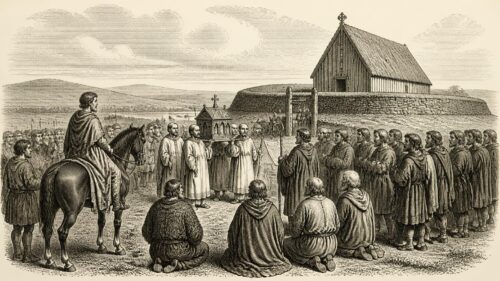
In 793, Ireland’s annals depict religious institutions as instruments of regional power rather than a unified kingdom. Muirgius of Connacht supported the promulgation of Comán’s law, while Munster’s Artrí was formally acknowledged as king alongside Ailbe’s law, probably strengthening Emly’s ecclesiastical claims. Armagh suffered the death of abbot Dub dá Leithe, other notable obituaries, and violent violation by Uí Chremthainn, followed by restoration. Tóla’s relics were taken on circuit, extending sacred authority beyond monasteries. In south-west Munster, the king of Corcu Duibne died at Conchenn. Chronological uncertainties remain, and however no securely recorded Viking raid occurred in Ireland that year.
Read Article
Archived: 30 October 2026
Abstract
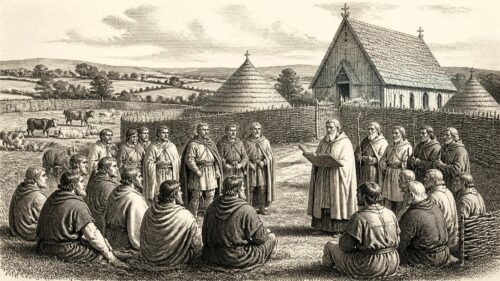
In 784, the Annals of Inisfallen record that the Law of Ailbe operated throughout Munster, indicating a provincial ecclesiastical settlement backed by saintly and likely secular authority. No surviving text identifies its rules, sponsors or proclamation, but such cána could protect churches, regulate obligations, secure revenues and reinforce peace. The measure reflected Emly’s importance and Munster’s contested kingship, without proving any specific ruler’s involvement. Notices of abbots’ deaths at Clonmacnoise and Terryglass reveal interconnected religious institutions. On 27 November, Irish-born Virgil of Salzburg died, demonstrating Irish ecclesiastical influence abroad. Together, these events illuminate sacred authority, political negotiation and rural obligations.
Read Article
Archived: 30 October 2026
Abstract
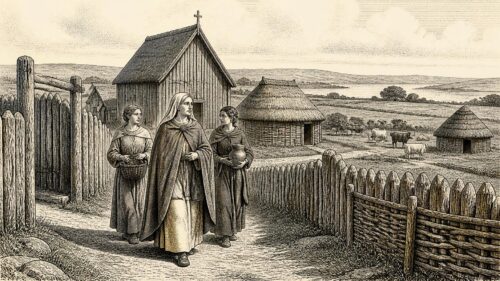
In 775, Irish annalistic evidence records deaths of ecclesiastical and learned figures, including Scannal, Maicníad, Augustin, Adarchu and Forbflaith, abbess of Clonbroney, alongside a battle at Uilleann Guaire that killed Flann son of Cellach and Scannlán son of Fínnechta. Dates and details remain uncertain because medieval annalistic chronologies differ. The year also saw Donnchad Midi, king of Tara, devastate Munster, demonstrating coercive but limited overlordship. These notices reveal interconnected political, religious and intellectual communities, in which churches held economic and social authority, women could lead religious houses, and rural households locally sustained kingdoms and monasteries through labour, rents, and service.
Read Article
Archived: 2 November 2026
Abstract
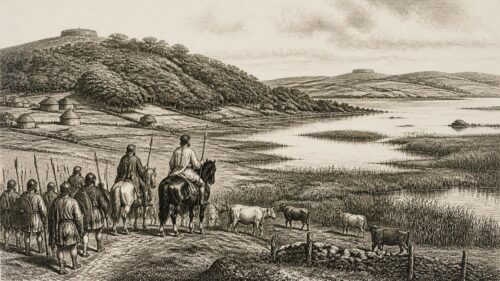
In 665 CE, Ireland stood in the shadow of a grave mortality while conflict still continued between powerful regional groups. The clearest event placed directly in this calendar year is the battle of Loch Fén, recorded by the Annals of Inisfallen as a fight between the men of Munster and Connacht in which Talamnach, son of Laidcenn, was killed. The notice is stark: it supplies neither a victor nor a cause. Yet its very brevity is revealing. Even amid epidemic loss, kings and war-bands remained able to mobilise, cross regional boundaries and contest territory or political influence. The battle also
Read Article





