The Penny Rent
Archived: 11 October 2026
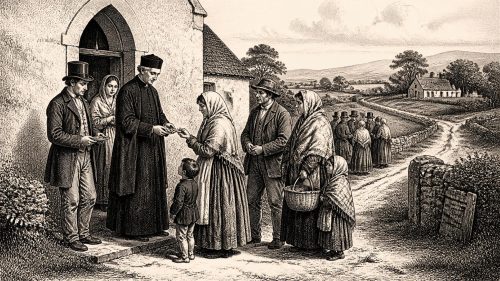
In 1824, Ireland saw organisational developments rather than decisive settlement or revolt. Daniel O’Connell’s Catholic Association introduced the penny Catholic Rent, linking parish subscriptions, clerical networks and constitutional agitation for emancipation. Tithe commutation and applotment sharpened rural grievances, amid official concern about agrarian secret societies. Parliament authorised a uniform survey and valuation, initiating the Ordnance Survey’s mapping. Economic and administrative modernisation included Belfast’s joint-stock Northern Banking Company, Donaghadee harbour planning, and standardised weights and measures. Belfast’s Academical Institution, Croker’s Irish travel and folklore publication, and Bishop Kernan’s succession illustrated expanding educational, cultural and Catholic institutional life, despite inequality and exclusion.