Archived: 11 October 2026
Abstract
In 1833, Irish government combined coercion, church reform and social investigation amid unrest and poverty. The Suppression of Disturbances Act expanded powers over meetings, movement and suspected rural disorder, constraining constitutional mobilisation associated with Daniel O’Connell. Tithe resistance persisted despite legislation adjusting arrangements, while the Church Temporalities Act abolished levies, reorganised bishoprics and revenues, but preserved Protestant establishment and endowments. O’Connell continued to advocate repeal, tithe reform and redress. In September, Archbishop Richard Whately began a Royal Commission examining poorer classes, inaugurating systematic inquiry into labour, land, charity and deprivation. The year left Ireland’s religious, political and economic crises unresolved.
Read Article

Archived: 11 October 2026
Abstract
In 1832, Ireland experienced reform, conflict and epidemic crisis. Glasnevin Cemetery opened in February as Daniel O’Connell’s inclusive burial project, its first interment an eleven-year-old Dublin boy. Cholera soon spread from Belfast to Dublin and other towns, killing perhaps 25,000 people and exposing poor sanitation, inadequate institutions and improvised medical and burial provision. Local boards of health organised contested responses. Meanwhile, resistance to Church of Ireland tithes continued despite government relief and enforcement measures. Parliamentary reform revised constituencies and increased representation but retained a property-based franchise. Debates over national education and restrictions on partisan processions reflected religious and political tensions.
Read Article
Archived: 11 October 2026
Abstract
In 1830 Daniel O’Connell took his Westminster seat, embodying Catholic Emancipation after the 1829 Relief Act, while its limitations remained stark. The raised £10 franchise disfranchised many former forty-shilling freeholders, and Ireland remained governed under the Union. O’Connell’s Waterford election followed William IV’s accession and a general election, amid emerging British reform debates. Resistance to tithes supporting the Church of Ireland intensified, particularly late in the year, reflecting religious inequality and rural hardship. Distress, insecure agricultural work and market grievances sharpened tensions. Belfast’s July Orange riots exposed northern sectarian divisions. Contemporary diaries and records reveal political life extending beyond Parliament.
Read Article

Archived: 11 October 2026
Abstract
In 1829, Catholic Emancipation transformed Irish constitutional politics after Daniel O’Connell’s 1828 Clare election and the Catholic Association’s mass mobilisation forced Wellington’s government to act. The Roman Catholic Relief Act, assented to on 13 April, enabled Catholics taking a new oath to enter Parliament and many public offices, though it preserved the Protestant state settlement and excluded them from certain positions. Simultaneously, the Irish election law raised the county freehold qualification from forty shillings to £10, disfranchising many poor Catholic voters. O’Connell’s pre-Act election required a Clare by-election, which he won unopposed. Protestant opposition persisted; Gerald Griffin’s novel reflected society.
Read Article

Archived: 11 October 2026
Abstract
Daniel O’Connell’s decisive County Clare by-election victory at Ennis in 1828 exposed the contradiction of allowing Catholic freeholders to vote while barring Catholic MPs from taking Westminster oaths. Challenging ministerial supporter William Vesey Fitzgerald, O’Connell secured 2,057 votes to 982, aided by priests, organisers and disciplined popular mobilisation. Though unable to take his seat, he forced government and parliament to confront Catholic exclusion. The campaign demonstrated constitutional agitation’s power amid rural poverty, contested education, coercive criminal law, and uneven economic development. Belfast’s new Botanic Garden and expanding trade statistics reflected urban and administrative ambitions, while Clare transformed local politics nationally.
Read Article
Archived: 11 October 2026
Abstract
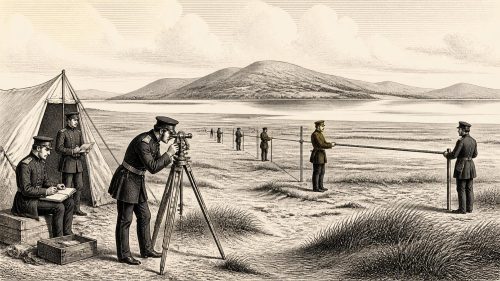
In 1827, Ireland remained politically unsettled as Catholic emancipation was debated but denied, despite petitions, Daniel O’Connell’s New Catholic Association and concern for vulnerable forty-shilling freeholders. The Petty Sessions Act regularised magistrates’ courts, while Beggars Bush Barracks reflected the state’s military reach. Fever, drought and harvest uncertainty exposed rural precarity. Religious controversy appeared in Dublin’s Maguire–Pope debate, alongside Franciscan restorations and Catherine McAuley’s lay House of Mercy. Ordnance Surveyors began the Lough Foyle baseline, initiating systematic mapping. In Callan, Amhlaoibh Ó Súilleabháin commenced his Irish-language diary, recording everyday life and cultural continuity amid administrative, religious and social change during 1827.
Read Article
Archived: 11 October 2026
Abstract
In 1826, Ireland saw organised Catholic politics challenge landlord authority without achieving emancipation. Daniel O’Connell’s reconstituted Catholic Association mobilised parish networks, subscriptions and forty-shilling freeholders around religious rights, education and electoral action. County Waterford’s election symbolised this change: Henry Villiers Stuart, a Protestant emancipation supporter, defeated Lord George Beresford, demonstrating tenants’ capacity to resist estate influence. Pro-emancipation gains elsewhere reinforced warning to government. Sterling replaced Irish currency, integrating financial administration with Britain. An education inquiry exposed fragmented, denominational schooling, while land legislation addressed complex tenancies amid rural hardship. Arklow received Ireland’s lifeboat station, and Tyrone Power advanced his London career.
Read Article
Archived: 11 October 2026
Abstract
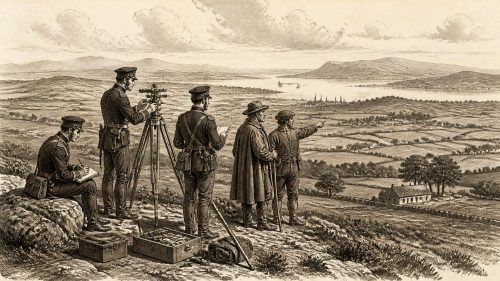
In 1825, government suppressed the Catholic Association through the Unlawful Societies Act, but Daniel O’Connell quickly reorganised constitutional agitation for emancipation, while a relief bill failed in the Lords. Thomas Colby’s Ordnance Survey began mapping Ireland for taxation and administration, incorporating local knowledge into state records. Government-assisted migration sent 2,024 people from Cork to Upper Canada. The Provincial Bank, Portlaw’s cotton venture, revised excise licences and packet steamers reflected economic change. Educational inquiry documented extensive yet fragmented schooling, while Croker’s Fairy Legends promoted Irish oral traditions. These developments linked politics, administration, migration, commerce and culture in an unequal, changing Ireland.
Read Article
Archived: 11 October 2026
Abstract
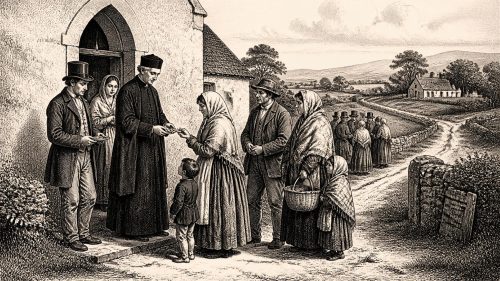
In 1824, Ireland saw organisational developments rather than decisive settlement or revolt. Daniel O’Connell’s Catholic Association introduced the penny Catholic Rent, linking parish subscriptions, clerical networks and constitutional agitation for emancipation. Tithe commutation and applotment sharpened rural grievances, amid official concern about agrarian secret societies. Parliament authorised a uniform survey and valuation, initiating the Ordnance Survey’s mapping. Economic and administrative modernisation included Belfast’s joint-stock Northern Banking Company, Donaghadee harbour planning, and standardised weights and measures. Belfast’s Academical Institution, Croker’s Irish travel and folklore publication, and Bishop Kernan’s succession illustrated expanding educational, cultural and Catholic institutional life, despite inequality and exclusion.
Read Article
Archived: 11 October 2026
Abstract
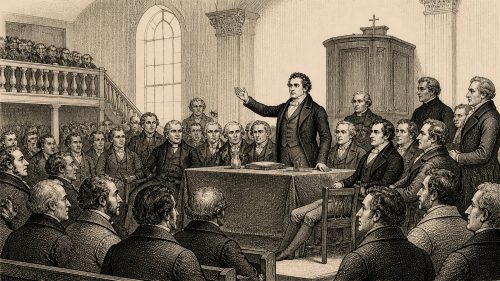
In 1823 Daniel O’Connell and fellow Catholic leaders founded the Catholic Association at Townsend Street Chapel, Dublin, creating a constitutional organisation to pursue emancipation through petitions, publicity and meetings. Initially limited to wealthier subscribers, it preceded the mass Catholic Rent of 1824. Its campaign developed amid exclusion of Catholics from Parliament and office, parliamentary debates on Irish justice, and renewed coercive legislation against rural disorder. The Composition for Tithes Act replaced payments in kind with monetary assessments but preserved an unpopular burden supporting the established church. Population pressure, poverty and potato-crop failure intensified grievances, making the Association’s political framework significant.
Read Article

Archived: 11 October 2026
Abstract
In 1822, Ireland endured agrarian unrest, food scarcity and emergency government. Lord Lieutenant Richard Wellesley inherited Rockite violence, chiefly in Munster, where the Insurrection Act, habeas corpus suspension, troops and special commissions produced prosecutions, transportation and executions. Poor harvests caused severe regional distress, especially in the west and south-west. Government coordinated charity and funded public works, employing labourers on roads, piers and harbours under engineers including Alexander Nimmo and Richard Griffith. Political divisions persisted over Catholic exclusion and the established Church. A new constabulary law encouraged organised policing. December's Bottle Riot, when a jar was thrown at Wellesley, symbolised conflict.
Read Article

Archived: 11 October 2026
Abstract
George IV’s accession in 1820 left Ireland under the Union, with limited property-based representation and Catholic exclusion from Parliament. Henry Grattan’s death removed a leading advocate of Catholic relief. Post-war depression and private-bank failures disrupted credit, trade and livelihoods, while Cork’s North Cathedral burned. The Dublin Gas Act, completion of the Lough Allen Canal, local schooling and the Royal Dublin Society reflected gradual improvement. Irish people also participated in Antarctic exploration and Cape Colony migration. In December, County Dublin freeholders at Kilmainham challenged an official loyal address, condemning the king’s treatment of Queen Caroline and Ireland’s distress, foreshadowing O’Connell’s mobilisation.
Read Article

Archived: 11 October 2026
Abstract
In 1819, Ireland faced continuing fever, hunger and unemployment after the post-war downturn and bad seasons. Sir John Newport’s Commons committee investigated contagious disease and labouring poverty, linking epidemic conditions to destitution while favouring regulated charity, fever hospitals and work over an Irish poor law. The Fisheries Act sought employment and food through managed fisheries, but offered limited immediate relief. Henry Grattan’s Catholic emancipation motion narrowly failed, confirming enduring political exclusion. John Devereux recruited an Irish Legion for Bolívar’s cause, though recruits suffered overseas. Belfast founded the Irish Harp Society, while Ribbonism reflected rural tension. The year exposed persistent insecurity.
Read Article
Archived: 11 October 2026
Abstract
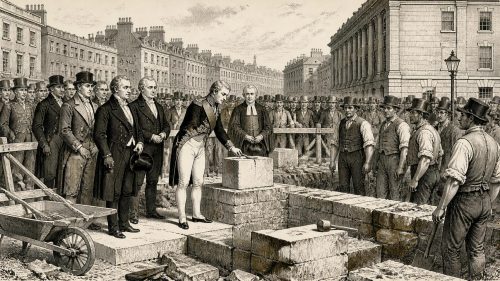
In 1814, post-Union Ireland faced peace as Napoleon’s abdication altered wartime trade while rural poverty and land tensions persisted. Robert Peel’s government answered disturbances, notably in Tipperary’s Middlethird, with the Peace Preservation Act, creating salaried magistrates and constables and strengthened coercive powers against unlawful combinations. Catholic politics were divided over a proposed Crown veto on bishops, with Daniel O’Connell opposing state control; emancipation remained unresolved. Dublin saw Whitworth lay the General Post Office foundation stone and Chapel Royal inaugurated, while Belfast’s Academical Institution opened. Shaw Mason began his parochial survey, and the Apprentice Boys Club formed in Derry, reflecting division.
Read Article
Archived: 11 October 2026
Abstract
In 1813, Catholic emancipation dominated Irish politics as Henry Grattan’s relief bill advanced at Westminster before collapsing over parliamentary admission and proposed state influence on episcopal appointments, opposed by bishops and Daniel O’Connell. Sectarian tension erupted at Garvagh, County Londonderry, where armed Protestants and Orangemen repelled Ribbonmen during a fair. An unsuccessful census initiative reflected administrative uncertainty, while observations of poverty, fever and education highlighted social pressures. Cultural life included Hugh Porter’s poetry and Glendalough’s patron festival. In September, the Limerick meteorite fell near Adare, becoming Ireland’s largest recorded meteorite fall and was preserved for scientific study as material evidence.
Read Article

Archived: 11 October 2026
Abstract
In 1812, Catholic politics revived through the Catholic Board, which defended constitutional petitioning against Convention Act restrictions. Daniel O’Connell emerged as a forceful opponent of the proposed Crown veto over bishops’ appointments. At Westminster, Henry Grattan secured a Commons vote favouring consideration of Catholic claims, but no emancipation legislation followed. Robert Peel’s appointment as chief secretary strengthened Dublin Castle’s resistance. Wartime markets supported agricultural output and trade, yet rural households faced insecure holdings, rents and poverty. Wakefield surveyed these inequalities; Edgeworth’s The Absentee criticised distant landlordism. Sadler’s balloon attempt provided a fleeting spectacle amid unresolved political, social and economic tensions.
Read Article
Archived: 11 October 2026
Abstract
In 1811, Irish politics centred on Catholic emancipation and the legality of organised petitioning. Edward Hay’s plan for county-appointed petition managers prompted Chief Secretary Wellesley-Pole’s circular, invoking the Convention Act to restrain the Dublin Catholic Committee. The ensuing controversy exposed tensions between constitutional petitioning, representative organisation and Dublin Castle’s authority after the Union. Henry Grattan presented a Catholic petition at Westminster, but emancipation failed; nevertheless, Catholic activists developed safer organisational methods, influencing Daniel O’Connell’s later strategy. The year also saw the foundation of the Kildare Place Society, cultural works by Owenson and Knowles, and HMS Saldanha’s wreck at Lough Swilly.
Read Article

Archived: 11 October 2026
Abstract
In 1807, six years after Union, Ireland remained governed from Dublin Castle and Westminster amid war, restricted representation and unresolved Catholic claims. George III's opposition defeated a limited Catholic military service measure, toppling Grenville ministry. The new lord lieutenant, Duke of Richmond, and chief secretary Arthur Wellesley pursued security, elections and renewed coercive powers, including insurrection and arms legislation. Michael Dwyer’s colonial trial illustrated repression’s imperial reach. Dublin gained a paving board amid wartime commercial pressures. In November, Rochdale and Prince of Wales were wrecked in Dublin Bay, killing about 400 and prompting later plans for a harbour at Dunleary.
Read Article
Archived: 11 October 2026
Abstract
In 1806, five years after the Union, Ireland was governed increasingly through Westminster, while Catholic emancipation remained unrealised despite Lord Grenville’s sympathetic ministry. The United Kingdom election returned Irish MPs through restricted, patronage-driven constituencies, and wartime administration integrated Irish finance, trade and defence into imperial structures. Legislation regulated butter exports, excise, and charitable hospitals, illustrating expanding state oversight without comprehensive poor relief. Coastal defences reflected continuing fear of French invasion. Dublin retained elite social importance, marked by Arthur Wellesley’s marriage. Literary publishing proved significant: Sydney Owenson’s The Wild Irish Girl articulated Gaelic cultural survival, alongside satire and Ulster vernacular verse.
Read Article

Archived: 11 October 2026
Abstract
In 1805, Irish Catholics petitioned Westminster for equal political rights after the Union abolished Dublin’s parliament. Introduced by Charles James Fox and Lord Grenville, the loyal, constitutional appeal sought admission to Parliament and major offices, while rejecting papal temporal authority and threats to the Protestant establishment. Parliament decisively rejected it, exposing Catholic exclusion and establishing a pattern of failed emancipation campaigns until 1829. The state simultaneously transported Wicklow insurgent Michael Dwyer and companions to New South Wales. Ireland shared in Napoleonic war’s consequences after Trafalgar, while cultural life included Mary Tighe’s Psyche, William Rowan Hamilton’s birth, and Brian Merriman’s death.
Read Article

Archived: 11 October 2026
Abstract
In 1803, amid post-Union discontent and renewed war with France, Robert Emmet organised a United Irish-inspired attempt to seize Dublin Castle and establish a provisional government. Conspirators produced pikes and explosives, while Anne Devlin carried messages, but weak coordination, limited firearms and absent regional support undermined the plan. On 23 July, the Thomas Street rising collapsed into confused violence; Lord Chief Justice Kilwarden and his nephew were murdered. Emmet was arrested, tried and executed, while Devlin and other suspects faced repression. Though militarily insignificant, the failure strengthened coercive government and preserved republican ideals of independence, popular sovereignty and inclusive citizenship.
Read Article

Archived: 11 October 2026
Abstract
In 1801 the Act of Union abolished Ireland’s parliament and incorporated the kingdom into the United Kingdom, while Dublin Castle and local administration remained. Ireland received limited Westminster representation, dominated by property and borough influence. Catholic hopes of emancipation collapsed after George III’s opposition, strengthening the established Protestant church and prompting ministerial resignations. Lord Hardwicke became lord lieutenant amid fears after the 1798 rebellion. United Irishman James Napper Tandy, condemned for treason, was pardoned and spared execution. Food scarcity, high prices and uneven relief burdened households. Fiscal and trade integration proceeded gradually, while officials envisaged Ireland within an imperial framework.
Read Article
Archived: 11 October 2026
Abstract
In 1799, post-rebellion Ireland remained militarised and insecure as Cornwallis and Castlereagh sought legislative union with Great Britain. Their proposal was defeated in the Commons, where Speaker John Foster led a narrow anti-union majority, although the Lords approved it. Public celebrations reflected resistance, but the unrepresentative Dublin parliament excluded Catholics. During the pause, government prepared to rebuild support through patronage. Courts martial, disturbed-district proclamations, prosecutions and transportation continued, tempered by Cornwallis’s commutations. Catholic bishops considered state oversight of appointments, while lay Catholics opposed union. Autumn rains damaged potatoes, raising subsistence fears amid wartime financial disruption. Ireland nevertheless faced constitutional change.
Read Article
Archived: 12 October 2026
Abstract
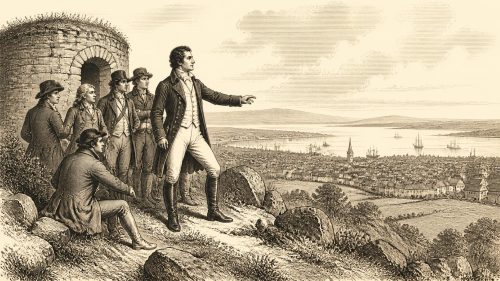
In 1795, wartime Ireland experienced reform, concession and sectarian conflict within its subordinate relationship to Britain. Lord Fitzwilliam’s arrival encouraged Catholic hopes of parliamentary admission, but London recalled him and defeated Grattan’s bill, undermining constitutional reform. United Irish leaders consequently moved further towards clandestine republicanism; Wolfe Tone departed for America seeking French support. Parliament nevertheless founded St Patrick’s College, Maynooth, to train Catholic clergy domestically. In County Armagh, the Battle of the Diamond confirmed Protestant dominance and prompted the formation of the Orange Order, followed by expulsions of Catholics. Routine infrastructure, legal and trade measures continued amid insecurity and polarisation.
Read Article
Archived: 12 October 2026
Abstract
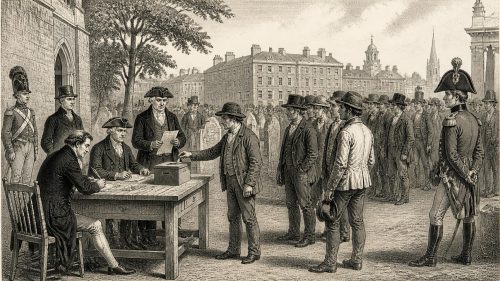
In 1793, Ireland combined Catholic relief with intensified state control amid war with revolutionary France. Following John Keogh’s Catholic Convention petition, the Roman Catholic Relief Act enfranchised qualified Catholic forty-shilling freeholders and opened certain employment and educational opportunities, while retaining exclusion from parliament, senior offices and Trinity fellowships. The Gunpowder Act regulated weapons, while the Irish Militia Act introduced parish enrolment and ballots, incorporating Catholics and Presbyterians into government service. The Convention Act restricted representative political assemblies, constraining reformers and United Irishmen. Economic pressures, militia obligations and print culture shaped daily life. The year broadened participation whilst strengthening coercive administration.
Read Article
Archived: 12 October 2026
Abstract
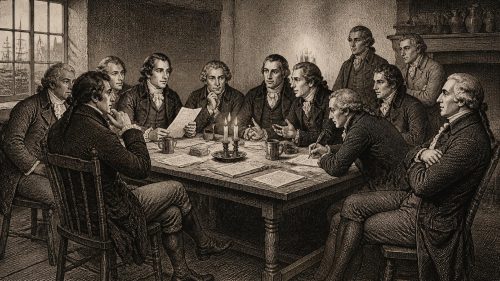
In 1791, Irish politics became organised without delivering constitutional change or Catholic emancipation. Belfast’s Bastille commemoration and the founding of the Society of United Irishmen linked parliamentary reform, Catholic inclusion and civic unity across religious divisions, influenced by Theobald Wolfe Tone. Dublin radicals, including John Keogh, Edward Byrne, James Napper Tandy and William Drennan, strengthened Catholic and reform movements, provoking divisions with conservative Catholic elites. The Dublin Custom House symbolised both commercial ambition and state authority, while the Grand Canal’s Barrow link improved transport to Waterford. Amid rural inequality, print, association and infrastructure widened horizons, marking transition towards popular politics.
Read Article




