Archived: 26 September 2026
Abstract
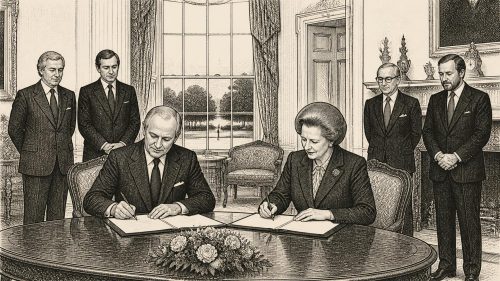
In 1985, the Anglo-Irish Agreement, signed by Garret FitzGerald and Margaret Thatcher at Hillsborough, created a permanent consultative role for Dublin in Northern Ireland affairs while confirming majority consent for constitutional change. It offered constitutional nationalists progress but provoked unionist protest and Fianna Fáil opposition. Violence continued, including major IRA attacks and the killing of a Garda officer. Sinn Féin advanced electorally and revised its Dáil abstention policy. The Republic faced severe unemployment and emigration, alongside the Progressive Democrats’ foundation and liberalised contraception law. Religious controversy, theatre, U2’s Croke Park concert and Cork 800 reflected changing national identities amid hardship.
Read Article
Archived: 8 October 2026
Abstract
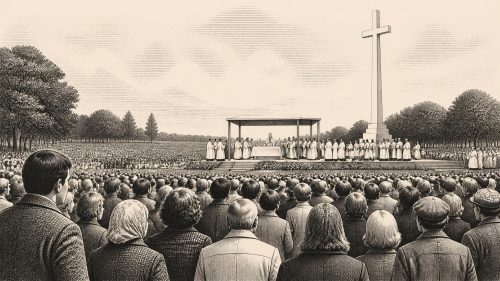
In 1979, Ireland confronted industrial disaster, political change, social reform, European integration and Troubles violence. The Betelgeuse explosion at Whiddy Island killed fifty people, exposing risks associated with oil trade. Ireland joined the European Monetary System, elected its first directly elected MEPs and hosted the European Council. Jack Lynch resigned, succeeded by Charles Haughey, whose cabinet included Máire Geoghegan-Quinn. Legislation established Údarás na Gaeltachta and cautiously legalised family planning. IRA attacks killed Lord Mountbatten and eighteen soldiers at Warrenpoint. Pope John Paul II’s visit, altered by security concerns, included an appeal for peace, encapsulating a modernising, divided and unsettled Ireland.
Read Article
Archived: 8 October 2026
Abstract
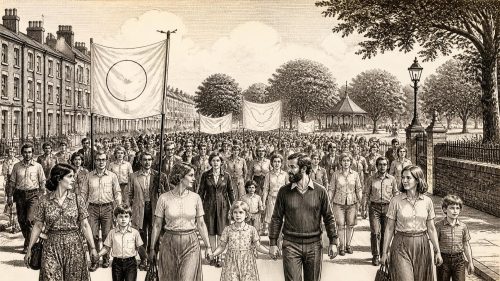
In 1976, Ireland endured intensified Troubles violence, including the Kingsmill massacre, the assassination of British Ambassador Christopher Ewart-Biggs, and continued direct rule in Northern Ireland. The Republic strengthened cross-border criminal co-operation and declared a constitutional emergency, prompting President Cearbhall Ó Dálaigh’s referral of emergency legislation, ministerial insult and resignation; Patrick Hillery succeeded him. Deaths of the Maguire children inspired the Peace People’s mass cross-community marches. Economic recession brought inflation and unemployment, alongside inheritance-tax and family-home reforms. An exceptional drought preceded wildlife legislation. Cultural life included U2’s formation and Maeve Binchy’s play, illustrating resilience amid political, social and environmental nationwide strain.
Read Article

Archived: 8 October 2026
Abstract
In 1975, Ireland hosted the first formal European Council meeting at Dublin Castle during its EEC presidency, signalling an expanded international role. Northern Ireland remained unstable despite IRA ceasefires: the Constitutional Convention favoured majority rule, while violence claimed 260 lives, including three Miami Showband members. Security policy proposed ending special-category prisoner status and building Maze H-Blocks. In the Republic, recession raised insured unemployment to 12 per cent, exposing dependence on British and European markets. Lasting changes included establishment of the Law Reform Commission, commencement of equal-pay legislation, and Oliver Plunkett’s canonisation. The year combined engagement, hardship, reform and national conflict.
Read Article
Archived: 8 October 2026
Abstract
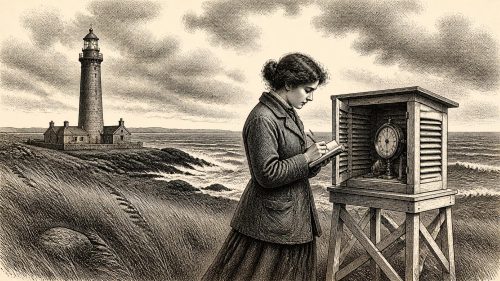
During 1944, neutral Ireland endured Emergency shortages, rationing and transport disruption while remaining strategically entangled in the war. At Blacksod Point, Maureen Flavin’s weather observations assisted Allied forecasting before the Normandy landings, illustrating neutrality’s limits. De Valera rejected Allied demands to expel Axis diplomats, defending sovereignty amid espionage concerns and partition. Fianna Fáil won a Dáil majority in May. Children’s allowances began in August, easing family pressures. December’s Transport Act prepared Córas Iompair Éireann, while the Abbey staged Joseph Tomelty’s Belfast-set play, The End House. The year combined democratic continuity, cautious social reform and preparations for postwar reconstruction across Ireland.
Read Article

Archived: 9 October 2026
Abstract
In 1909, Ireland remained within the United Kingdom, yet social, political and cultural change accelerated. Old-age pensions, introduced in January, gave qualifying elderly people a statutory income. The Irish Land Act advanced tenant purchase and addressed western congestion, while the People’s Budget and the United Irish League’s baton convention exposed nationalist divisions, prompting William O’Brien’s All-for-Ireland League. James Larkin’s general union established an Irish labour base. University reform replaced the Royal University with national and Belfast institutions. Synge’s death, Irish-language opera and the Clare Island Survey reflected innovation. On 31 December, Harry Ferguson’s monoplane achieved Ireland’s first self-designed, self-built flight.
Read Article
Archived: 10 October 2026
Abstract
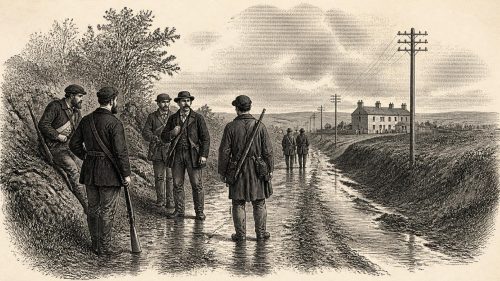
In 1867 the Irish Republican Brotherhood launched a poorly coordinated Fenian rising seeking an independent republic and social reform. After alarms including the failed Chester Castle raid, authorities extended habeas corpus suspension, arrested suspects, and strengthened policing. On 5 March, insurgents attacked police and coastguard stations, disrupted telegraphs and railways, and assembled near Dublin and in Munster. Better-armed government forces, intelligence, poor communications, inadequate weapons, and absent mass support quickly defeated them. Peter O'Neill Crowley's later death fostered martyrdom. The year brought Fenian rescues and executions in Manchester, transportation to Western Australia, the Clerkenwell bombing, hardship, reform, and Orange mobilisation.
Read Article

Archived: 10 October 2026
Abstract
In 1857, post-Famine Ireland remained marked by emigration, altered landholding and poverty, while political representation was limited by property-based voting. The general election strengthened Liberals but also revealed the weakness of the tenant-right Independent Irish Party. Belfast's Orange Day riots, prolonged through summer, exposed sectarian tensions and discredited a predominantly Protestant police force, prompting a later inquiry. Administrative reforms, including the Boundary Survey Act and Griffith's Valuation, expanded state oversight of land and taxation. Institutions and enterprises included Kilkenny's St Mary's Cathedral, Dublin's Natural History Museum, zoo breeding, Gallaher's tobacco venture and Scrabo Tower, illustrating reconstruction, commerce and contested authority.
Read Article

Archived: 10 October 2026
Abstract
In 1849, the Great Famine continued as blight, hunger, eviction, overcrowded workhouses and disease devastated Ireland. Cholera killed 772 of 1,077 recorded cases at Ballinasloe Union Workhouse, illustrating inmates’ vulnerability. Relief depended heavily on inadequate local rates; the May rate-in-aid redistributed Irish, rather than British, resources. The Incumbered Estates Act signalled restructuring of landownership, while emigration, consolidation and evictions altered rural life. Young Ireland leaders were transported, and unrest persisted; Dolly’s Brae exposed sectarian tensions. Victoria’s tour, new Queen’s Colleges and the Dublin–Cork railway projected progress, yet famine, political conflict and social upheaval still continued across the island’s fractured communities.
Read Article

Archived: 11 October 2026
Abstract
In 1832, Ireland experienced reform, conflict and epidemic crisis. Glasnevin Cemetery opened in February as Daniel O’Connell’s inclusive burial project, its first interment an eleven-year-old Dublin boy. Cholera soon spread from Belfast to Dublin and other towns, killing perhaps 25,000 people and exposing poor sanitation, inadequate institutions and improvised medical and burial provision. Local boards of health organised contested responses. Meanwhile, resistance to Church of Ireland tithes continued despite government relief and enforcement measures. Parliamentary reform revised constituencies and increased representation but retained a property-based franchise. Debates over national education and restrictions on partisan processions reflected religious and political tensions.
Read Article
Archived: 11 October 2026
Abstract
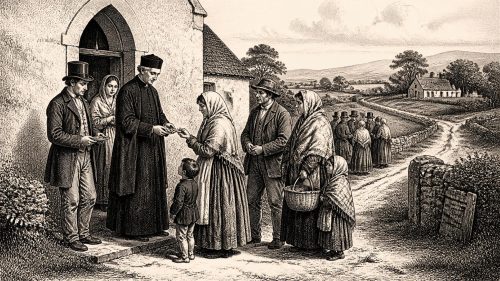
In 1824, Ireland saw organisational developments rather than decisive settlement or revolt. Daniel O’Connell’s Catholic Association introduced the penny Catholic Rent, linking parish subscriptions, clerical networks and constitutional agitation for emancipation. Tithe commutation and applotment sharpened rural grievances, amid official concern about agrarian secret societies. Parliament authorised a uniform survey and valuation, initiating the Ordnance Survey’s mapping. Economic and administrative modernisation included Belfast’s joint-stock Northern Banking Company, Donaghadee harbour planning, and standardised weights and measures. Belfast’s Academical Institution, Croker’s Irish travel and folklore publication, and Bishop Kernan’s succession illustrated expanding educational, cultural and Catholic institutional life, despite inequality and exclusion.
Read Article
Archived: 11 October 2026
Abstract
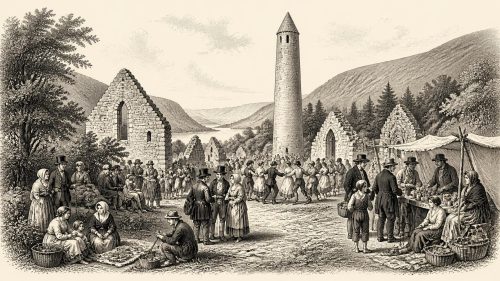
In 1813, Catholic emancipation dominated Irish politics as Henry Grattan’s relief bill advanced at Westminster before collapsing over parliamentary admission and proposed state influence on episcopal appointments, opposed by bishops and Daniel O’Connell. Sectarian tension erupted at Garvagh, County Londonderry, where armed Protestants and Orangemen repelled Ribbonmen during a fair. An unsuccessful census initiative reflected administrative uncertainty, while observations of poverty, fever and education highlighted social pressures. Cultural life included Hugh Porter’s poetry and Glendalough’s patron festival. In September, the Limerick meteorite fell near Adare, becoming Ireland’s largest recorded meteorite fall and was preserved for scientific study as material evidence.
Read Article
Archived: 11 October 2026
Abstract
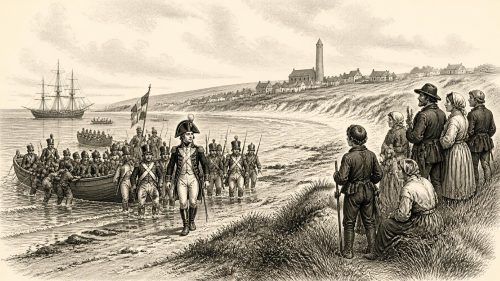
In 1798, the United Irishmen attempted a national revolution against British rule, seeking a representative Irish republic uniting Catholics, Presbyterians and reforming Anglicans with French support. Arrests, coercion and weak coordination fragmented the rising into regional conflicts. Wexford rebels captured Enniscorthy and Wexford town, but atrocities including Scullabogue accompanied fighting before defeat at Vinegar Hill. Ulster risings at Antrim and Ballynahinch failed. In August, General Humbert’s French force landed at Killala, won at Castlebar, then surrendered at Ballinamuck. Repression, executions and transportations followed. The rebellion’s violence and French intervention strengthened arguments for union, reshaping Irish politics and leaving divisive legacy.
Read Article
Archived: 11 October 2026
Abstract
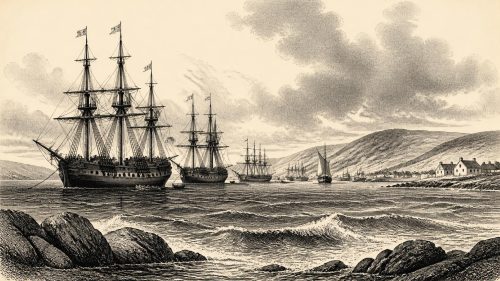
In 1796, Ireland faced an attempted French invasion that exposed the convergence of revolutionary politics, sectarian tension and wartime insecurity. Theobald Wolfe Tone helped secure French support for an expedition under General Hoche, but storms, dispersal and confused command prevented its 14,000 troops from landing at Bantry Bay. Dublin Castle answered unrest with the Insurrection Act and newly established yeomanry, while Orange organisation strengthened Protestant loyalism. Catholic responses varied, exemplified by Bishop Francis Moylan’s anti-revolutionary pastoral. Meanwhile, the Royal Canal reached Kilcock and Edward Bunting published Irish harp music. The failed invasion intensified repression, mobilisation and republican hopes before 1798.
Read Article

Archived: 12 October 2026
Abstract
In 1772, George Townshend’s departure and Simon Harcourt’s arrival as Lord Lieutenant altered Dublin Castle’s leadership without changing Ireland’s dependence on British imperial authority or its patronage-based, unrepresentative parliament. Ulster’s Hearts of Steel protest exposed rural insecurity over rents, leases, taxes and evictions; government answered with troops, targeted legislation and a later pardon, rather than structural reform. Parliament granted Catholics restricted long-term leases of bog land, a limited economic concession preserving wider penal disabilities. The London-Derry Journal’s foundation and revived siege commemoration illustrated print’s growing civic role. Meanwhile, linen, improvement and institutions coexisted with inequalities in land, religion and power.
Read Article
Archived: 12 October 2026
Abstract
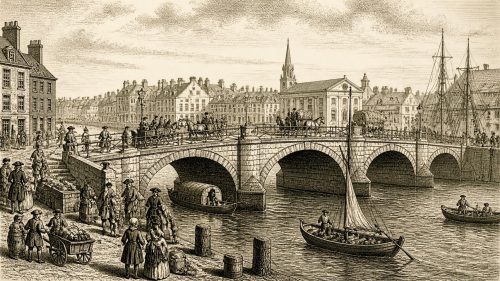
In 1755, Ireland remained a Protestant-controlled kingdom constrained by Britain, with Catholics and Presbyterians excluded from political rights. William Cavendish became lord lieutenant as parliament resumed under a narrow electorate. Dublin’s Essex Bridge opened, improving movement across the Liffey, while Luke Gardiner’s death marked his influence on planned urban development. Banking failures exposed fragile commercial credit, despite linen’s importance. Thomas Omer began Shannon navigation works, seeking inland connectivity. Russborough House displayed landed wealth; Moravian activity illustrated religious diversity; and the Irish Artillery Company reflected tensions. Lisbon’s earthquake and tsunami disturbed Irish coasts, damaging Galway’s Spanish Arch and demonstrating Atlantic connections.
Read Article

Archived: 13 October 2026
Abstract
In 1748, Ireland’s restricted Protestant political order was highlighted by the Newtown Act, which regularised non-resident burgesses and potentially strengthened borough patronage, while excluding Catholics and dissenters from power. Completion of James FitzGerald’s Palladian Kildare House demonstrated aristocratic wealth, influence and Dublin’s southward expansion. Wartime fasts and embargoes gave way to ceasefires and the Treaty of Aix-la-Chapelle, though rural households remained economically insecure within imperial trading constraints. Proclamations against robbery, intimidation and arson reflected official anxieties over order. Catholic organisation persisted despite Penal Laws, marked by Archbishop Ross Roe MacMahon’s death, while early Methodist preaching added to Ireland’s religious landscape.
Read Article
Archived: 13 October 2026
Abstract
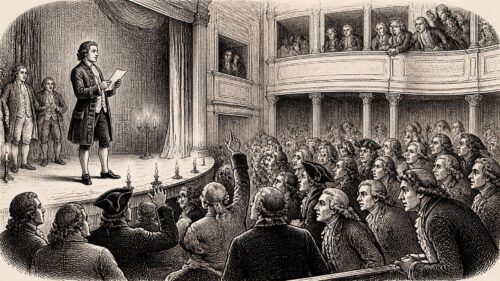
In 1712, Ireland remained tense following Williamite wars, with Tory administrators under Sir Constantine Phipps accused by Whigs of favouring Jacobitism and interests. Dublin’s conflict erupted when Dudley Moore delivered a banned Whig prologue on William III’s anniversary, provoking proceedings. Religious policy combined missionary outreach and exclusion: John Richardson published an Irish-English prayer book while penal laws constrained Catholics; Quaker pioneer William Edmundson died. Banbridge gained a bridge across the Bann, aiding communications. Livelihoods depended on agriculture and expanding linen exports, shaped by imperial restrictions, war and landholding. These events reveal authority contested through politics, religion, print, commerce and infrastructure.
Read Article
Archived: 13 October 2026
Abstract
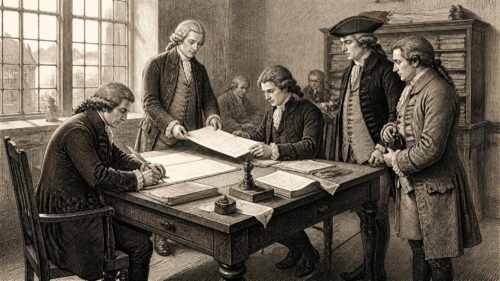
In 1708, Ireland’s new Registry of Deeds entered its first memorial, strengthening recorded property claims while serving a Protestant order shaped by confiscation and penal laws. During the French-backed Jacobite invasion scare, Dublin Castle issued anti-Catholic proclamations and detained clergy and gentlemen, though no rebellion followed. Parliament was prorogued under Lord Lieutenant Pembroke, while Thomas Wharton’s appointment foreshadowed change. Belfast Castle burned, killing three Donegall daughters and servants. Samuel Molyneux’s northern tour recorded contrasting landscapes, rebuilding, Belfast’s growth and Ulster’s developing linen trade. Thomas Milles became bishop of Waterford and Lismore in 1708, illustrating the Church of Ireland’s institutional authority.
Read Article

Archived: 14 October 2026
Abstract
In 1662, the Irish Act of Settlement established a Restoration framework for resolving land disputes arising from rebellion, conquest and Cromwellian redistribution. It protected Protestant interests while offering limited restitution to Catholics deemed innocent, subject to reprisal and political tests. The lord lieutenant, Duke of Ormond, oversaw preparations for claims procedures, amid paperwork, proclamations and titles. Government reinforced Anglican conformity, regulated Catholic and dissenting assemblies, reorganised parishes, customs and trade, and improved postal links with Scotland. Dublin’s Theatre Royal at Smock Alley opened as a symbol of Restoration authority. The year converted conquest into an unequal landed and confessional order.
Read Article
Archived: 16 October 2026
Abstract
In 1626, Lord Deputy Falkland governed Ireland amid fiscal, religious and landholding tensions. Charles I restored Waterford’s charter, withdrawn after civic officers refused the oath of supremacy, enabling Catholic municipal leadership within Protestant legal constraints for an alleged £3,000. The Crown advanced plantation in Upper Ossory, reshaping contested Fitzpatrick lands. To fund 5,500 troops during war with Spain, Falkland offered proposed Graces, including land-title security, reduced recusancy penalties and officeholding opportunities for Catholics. Protestant bishops, led intellectually by James Ussher, opposed toleration. Aodh Mac Cathmhaoil became Catholic archbishop of Armagh, dying in Rome; Niall Garvach O’Donnell died imprisoned in Tower.
Read Article

Archived: 16 October 2026
Abstract
In 1620, Longford’s April plantation lease conditions advanced Crown efforts to replace Gaelic landholding with surveyed estates, rents and accountable landlords, while allowing adaptation by established inhabitants. Under Sir Oliver St John and surveyor William Parsons, plantation policy extended beyond Ulster, with Leitrim approved for development. Royal patronage elevated Richard Boyle as earl of Cork and Catholic Gaelic-Scottish Randal MacDonnell as earl of Antrim, binding regional powers to the Stuart state. Bangor gained port status, strengthening Irish Sea links. Church appointments, Catholic continental networks, and Trinity College’s scholars revealed competing yet interconnected religious and intellectual worlds within the post-conquest order.
Read Article
Archived: 16 October 2026
Abstract
In 1612, Ireland’s post-conquest settlement advanced through coercion, plantation, incorporation and commerce. Catholic bishop Conor O’Devany and priest Patrick O’Loughran were executed in Dublin for treason, exposing official fears of Gaelic exile and foreign Catholic links, while Catholic practice endured. In Ulster, Arthur Chichester’s Plantation redistributed forfeited land, but inadequate building, settlement and defence prompted an inquiry. Dungannon’s charter began a drive creating boroughs to impose English institutions and secure Protestant parliamentary representation; Baltimore and Roscommon reflected its reach. New port books documented trade. John Davies defended conquest, law, property reform and Protestant governance as foundations of lasting English rule.
Read Article
Archived: 17 October 2026
Abstract
In 1605, Sir Arthur Chichester became lord deputy, seeking to convert victory in the Nine Years’ War into durable royal control through law, land reform, revenue and Protestant conformity. March’s proclamation declared Irish people direct subjects of James I, challenging Gaelic lordship and encouraging fixed rents and tenures. Hamilton’s November grant in County Down foreshadowed Scottish settlement, without constituting the later Ulster Plantation. July’s proclamation expelled Catholic clergy and demanded Church of Ireland attendance, while mandates targeted Dublin Catholics. Administrative changes strengthened Protestant authority. Continental Catholic education and military service across Europe also underscored an uneasy post-war settlement in Ireland.
Read Article
Archived: 19 October 2026
Abstract
In 1482 Ireland’s events reflected regional lordship, kinship, religion and learning rather than national change. Conn Ó Néill of east Ulster died, renowned as a warrior, protector and patron of Irish and Scottish learned people; Ó Néill violence followed. Feuds among Ó Raghallaigh, Mag Uidhir, Ó hAinligh and families exposed fragility of peace, guarantees and oaths, while alliances crossed Gaelic and Anglo-Irish lines. Annals commemorated scholars and hospitable clergy, revealing learning, guest-houses and devotion as authority. Roland Savage’s appointment and Tadhg Mac Cárthaigh’s papal provision to Ross showed English administrative and ecclesiastical connections, both constrained by local power in practice.
Read Article

Archived: 20 October 2026
Abstract
In 1453, Irish annals record regional struggles rather than a national crisis. At Ardglass, a Dublin fleet pursuing Welsh raiders who had seized the archbishop defeated Henry Mac Néill Buidhe’s Clandeboye force, aided by the Savages; leading Ulster men died and Henry was captured. In Oriel, Hugh Roe MacMahon died and was succeeded by Felim MacMahon, while Donnchadh MacCarthy Reagh’s death brought Diarmaid an Dúna to power in Carbery. Killings, deaths and disputed lordships in Connacht, Bréifne and Tirerrill revealed political dependence on kin, followers, castles and church patronage. The record depicts maritime, localised and interconnected late-medieval society in Ireland.
Read Article
Archived: 20 October 2026
Abstract
In 1444, Aodh Buidhe O’Neill of Clandeboye died from wounds received raiding Iveagh, prompting Eóghan O’Neill of Tír Eógain to intervene. Clandeboye leaders, allied with the MacQuillans, ambushed and defeated him in Dufferin, taking hostages including his son. Eóghan also compelled Dundalk to pay money and wine, while English government met at Drogheda with limited reach. Thomond suffered a violent Ó Briain succession rupture, including Mathgamain’s blinding and Toirdelbach’s seizure of power. Rome appointed Cormac Mác Shamhradháin bishop of Ardagh, while Trim’s Marian miracle cult, charity, deaths, warfare, and learned patronage reflected Ireland’s interconnected yet fragmented political and religious world.
Read Article
Archived: 21 October 2026
Abstract
In 1391, Irish annals recorded fragmented but revealing struggles for power. Tigernán Mór Ó Ruairc escaped an ambush at a Breifne pass while travelling to meet John Ó Raighillaigh, defeating attackers despite conflicting accounts of their numbers. Diarmaid Mac Eochagáin, lord of Cenél Fiachach, died in January. Domhnall Óg Mac Carthaigh Mór, king of Desmond, died and was succeeded by his son Tadhg. In Ulster, Mac Gilla-Muire of Uí nDerca-Céin and Ó hAnluain of Oirthir were killed by kinsmen. Poet-scholar Tadhg Ó hUiginn and Bébhinn Ó Maelconaire died. English statutes applied in the Dublin lordship, but Gaelic authority remained decisive.
Read Article

Archived: 23 October 2026
Abstract
For Ireland, 1360 is remembered most clearly through a stark cluster of fires. The Annals of Connacht record “great burnings” at Roscommon, Devenish, Sligo, the monastery of Lisgoole, Fenagh and Drumlease. The entry gives no date within the year, no named commander and no narrative explaining whether these were connected attacks, separate raids, or destruction arising from several local conflicts. That silence matters. It would be unsafe to turn the notice into a single, neatly organised campaign. Yet its geographical reach, from Connacht into Fermanagh and the north-west, makes it an unusually vivid indication of insecurity in a year otherwise
Read Article

Archived: 24 October 2026
Abstract
In 1293, Ireland experienced interconnected political, administrative and religious upheavals. In Connacht, Magnus Ó Conchobair’s death triggered rapid changes of kingship, as Áed mac Eógain, Cathal Ruad and Anglo-Irish interests contested authority. Violence destabilised Moylurg and claimed several regional rulers. William de Vesci’s rivalry with John fitz Thomas FitzGerald prompted Edward I to restrain military mobilisation, reform sheriffs’ accountability and investigate the justiciar. At Saul, Nicholas Mac Máel Ísu enshrined reported relics of Patrick, Columba and Brigid, reinforcing ecclesiastical prestige. Episcopal deaths and contested elections linked Irish churches to royal administration, monasteries and Rome, revealing overlapping, insecure jurisdictions across Ireland.
Read Article





