

Related Archive: Crag Cave

Crag Cave Interstadial

Crag Cave Interstadial

Archived: 9 September 2026

Abstract

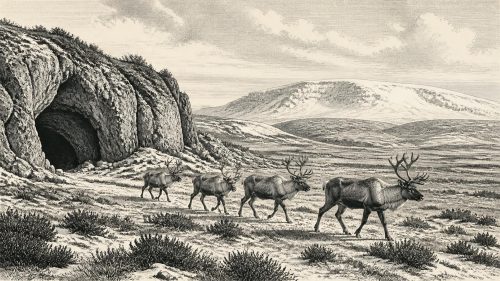
Around 31,949 BCE, Ireland lay in the climatically unstable Late Pleistocene, approaching maximum glaciation but retaining intermittently ice-free terrain in the south. Crag Cave speleothems indicate changing conditions, while lower sea levels reshaped coasts. Castlepook Cave’s mixed deposits preserve cold-adapted fauna, including reindeer, mammoth, lemmings, predators and giant deer, suggesting open steppe-tundra habitats. A possibly butchered reindeer bone dated about 33,000 years ago offers tentative evidence of human visitation, not settlement. No contemporary Irish tools, hearths, burials or communities are securely known. Environmental change, cave evidence and uncertainty therefore define this remote period, preceding later proven Upper Palaeolithic occupation there.


Read Article

Crag Cave Calcite Growth

Crag Cave Calcite Growth

Archived: 8 September 2026

Abstract

Around 31,965 BCE, a retrospective and imprecise date, Ireland lay within the climatically unstable Upper Palaeolithic. It was not yet uniformly covered by the later maximum ice sheet: Fermanagh sediments and calcite growth at Crag Cave indicate local ice-free or intermittently unfrozen ground, although regional glaciation was advancing. Lower sea levels altered coastlines without guaranteeing land access. Open steppe-tundra supported fauna including reindeer, giant deer, mammoth and hyaena, though cave deposits are complex. No secure human settlement is known. A possibly cut-marked reindeer bone suggests brief human visitation, but not occupation. This glacial era shaped Ireland’s terrain and remains uncertain.

Read Article

