

Two Kilometres From Home
In 2020, Ireland experienced political realignment, pandemic emergency and Brexit transition. February’s inconclusive election saw Sinn Féin lead first-preference votes, Fianna Fáil win most seats, and caretaker Taoiseach Leo Varadkar govern until Fianna Fáil, Fine Gael and Greens formed an unprecedented coalition under Micheál Martin in June. COVID-19 transformed daily life: closures, lockdowns, the two-kilometre exercise rule, remote work and restricted funerals accompanied 1,928 deaths. Schools adopted remote teaching and calculated Leaving Certificate grades; emergency payments addressed severe job losses amid housing pressure. Northern Ireland restored devolution; Brexit ended in EU-UK trade agreement; Ireland returned to Level 5 awaiting vaccination.
View Record
Tuam, Passes and Protocol
In 2021, Ireland emerged unevenly from COVID-19 restrictions as vaccination expanded, COVID passes enabled reopening, and Omicron prompted renewed limits. A cyberattack on the Health Service Executive exposed institutional strain and pandemic inequalities. Publication of the Mother and Baby Homes report and the State apology intensified disputes over redress, records and Tuam. Brexit’s Northern Ireland Protocol fuelled loyalist unrest and Democratic Unionist Party leadership turmoil. Housing shortages prompted Housing for All, while climate legislation, corporate-tax reform and Security Council work shaped policy. Treaty centenary commemorations highlighted partition and civil-war legacies, underscoring recovery’s social, constitutional and international dimensions across the island.
View Record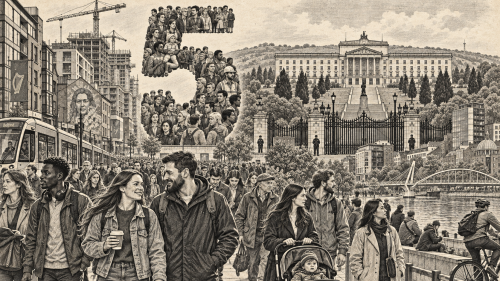
Five Million and Stormont
In 2022, Ireland lifted most Covid restrictions, restoring public life while health services retained pandemic pressures. Russia’s invasion of Ukraine brought sanctions, temporary protection and more than 64,000 arrivals, intensifying housing shortages and inflation; government introduced energy and welfare supports. Census results recorded 5,123,536 residents, the first population above five million since 1851. Housing, homelessness and maternity-hospital governance remained contentious. Sinn Féin became Northern Ireland’s largest Assembly party, but DUP opposition to the Protocol prevented an Executive. Ireland experienced its warmest recorded year, set emissions ceilings, marked cultural and revolutionary centenaries, and completed the orderly Martin-Varadkar Taoiseach rotation in December.
View Record
Parnell Square and Five Million
In 2023, Ireland’s population surpassed five million, intensifying pressures on housing, homelessness, public services and migration accommodation. Employment remained strong despite inflation and multinational-led GDP contraction, while housing completions rose without easing rental scarcity. Government introduced domestic-violence leave, revised electoral boundaries and launched an anti-racism plan. Ireland marked the Good Friday Agreement’s twenty-fifth anniversary during continuing political deadlock in Northern Ireland, highlighted by President Biden’s visit. Sporting successes and Sinéad O’Connor’s death shaped public culture, while the RTÉ payments controversy damaged trust. November’s Parnell Square riot exposed misinformation, racism and policing concerns. Record warmth, rainfall and flooding underscored climate vulnerability.
View Record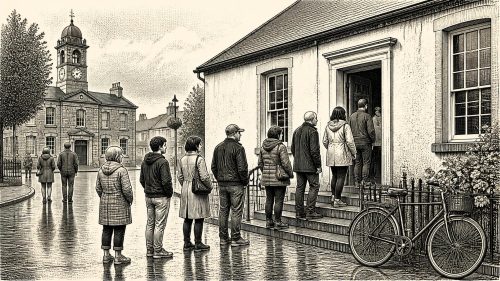
The Two No Votes
Ireland’s 2024 combined constitutional rebuff, electoral change and social pressures. In March, voters rejected Family and Care amendments, citing unclear wording and limited practical value. Simon Harris succeeded Leo Varadkar as Taoiseach, while local, European and November general elections produced fragmented representation; government formation remained unresolved. Population growth and migration intensified housing, service and international-protection accommodation shortages despite construction and economic resilience. Cuan expanded domestic-violence provision. Ireland recognised Palestine, challenged UK legacy legislation, and Northern Ireland’s Executive returned. Cultural achievements included Cillian Murphy’s Oscar. Education initiatives and a stormy year highlighted environmental concerns, reinforcing tensions between activity and inadequate capacity.
View Record
Éowyn and Martin’s Return
Ireland’s 2025 combined economic strength with social and infrastructural pressures. Micheál Martin returned as Taoiseach, leading a Fianna Fáil–Fine Gael coalition supported by independents, which prioritised housing, services, security and competitiveness. Ireland pursued prominent legal and diplomatic action concerning Gaza, while Shared Island and research funding encouraged practical north–south cooperation. Population growth, employment and tax revenues intensified demand for homes, schools and healthcare. Housing completions rose, alongside a new long-term building plan and planning reforms. Cultural and language initiatives continued. Storm Éowyn caused severe disruption, and an exceptionally warm year highlighted climate risks. Dependence on multinational corporation tax remained vulnerability.
View Record