Archived: 1 October 2026
Abstract
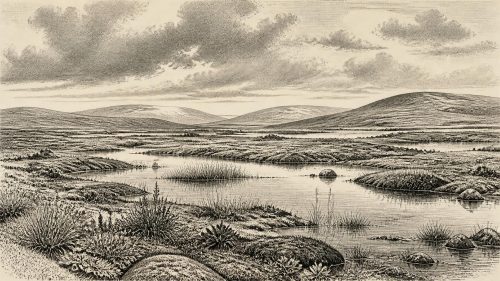
Thirty thousand four hundred and twenty-nine BCE is a retrospective label within a broad, uncertain Late Pleistocene range, not a date for a recorded Irish event. Derryvree, County Fermanagh, preserves freshwater silts and organic deposits between glacial tills, demonstrating an ice-free interval before renewed glaciation. Its pollen, plants and insects indicate a treeless, wet, varied tundra landscape of pools, mosses, sedges and sparse herbs. Castlepook Cave fauna in Cork shows connections with north-west European ecosystems, including reindeer, mammoth and predators. A cut-marked reindeer bone suggests human activity, but cannot establish settlement. Later ice erased evidence, leaving environmental archives, not history.
Read Article

Archived: 10 September 2026
Abstract
About 31,843 BCE, Ireland lay within the climatically unstable Late Pleistocene, before the last British–Irish Ice Sheet reached its maximum. Freshwater sediments at Derryvree, County Fermanagh, dated broadly to this period, preserve evidence of ice-free wet tundra, mosses, sedges and herbaceous vegetation between glacial advances. Cave records and faunal collections indicate fluctuating milder phases and varied mammals, including reindeer, mammoth and hyaena, although deposits cannot reconstruct single communities. Possible cut marks on a Castlepook reindeer bone suggest a human visit, not settlement. Subsequent ice expansion destroyed or buried much evidence, leaving fragmentary environmental archives rather than a documented human society.
Read Article




