

Related Archive: Edward Bunting

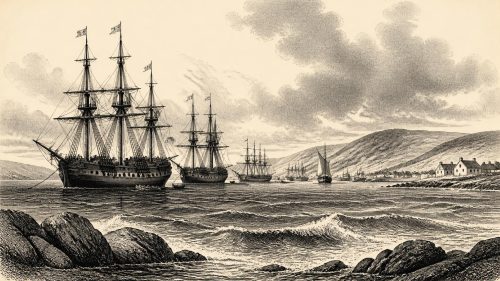
Bantry Bay’s Unlanded Army

Bantry Bay’s Unlanded Army

Archived: 11 October 2026

Abstract

In 1796, Ireland faced an attempted French invasion that exposed the convergence of revolutionary politics, sectarian tension and wartime insecurity. Theobald Wolfe Tone helped secure French support for an expedition under General Hoche, but storms, dispersal and confused command prevented its 14,000 troops from landing at Bantry Bay. Dublin Castle answered unrest with the Insurrection Act and newly established yeomanry, while Orange organisation strengthened Protestant loyalism. Catholic responses varied, exemplified by Bishop Francis Moylan’s anti-revolutionary pastoral. Meanwhile, the Royal Canal reached Kilcock and Edward Bunting published Irish harp music. The failed invasion intensified repression, mobilisation and republican hopes before 1798.

Read Article

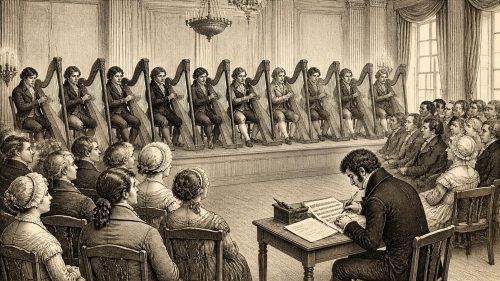
Back Lane and Belfast Harps

Back Lane and Belfast Harps

Archived: 12 October 2026

Abstract

In 1792, Irish politics was shaped by Catholic relief, reform agitation and anxiety after the French Revolution. The Catholic Relief Act eased restrictions on education, law and mixed marriage but withheld voting and parliamentary rights. December’s Back Lane Convention demonstrated Catholic national organisation and petitioned for constitutional participation. In Belfast, United Irishmen and Volunteers promoted reform, religious unity and sympathy with France, prompting repression. The Belfast Harp Festival preserved a musical tradition through Edward Bunting’s transcription. Economic measures supported linen, fisheries, navigation, roads and enterprise while export embargoes revealed insecurity. Together these developments enlarged Ireland’s public sphere without producing revolution.

Read Article

