Archived: 30 September 2026
Abstract
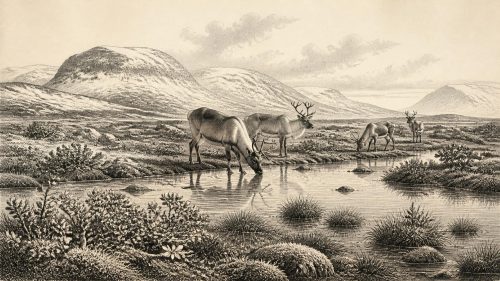
The label 30,431 BCE denotes a Late Pleistocene interval rather than an Irish year. Derryvree, County Fermanagh, records a locally ice-free freshwater phase between glacial advances, supporting wet, treeless tundra vegetation, insects and aquatic life. Crag Cave indicates repeated climatic shifts. At Castlepook Cave, County Cork, remains of mammoth, reindeer, giant deer, hyaena and other cold-adapted animals demonstrate intermittent large-mammal ecosystems in open landscapes. A possibly cut-marked reindeer bone raises, but does not prove, human presence. No secure settlements or social evidence exist. Later ice altered or destroyed records, leaving an environmental history of dynamic climate, fauna and advancing glaciers.
Read Article

Archived: 10 September 2026
Abstract
Around 31,855 BCE, Ireland formed a variable Late Pleistocene, Marine Isotope Stage 3 landscape rather than a uniformly ice-covered island. Derryvree sediments in Fermanagh record an ice-free, treeless, wet tundra of grasses, sedges, herbs, juniper, mosses and beetles, later overridden by glaciers. Castlepook Cave in Cork preserves bones accumulated over long periods, including mammoth, giant deer, reindeer, bear, wolf and hyaena, demonstrating wider European faunal connections but not coexisting assemblages. A possibly cut-marked reindeer bone suggests early human activity, yet settlement remains unproven. Lower sea levels aided animal dispersal, while evidence for trade, agriculture, politics, ritual or continuous occupation absent.
Read Article





