Archived: 9 October 2026
Abstract
In 1918, Britain’s attempt to impose conscription on Ireland, amid the failure of the Irish Convention, united constitutional nationalists, Sinn Féin, labour, Catholic clergy and local communities. Pledges, a national strike and women’s activism helped make enforcement politically hazardous, while arrests under the alleged German Plot enhanced Sinn Féin’s standing. Simultaneously, influenza caused 10,651 recorded deaths, straining households and institutions. After the Armistice, an expanded electorate voted in December. Sinn Féin won 73 of 105 seats, displacing the Irish Parliamentary Party, although unionism remained strong in the north-east. The year reshaped nationalist politics and foreshadowed Ireland’s subsequent revolutionary political conflict.
Read Article

Archived: 9 October 2026
Abstract
In 1917, electoral victories for Count Plunkett, Joseph McGuinness and Éamon de Valera weakened the Irish Parliamentary Party and demonstrated the appeal of abstentionist nationalism. Willie Redmond’s death at Messines underscored Ireland’s divided wartime experience. Lloyd George’s Irish Convention, meeting in Trinity College, pursued constitutional settlement without Sinn Féin, while unionist safeguards remained central. Thomas Ashe’s death following forcible feeding and his Glasnevin funeral transformed republican mourning into mass political mobilisation. October’s Sinn Féin Ard Fheis united separatist strands under de Valera, alongside Volunteer reorganisation. Wartime shortages, inflation, agricultural profits and state controls sharpened social pressures, making revolutionary crisis likely.
Read Article
Archived: 9 October 2026
Abstract
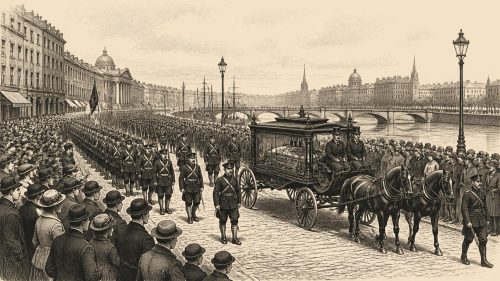
In 1915, the First World War intensified Ireland’s political, social and cultural divisions. The sinking of RMS Lusitania off Kinsale brought global conflict directly to Cork, killing about 1,198 people, including Hugh Lane and Thomas O’Brien Butler. John Redmond’s National Volunteers demonstrated continued constitutional strength, while Irish troops endured heavy losses at Gallipoli and prepared for France. Recruitment increasingly provoked opposition. Meanwhile, IRB-linked Volunteers secretly planned a 1916 rising, seeking German aid, while James Connolly promoted socialist militancy. O’Donovan Rossa’s Dublin funeral became a major republican demonstration. Cultural bodies debated nationalism, and wartime prices and hardship affected communities nationwide unevenly.
Read Article




