


Related Archive: Food supply

Culloden Repercussions

Culloden Repercussions

Archived: 13 October 2026

Abstract

In 1746, Ireland experienced the repercussions of Culloden rather than battle, as Irish exiles in French service fought for the Jacobites while Dublin Castle guarded against recruitment and disorder. Chesterfield’s administration ended amid continuing Catholic exclusion and official caution. Poor harvests, wartime demand and trade disruption prompted embargoes on provisions and salted meat, alongside grain imports and quarantine changes. Government proclamations targeted outlaws, organised fasts, and extended authority through local institutions. Westminster restricted Irish glass exports, while linen remained encouraged. John Cennick began Moravian work in Dublin, and Jonathan Swift’s bequest secured St Patrick’s Hospital’s legal foundation, illustrating charitable change.

Read Article

Glenmalure Victory

Glenmalure Victory

Archived: 25 October 2026

Abstract

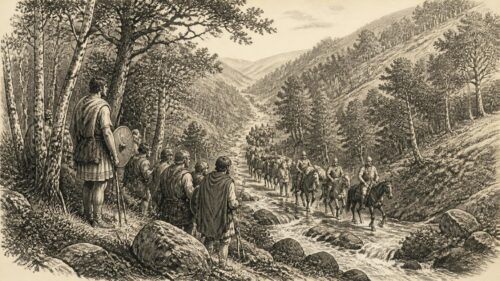
In 1276, Ireland remained politically fragmented, with English lordship dependent on local power, finance and force. In Connacht, rivalry between Tadc Ó Conchobair and Áed Muimnech produced alliances, burnings, cattle raids, recoveries and deaths, affecting wider lordly communities. In Wicklow, Geoffrey de Geneville’s expedition was defeated at Glenmalure by Art Mac Murchada, Gearóid Ó Broin and allies, demonstrating mountain resistance to Dublin’s authority. Edward I replaced Geneville with Robert de Ufford, whose government sought firmer control through administration, military spending and fortifications at Rindoon and Athlone. Possible Irish interest in English common law also exposed law as a negotiable privilege.

Read Article

