Archived: 28 September 2026
Abstract
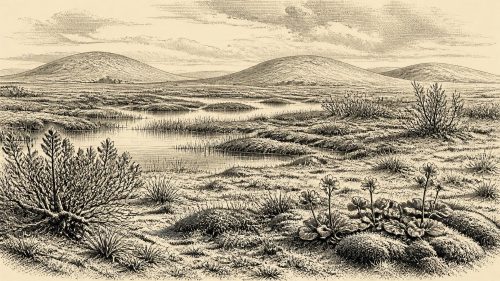
About 30,524 BCE, Ireland lay within the volatile Late Pleistocene, not a datable historical year. At Derryvree, County Fermanagh, sediments between glacial tills preserve evidence of an ice-free freshwater wetland sometime between roughly 36,900 and 31,700 cal BP. Fossils indicate tundra vegetation, including fringed sandwort, mosses, sedges and aquatic plants, with insects inhabiting pools and saturated ground. Southern cave collections show that diverse cold-stage mammals, including reindeer, mammoth and predators, reached or inhabited Ireland at varying times. Human presence remains unproven: a possibly butchered reindeer bone is inconclusive. Subsequent ice-sheet expansion buried and preserved this fragile environmental archive for posterity.
Read Article
Archived: 17 September 2026
Abstract
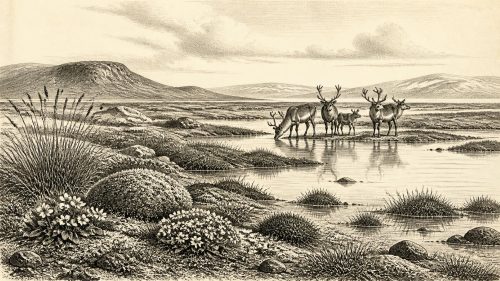
Around 31,482 BCE, Ireland has no recoverable written or event history, but environmental evidence indicates varied Late Pleistocene conditions. At Derryvree, County Fermanagh, freshwater sediments between tills, dated broadly to 36,900–31,700 cal BP, preserve tundra plants, mosses, insects and wetland habitats during an ice-free interval. Climate fluctuated sharply as the Irish Ice Sheet expanded towards its later maximum. Castlepook Cave, County Cork, contains time-averaged remains of mammoth, reindeer, giant deer, predators and fauna. A cut-marked reindeer bone may indicate human butchery, but disturbed deposits and absent artefacts leave this unconfirmed. The evidence depicts dynamic, biologically active landscapes, not settled society.
Read Article





