
Archived: 15 October 2026
Abstract
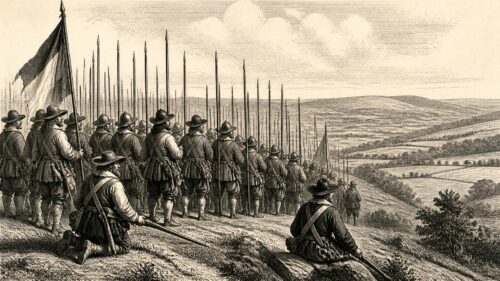
In 1648, the Catholic Confederation of Ireland fractured over the Dungarvan truce with Murrough O’Brien, Lord Inchiquin, newly aligned with Charles I. Exhaustion after 1647 defeats led moderates to seek a royalist coalition and negotiations with Ormond, despite Inchiquin’s destructive record. Papal nuncio Rinuccini condemned the truce, censuring supporters and joining Owen Roe O’Neill’s resistance. Rival Confederate armies campaigned without decisive battle, burdening civilians suffering requisition and scarcity. The Kilkenny assembly marginalised O’Neill, while Ormond’s return and Rome’s limited aid strengthened accommodation. O’Neill’s ceasefire with parliamentarian Michael Jones revealed division. Winter brought coalition, not peace, before the 1649 Ormond settlement.
Read Article
Archived: 15 October 2026
Abstract
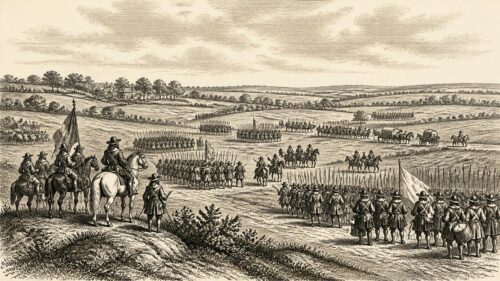
In 1647, the Catholic Confederation’s position collapsed after political division, logistical weakness and military reverses. Parliament gained Dublin when Ormond transferred the city in June, providing a strategic base. Michael Jones destroyed Thomas Preston’s Leinster army at Dungan’s Hill in August, ending any prospect of taking Dublin. In Munster, Inchiquin’s forces devastated communities and stormed Cashel, killing defenders and civilians, plundering the religious complex and deepening Catholic fears. In November, Inchiquin defeated Taaffe’s army at Knocknanuss, killing Alasdair MacColla. Although Kilkenny and O’Neill’s Ulster army survived, these disasters encouraged royalist negotiation and transformed Confederate ambitions into a struggle for survival.
Read Article
Archived: 15 October 2026
Abstract
In 1646, the Catholic Confederation reached its military zenith but became divided over peace with Charles I. Owen Roe O’Neill’s victory over Scottish Covenanters at Benburb, Preston’s Connacht operations, and the capture of Bunratty strengthened hopes of securing Catholic religious and political guarantees. The First Ormond Peace, agreed secretly with the royalist lord lieutenant, offered insufficient protections and provoked clerical, military and popular resistance. Papal nuncio Giovanni Battista Rinuccini led opposition, overthrowing the agreement and remodelling Confederate government. A failed advance on Dublin exposed rivalries, weak supply and divided command. Kilkenny’s Catholic print culture also articulated suffering, rights and legitimacy.
Read Article

Archived: 15 October 2026
Abstract
In 1645, the Catholic Confederation strengthened its position by capturing Duncannon Fort after Thomas Preston’s siege, gaining control over an important Waterford Harbour defence but not coastal supremacy. Secret negotiations between Edward Somerset, earl of Glamorgan, and Confederate representatives promised religious concessions and troops for Charles I, but their disclosure damaged royalist prospects. Archbishop Malachy Ó Caollaidhe died amid Connacht fighting. Papal nuncio Giovanni Battista Rinuccini arrived with money, arms and authority, intensifying demands for enforceable Catholic guarantees. War imposed severe local burdens, while Jesuits founded a Galway school and John Colgan published a major saints’ collection at Leuven abroad.
Read Article

