Archived: 14 October 2026
Abstract
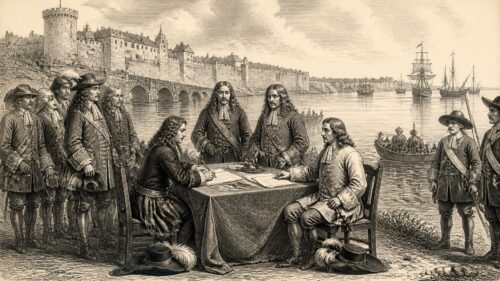
In 1691, Williamite forces broke Jacobite power in Ireland, ending the war begun after James II’s overthrow. Ginkel captured Athlone, then defeated Saint-Ruth’s army at Aughrim, where the French commander’s death precipitated rout and Galway’s surrender. Limerick, divided after Tyrconnell’s death and deprived of resources, endured siege, bombardment and a Williamite crossing of the Shannon. Articles signed on 3 October ended organised resistance, offering protections for Catholic property, trade and worship, though their wording and enforcement remained disputed. Military terms enabled departure, Williamite service or homecoming. Thousands entered French service, while William and Mary secured sovereignty amid unsettled political consequences.
Read Article
Archived: 14 October 2026
Abstract
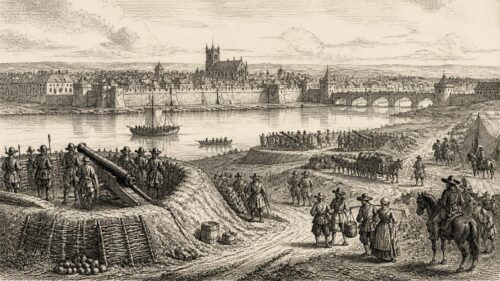
In 1651 Commonwealth forces tightened control of Ireland through campaigns in Munster and Connacht. Henry Ireton besieged Limerick, while Lord Broghill defeated Muskerry’s attempted relief army at Knocknaclashy, ending prospects of substantial support. Blockade, artillery, hunger and disease devastated Limerick’s inhabitants, provoking divisions between defenders, clergy and civilians seeking terms. The city surrendered on 27 October after internal betrayal opened key positions. Although many received quarter, leading military, civic and Catholic figures were excluded, imprisoned or executed. Ireton envisaged a more English, Protestant city. Meanwhile Galway came under blockade, becoming the remaining major centre of organised Catholic and royalist resistance.
Read Article
Archived: 18 October 2026
Abstract
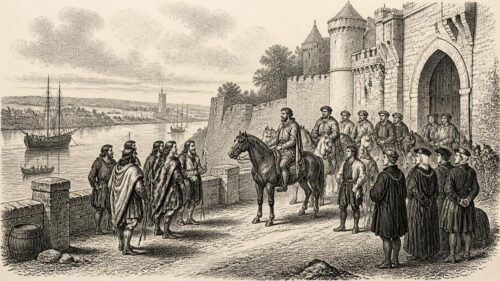
In 1549, Tudor authority in Ireland rested on negotiation, military pressure and limited resources. William Brabazon replaced Edward Bellingham as lord justice and held a major court at Limerick, where regional lords accepted a contingent peace secured by civic and aristocratic guarantees. Conflict continued across the midlands and west through castle seizures, raids, killings and disputed successions within Gaelic kindreds. Gunpowder caused Dermot O’Sullivan’s death, illustrating changing warfare. French envoys explored an Ulster alliance through Lough Foyle but found Gaelic divisions. Religious reform remained uneven, while local lordship, kinship and control of land shaped daily political realities beyond royal centres.
Read Article




