


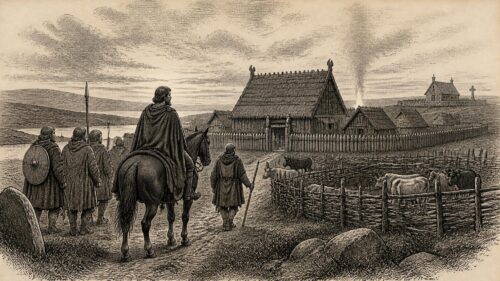
Archived: 28 October 2026
Abstract
In 901, Máel Ruanaid, designated heir of Ireland and son of high king Flann Sinna, was burned to death with companions by the Luigne, exposing the insecurity of succession and the reach of local rivalries. Among the victims were a neighbouring king and an ecclesiastical superior, illustrating intertwined secular and religious power. Annalistic dating remains uncertain, particularly for Cormac son of Cuilennán's accession as bishop-king of Cashel, generally placed in 901–902. Notices of abbots' deaths show monasteries' regional importance. The article cautions against assigning Dublin's Viking expulsion, famine, or other undocumented events securely to 901, despite gaps in surviving evidence.
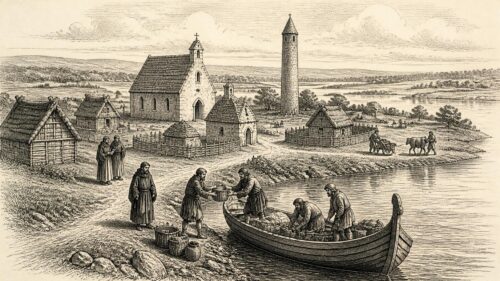
Read Article
Archived: 29 October 2026
Abstract
Conventionally dated to 843, despite annalistic chronological discrepancies, the year is chiefly recorded through deaths that affected Irish political, ecclesiastical and scholarly life. Máel Ruanaid son of Donnchad, king of strategically important Mide, died, leaving his dynasty poised for the later rise of his son Máel Sechnaill. Fergus son of Fothaid, king of Connacht, also died, creating uncertainty in another major province. Conglach, vice-abbot of Clonmacnoise, died after the monastery’s recent Viking plundering. Donnacán, an Irish scribe and anchorite, died in Italy, demonstrating enduring continental links. Viking pressure remained a background threat, although no battle is securely recorded for 843.
Read Article