Archived: 27 October 2026
Abstract
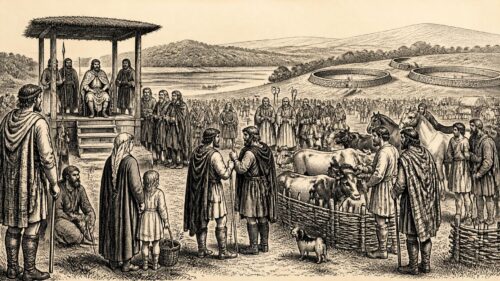
In 916, Flann Sinna died on 25 May after ruling Tara since 879, ending a long southern Uí Néill ascendancy. His son Conchobar succeeded in Mide, while Niall Glúndub of Cenél nÉogain became king of Tara, reflecting dynastic alternation rather than unified monarchy. Niall renewed the neglected Fair of Tailtiu, publicly asserting royal authority and the capacity to organise exchange, obligations and assembly. Elsewhere, raiders from Loch Dá Chae harried Munster and Leinster, killing Ainnle of Uaithne. Deaths among leading ecclesiastics and a lightning fire at Armagh exposed institutional vulnerability amid ceremony, rivalry and Scandinavian pressure throughout much of Ireland.
Read Article
Archived: 27 October 2026
Abstract
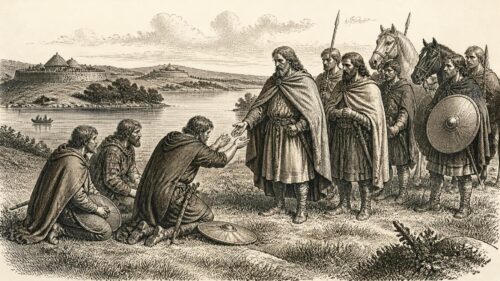
In 915, Ireland experienced interconnected political, religious and military pressures rather than a decisive battle. Óengus, Flann Sinna’s designated heir, died, weakening the ageing king of Tara, while Domnall of Ailech died in penitence, confirming his half-brother Niall Glúndub’s northern prominence. Flann’s sons Donnchad and Conchobor rebelled in Mide, but Niall’s army secured their submission and a truce with Brega, enhancing his influence. Scandinavian forces based at Waterford Harbour plundered Munster churches and settlements. Deaths of leading clerics and the treacherous wounding of a local king reveal institutional and regional instability. The year foreshadowed later succession conflicts and Viking warfare.
Read Article
Archived: 27 October 2026
Abstract
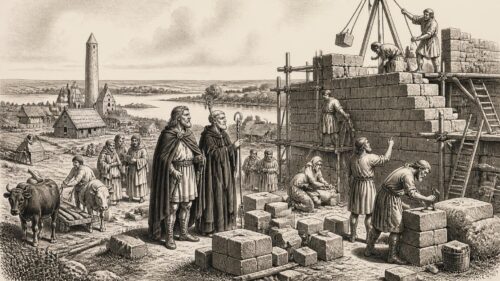
In 909, Flann Sinna, king of Tara, and Colmán Conaillech sponsored a stone church and sacristy at Clonmacnoise, whose surviving north wall attests early Irish monumental masonry. Situated beside the Shannon, the foundation served a populous religious and lay settlement while displaying royal power, ecclesiastical wealth and political connections. The nearby Cross of the Scriptures similarly linked Christian teaching with patronal commemoration. Following Flann’s victory at Belach Mugna in 908, his ally and son-in-law Cerball of Leinster died, prompting dynastic change. Annals also note regional rulers’ and churchmen’s deaths, cattle disease, and killings in Brega. Some battles remain insecurely dated.
Read Article
Archived: 28 October 2026
Abstract
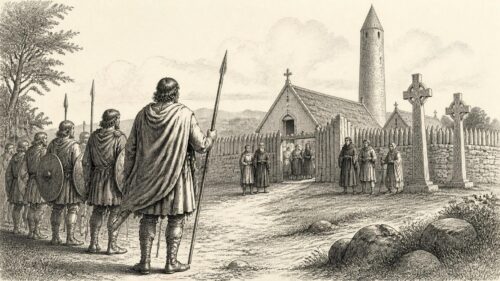
In 904, Flann Sinna, king of Tara, violently confronted his adult son Donnchad at Kells, where the Annals of Ulster record the profanation of the sacred site and the beheading of many men near its oratory. The episode, imperfectly dated, reveals dynastic conflict overriding sanctuary. Deaths of the leaders of Clonmacnoise, Glendalough and Emly marked transitions within influential ecclesiastical centres. Beyond Ireland, Ímar, grandson of Ímar, was killed by men of Foirtriu, reflecting instability after Dublin’s 902 expulsion of Scandinavian rulers. Later attribution of Clonmacnoise’s stone church to 904 is unreliable; evidence dates it to 909 rather than that year.
Read Article
Archived: 28 October 2026
Abstract
In 903, Irish annals recorded political and ecclesiastical transitions rather than a major campaign. Máel Finnia of Brega, recently associated with Dublin’s Scandinavian expulsion, died and received praise emphasising piety, generosity and martial authority. At Treóit near Tara, Máel Mithig and Áengus committed an unnamed killing at Flann Sinna’s instigation, showing royal influence exercised through kinship and local allies. Deaths among rulers in Laíges, Tuirbe and Uí Cheinnselaig indicated regional succession pressures. Senior churchmen also died, underlining monasteries’ administrative and political importance. Divergent annals require chronological caution. The year reveals power resting on fragile relationships between dynasties, churches and communities.
Read Article
Archived: 28 October 2026
Abstract
In 901, Máel Ruanaid, designated heir of Ireland and son of high king Flann Sinna, was burned to death with companions by the Luigne, exposing the insecurity of succession and the reach of local rivalries. Among the victims were a neighbouring king and an ecclesiastical superior, illustrating intertwined secular and religious power. Annalistic dating remains uncertain, particularly for Cormac son of Cuilennán's accession as bishop-king of Cashel, generally placed in 901–902. Notices of abbots' deaths show monasteries' regional importance. The article cautions against assigning Dublin's Viking expulsion, famine, or other undocumented events securely to 901, despite gaps in surviving evidence.
Read Article
Archived: 28 October 2026
Abstract
In annalistic 897, Máel Finnia of Brega defeated Ulaid and Dál nAraidi forces at Rath Cró, killing two kings and wounding Aidíth of Ulaid. Flann Sinna of Tara campaigned in Connacht, extracting pledges that demonstrated contested high-kingship. Uathmarán of Uí Fhailgi was killed by his own people, while Cormac of Mothail gained Déisi kingship after killing Máel Bennachta. Cathasach, tanist-abbot of Armagh, died. Aidíth was later murdered by associates. Dublin remained Scandinavian in 897; its expulsion belonged to 902. The sources reveal regional warfare, unstable succession and church politics, but cannot support broader claims about ordinary life or environmental conditions.
Read Article
Archived: 28 October 2026
Abstract
In 888, annalistic evidence records a major setback for Flann Sinna, king of Tara, when Dublin-centred foreigners defeated his coalition at the Battle of the Pilgrim. The deaths of Connacht’s king Áed and prominent churchmen exposed the breadth and fragility of Flann’s alliances. Meanwhile, Norse king Sigfrith was killed by a kinsman, and Cerball of Osraige died, altering regional politics. Northern Uí Néill forces campaigned against the south, while Tailtiu’s royal fair was not held. The year also saw Armagh’s abbot die and noted a change affecting religious women, illustrating intertwined political, ecclesiastical and social authority in contemporary Irish society.
Read Article
Archived: 28 October 2026
Abstract
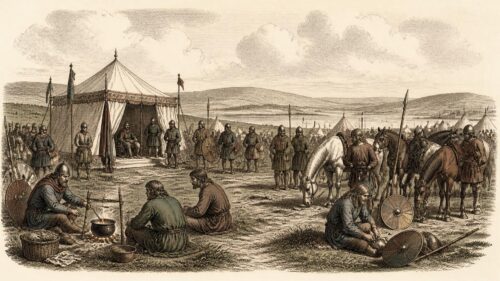
In 882, annalistic sources record Flann Sinna, king of Tara, asserting authority through campaigns, alliances and hostage-taking. With a mixed Irish and Scandinavian army, he entered northern Fochla, camped at Mag Eitir dí Glais, invaded Armagh and reportedly secured hostages from Cenél Conaill and Cenél nEógain. He also raided Munster and took hostages there. Elsewhere, the Conaille defeated the Ulaid, killing King Ainfíth and other nobles, while Scannlán of Dún Lethglaise was killed. Deaths included Connacht’s king Conchobor and several prominent churchmen. The records portray fragmented politics, where military power, ecclesiastical prestige and shifting alliances shaped rule across Ireland broadly.
Read Article
Archived: 28 October 2026
Abstract
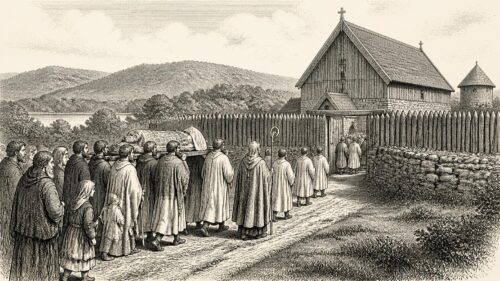
In 881, the Annals of Inisfallen record the death of Aed of In tAilén, described as bishop and confessor of Ireland, though his church and byname remain uncertain. Corrected annalistic chronology also places Flann Sinna’s northern expedition in this year. Leading Irish and Scandinavian forces, he camped at Mag Eitir dí Glais, invaded Armagh, and received hostages from Cenél Conaill and Cenél nEógain, asserting overlordship through military pressure and negotiation. The evidence highlights churches as influential, vulnerable centres of learning and wealth, Scandinavian participation in politics, and the limits of medieval records, which reveal no securely dated crises or conditions.
Read Article
Archived: 28 October 2026
Abstract
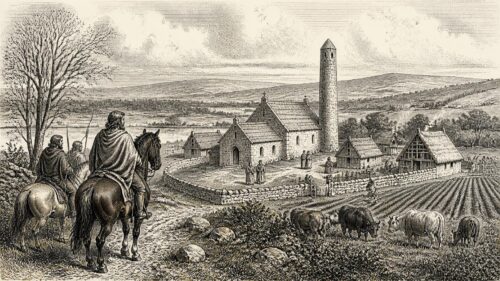
In 879, Áed Findliath, northern Uí Néill ruler and king of Tara, died at Druim Inasclainn, modern Dromiskin. His death brought Murchad son of Máel Dúin to the northern kingship and Flann Sinna of Clann Cholmáin to Tara, reviving a northern-southern Uí Néill alternation. Annals also record deaths among regional chiefs and church leaders, exposing widespread succession uncertainties. Foreigners captured Armagh’s superior Máel Coba and lector Mochta, demonstrating ecclesiastical vulnerability amid Scandinavian maritime activity. Spring fodder scarcity, followed by autumn abundance, highlighted cattle’s economic importance. The year revealed decentralised politics, influential churches, local instability, and relationships renegotiated after royal change.
Read Article





