
Archived: 26 September 2026
Abstract
In 1196, Ireland comprised competing regional lordships, churches and Anglo-Norman centres rather than a unified polity. Armagh’s canonry and precinct were burned, while conflict nearby saw Ruaidrí Mac Duinn Shléibhe’s mixed force defeated and Muirchertach Mac Lochlainn killed despite sacred guarantees. Sanctuary violations, retaliatory killings and dynastic successions demonstrated insecure local power. In Munster, Domnall Mac Carthaigh defeated English forces, challenged Limerick, attacked castles and negotiated over Cork, amid conflicts involving Irish and settler allies. Raids reached Louth and the midlands. Religious institutions remained politically influential, providing oaths, burial and retirement. Annalistic evidence depicts uneven disruption, not an island-wide crisis.
Read Article

Archived: 26 September 2026
Abstract
In 1071, Diarmait mac Máel na mBó’s southern Irish dominance weakened after dynastic losses, while his ally and foster-son, Tairdelbach Ua Briain of Munster, increasingly supplied the military force behind their authority. Tairdelbach took Leinster and Mide hostages for Diarmait, raided midland rivals, and mobilised Munster to build Shannon bridges at Áth Caille and Killaloe, improving strategic communications. Violence, depositions and killings affected Ulaid, Donegal and the midlands. Kildare, Glendalough and Clondalkin were burned amid Leinster instability. Despite warfare, farming, craft production, trade and ecclesiastical learning continued, as Tairdelbach’s infrastructure, diplomacy and campaigns foreshadowed his rising power in southern Ireland.
Read Article

Archived: 26 September 2026
Abstract
In 1068, Irish annals portray Tairdelbach Ua Briain’s growing ascendancy amid fragmented regional kingship. His rival cousin Murchad Ua Briain was killed during a raid in Tethba, strengthening Tairdelbach’s control of Munster. An ordinance credited to him promised security sufficient for livestock to remain unprotected at night. Visiting Leinster, he acquired Brian Bóruma’s sword and a Saxon royal standard from Diarmait mac Maíl na mBó, reflecting dynastic and Irish Sea politics linked to English exiles. Northern rulers died violently, while Armagh’s successor successfully visited Munster. Church deaths, Clonfert’s disruption, trade, farming and manuscript culture reveal political, ecclesiastical and maritime networks.
Read Article

Archived: 26 September 2026
Abstract
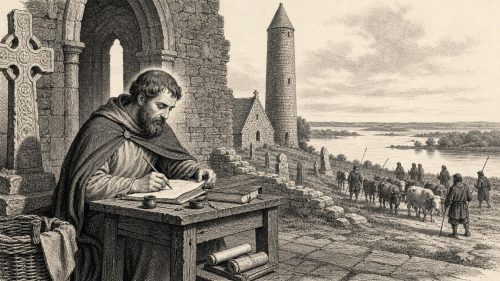
In 1030, Ireland remained divided among competing dynasties after Brian Bórama and Máel Sechnaill’s deaths. Annals record the killing of Tadc Ua Conchobair of Connacht, conflict and devastation in Mide, and northern rivalry culminating in Ruaidrí Ua Canannáin’s death. Flaithbertach Ua Néill travelled to Rome, while Tadc of Uí Cheinnselaig died on pilgrimage at Glendalough. Gormlaith’s death linked Leinster, Dublin and Munster dynasties. Ecclesiastical leaders, including successors of Ciarán, Tigernach and Comgall, died, alongside chief poet Cú Mara. Relic profanation, church attacks, maritime loss and a solar eclipse illustrate religion, learning, violence and observation shaping everyday political life across Ireland.
Read Article
Archived: 26 September 2026
Abstract
In 1023, Ireland experienced political fragmentation after Máel Sechnaill’s death. Rivalries destabilised Mide, where Domnall Ua Máel Sechnaill was killed, while Dublin’s Hiberno-Scandinavian rulers raided South Brega, killed Ainbíth Ua Cathasaigh, and seized King Donnchad Ua Duinn. Tadc son of Brian Bórama, a Munster dynastic rival, was killed by the Éile, allegedly at his half-brother Donnchad’s instigation. Connacht and northern kings also died in factional conflict. Clonmacnoise’s church lands were plundered of cattle. Annalists recorded January lunar and solar eclipses, spring drought, ecclesiastical deaths, and foreign rulers, revealing monastic learning and Ireland’s links across the Irish Sea and Christian Europe.
Read Article

Archived: 26 September 2026
Abstract
In 1022, the death of Máel Sechnaill mac Domnaill, king of Mide and foremost post-Clontarf claimant to Ireland’s high-kingship, exposed the weakness of island-wide authority. He died at Cró Inis on Lough Ennell, honoured by churches and remembered for royal generosity, though later accounts elaborate his final rites. His loss, following the death of his heir in 1021, intensified succession disputes. Warfare continued: Waterford’s Sitriuc was killed, Ulaid defeated Dublin at sea and attacked Airgialla, while regional rulers and heirs fell. Kildare was plundered, churchmen and poets died, and Irish kingship, trade, maritime power and ecclesiastical wealth remained closely intertwined.
Read Article

Archived: 26 September 2026
Abstract
In 1019, five years after Clontarf, Ireland remained politically fragmented despite Máel Sechnaill’s high-kingship. Donnchad mac Briain survived a sword attack that severed his right hand, while the death of Munster’s heir Mathgamain weakened Dál Cais networks. Sitriuc Silkbeard’s Dubliners raided Kells, killing inhabitants and carrying off captives and spoils. Lightning burned Kildare, and attackers violated Durrow’s stone church to seize and kill Mael Muad. Dynastic killings affected Ailech, Leinster and smaller kingdoms; northern raids, revenge killings and disease in Ára compounded insecurity. Annals portray churches as wealthy, vulnerable institutions and record interconnected sacred authority, warfare, succession and local life.
Read Article
Archived: 26 September 2026
Abstract
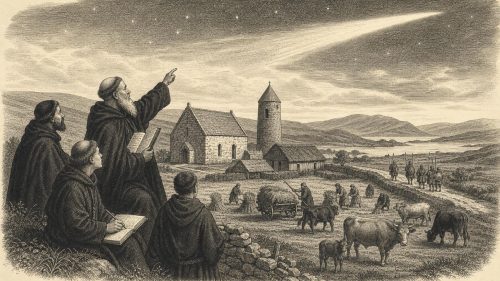
In 1018, four years after Clontarf, Ireland remained fragmented, as rival dynasties, Hiberno-Norse towns and local peoples pursued power through raiding, treachery and alliance. Máel Sechnaill’s authority in Mide was challenged when his steward and an allied king died during conflict in Fir Chell. Sitriuc Silkbeard of Dublin treacherously blinded Braen, son of Leinster’s Máel Mórda, ending his capacity to rule. Northern Uí Néill forces mobilised, while killings and plundering affected Gailenga, Tuatha Luigne and Óentreb. Ecclesiastical deaths reflected churches’ political and cultural importance; Waterford’s Norse king died. Annalists also recorded an autumn comet, revealing learned religious observation amid instability.
Read Article

Archived: 26 September 2026
Abstract
In 1016, two years after Clontarf, Máel Sechnaill mac Domnaill reasserted authority by taking Ulaid hostages, while Donnchad mac Briain raided Shannon islands, seized boats and consolidated Munster. Northern conflict between Ulaid and Dál Araide killed several rulers, and Osraige’s king slew Leinster and Uí Drona leaders at Leithglenn. Other regional dynastic deaths revealed fragmented power. Ecclesiastical life remained influential despite fires at Clonmacnoise, Clonfert, Kells and Downpatrick; church officers and the chief poet Mac Liag died. Raiding, hostage-taking and an autumn storm burdened communities. Annalistic peace meant relative stability after Clontarf, not an end to violence or political rivalry.
Read Article
Archived: 26 September 2026
Abstract
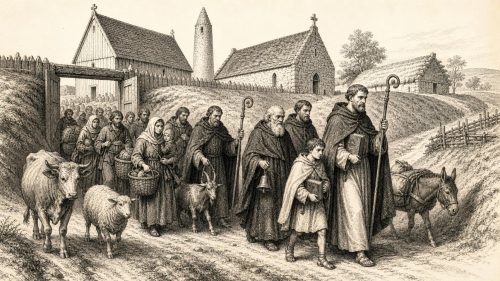
In 1015, Ireland remained unsettled after Clontarf, which had killed Brian Bóruma, Leinster’s Máel Mórda and key heirs. Máel Sechnaill mac Domnaill, aided by Flaithbertach Ua Néill, reasserted authority by plundering Leinster, taking cattle, tribute and hostages; later sources also associate campaigning with Dublin. In Munster, Donnchad mac Briain fought rivals while local kings suffered killings and deaths. Scarcity and dissension disrupted churches, with Emly vacated, Lorrha invaded and other sites plundered. Norse-Gaelic raiders seized 150 captives from western islands. Deaths, betrayals and interdynastic violence across Connacht, Bréifne and the north underscored a fragmented, dangerous political reconstruction after Brian's death.
Read Article

Archived: 26 September 2026
Abstract
In 1014, Ireland’s layered kingship faced conflict over Brian Boru’s overlordship of Dublin and Leinster. On Good Friday, 23 April, Brian’s coalition, including Máel Sechnaill, defeated Leinster, Dublin and overseas Scandinavian forces at Clontarf. The costly victory killed Brian, his son Murchad, grandson Tairdelbach, Máel Mórda of Leinster and Sigurðr of Orkney, but neither destroyed Dublin nor expelled Scandinavians. Armagh’s elaborate burial rites strengthened Brian’s Christian royal memory. Subsequent Munster rivalries, provincial raids and deaths exposed continuing instability after the battle. Máel Sechnaill resumed central political importance, while Dublin remained a vital Hiberno-Norse trading centre within the Irish Sea world.
Read Article

Archived: 26 September 2026
Abstract
In 1013, Brian Bórama’s Irish overlordship faced coordinated resistance from Leinster and Hiberno-Norse Dublin under Máel Mórda and Sitriuc Silkbeard. Warfare spread across Mide, Brega, Leinster and Munster: Máel Sechnaill suffered losses near Dublin but countered raids, while northern rivals increased pressure. Brian and his son Murchad conducted prolonged campaigns, devastating Leinster, taking captives and advancing towards Dublin. Dublin’s fleet burned Cork, though Munster forces killed prominent Dubliners. Church relics, ecclesiastical authority, agriculture and fortifications featured in the conflict. Annals portray a Christian, literate yet violent society. No settlement emerged; 1013 established the conditions for Clontarf’s decisive battle in 1014.
Read Article

Archived: 26 September 2026
Abstract
Annals for 1009 portray Ireland as a contested polity under Brian mac Cennétig’s formidable but limited overlordship. Máel Sechnaill raided Leinster, while Flaithbertach Ua Néill killed rivals, raided Brega and seized cattle tribute. Connacht and Bréifne fought reciprocal campaigns, alongside local dynastic killings. The death of Brian’s Connacht-born wife reflected the political importance of royal marriage. Armagh’s lead-roofed oratory demonstrated ecclesiastical wealth and ambition; deaths of church successors at Kells and Ros Cré marked institutional change. The chief poet Clothna also died. Cattle, warfare, hostages, alliances and religious centres shaped authority, revealing competing kingships rather than a unified Irish state.
Read Article
Archived: 26 September 2026
Abstract
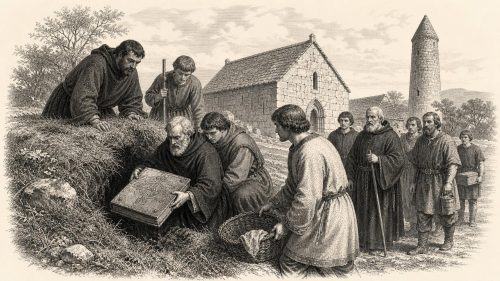
In 1007, Brian Bóruma reinforced his authority by campaigning towards Armagh, securing Ulaid hostages and involving Norse allies. Ulaid suffered rival killings, revenge and violations of church sanctuary, alongside intervention by Flaithbertach Ua Néill. In Mide, the displaced high king Máel Sechnaill revived Tailtiu’s assembly, installed a Columban successor and funded Clonmacnoise’s altar-front through local levies, asserting ceremonial kingship. At Kells, the Great Gospel of Colum Cille, probably the Book of Kells, was stolen for its precious cover but recovered. Ecclesiastical obits reveal religious networks. The annals depict Ireland as politically fragmented, wealthy, and shaped by power, sanctity and violence.
Read Article

Archived: 26 September 2026
Abstract
In 1004, Brian Bórama’s claim to supremacy over Ireland remained ambitious but incomplete. Having subordinated Máel Sechnaill of Mide, he faced determined northern resistance from Cenél nEógain. The Annals of Ulster record that they obstructed his intended circuit of Ireland. At Cráeb Tulcha on 14 September, Cenél nEógain defeated Ulaid; Ulaid king Eochaid mac Ardgar and Ailech king Áed Ua Néill died, destabilising both powers. Traditions associate this period with Brian’s expedition to Armagh, demands for hostages, and gold offering, linking political display with ecclesiastical authority. Annals record clerical deaths, regional killings, Dublin’s burning, and Máel Sechnaill’s injury, revealing insecurity.
Read Article

Archived: 26 September 2026
Abstract
In 1003, Brian Bórama sought to turn his newly acquired high-kingship into authority, relying on cooperation with Máel Sechnaill of Mide. Their northern Connacht expedition was checked by the Northern Uí Néill, demonstrating limits to Brian’s power. Brian deposed Leinster’s Donnchad and installed Máel Mórda, holding provincial hostages as guarantees. Across Ireland, raids, killings and disputed successions showed persistent instability. Ecclesiastical deaths and sanctuary violations emphasised churches’ political importance, while learned figures preserved claims and status. Uncertainly dated northern warfare further revealed regional fragmentation. Ireland was consolidating under Brian, yet rule remained dependent on force, alliances, tribute and religious legitimacy.
Read Article




