

Related Archive: Municipal Reform

Corn Exchange Repeal Launch

Corn Exchange Repeal Launch

Archived: 11 October 2026

Abstract

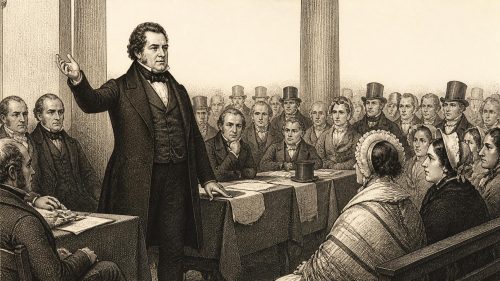
In 1840 Daniel O’Connell relaunched the constitutional campaign to repeal the Act of Union through the National, later Loyal National, Repeal Association, seeking an Irish legislature within the Crown rather than separation. Though initially modest, it established subscriptions, committees and local mobilisation. Parliament’s Municipal Corporations (Ireland) Act replaced most old corporations and reformed ten boroughs, but retained restricted franchises and limited powers. The Poor Law entered operation, with Cork’s temporary workhouse admitting inmates, signalling a restrictive institutional response to poverty. Rural inequality, population pressure and regional contrasts persisted, alongside railway plans, church reforms and Father Mathew’s temperance movement across Ireland.

Read Article

Constables and Tithe Arrears

Constables and Tithe Arrears

Archived: 11 October 2026

Abstract

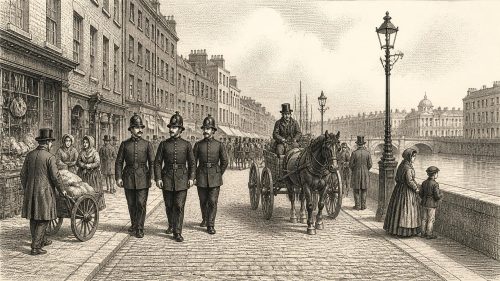
In 1836, Ireland experienced contested administrative reform rather than a decisive settlement. Westminster strengthened policing through the Constabulary and Dublin Police Acts, while licensing rules extended supervision of public houses. Tithe arrears remained unresolved: the Tithe Compositions Act merely suspended recovery proceedings, and church reforms scrutinised ecclesiastical revenues. O’Connell’s Catholic organisation demonstrated popular political strength despite a narrow franchise, notably in Longford. Municipal reform largely stalled. The Poor Inquiry documented severe, varied poverty but produced no agreed remedy; poor law followed in 1838. Crop failures heightened anxiety, while banks, newspapers and Mount Jerome cemetery reflected emerging institutional and urban change.

Read Article

