Archived: 11 October 2026
Abstract
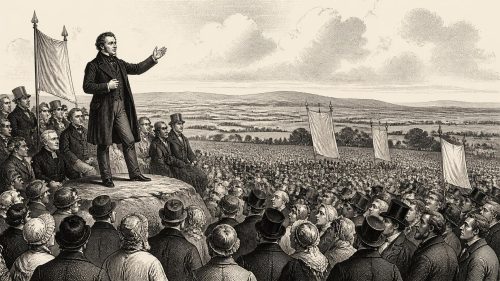
In 1843 Daniel O’Connell’s Repeal campaign sought restoration of an Irish parliament while retaining the Crown. Organised by the Repeal Association, enormous peaceful monster meetings at Trim, Tara and Mullaghmast mobilised supporters and linked self-government to Ireland’s nationhood, poverty, land insecurity and development. Thomas Davis and The Nation broadened its cultural nationalism, while clergy played organisational roles. Beneath pageantry, agricultural dependence, insecure tenancies and harsh Poor Law relief revealed social vulnerability. The prohibited Clontarf meeting marked the campaign’s defeat: O’Connell cancelled it to avert violence, after which government prosecutions began. Repeal failed, but 1843 shaped nationalism and highlighted Ireland’s crisis.
Read Article
Archived: 11 October 2026
Abstract
In 1840 Daniel O’Connell relaunched the constitutional campaign to repeal the Act of Union through the National, later Loyal National, Repeal Association, seeking an Irish legislature within the Crown rather than separation. Though initially modest, it established subscriptions, committees and local mobilisation. Parliament’s Municipal Corporations (Ireland) Act replaced most old corporations and reformed ten boroughs, but retained restricted franchises and limited powers. The Poor Law entered operation, with Cork’s temporary workhouse admitting inmates, signalling a restrictive institutional response to poverty. Rural inequality, population pressure and regional contrasts persisted, alongside railway plans, church reforms and Father Mathew’s temperance movement across Ireland.
Read Article




