
Archived: 8 October 2026
Abstract
In 1962, Seán Lemass advanced Ireland’s application to join the European Economic Community, arguing that economic modernisation required wider markets despite dependence on Britain. Growth after 1958 tempered, but did not end, emigration, rural decline and weak infrastructure; new housing, sanitation and welfare measures addressed domestic needs. The IRA ended Operation Harvest, while Ireland continued demanding UN service in the Congo. Television expanded national culture through Radharc and The Late Late Show, as the Theatre Royal closed and The Chieftains formed. Catholic influence remained strong, yet Vatican II signalled change. Ireland balanced European ambition, international engagement, tradition and unresolved partition.
Read Article

Archived: 8 October 2026
Abstract
1960 marked Ireland’s transition towards modernisation amid emigration, low incomes and rural decline. Seán Lemass’s government advanced the Programme for Economic Expansion, promoting investment, exports, infrastructure and overseas industry, while extending state institutions through legislation. The Broadcasting Authority Act established the basis for national television, conceived as both modern medium and cultural instrument. Ireland’s international role expanded when troops joined the UN Congo mission and Frederick Boland became General Assembly president; nine soldiers’ deaths at Niemba exposed peacekeeping’s dangers. Partition remained unresolved, while disasters at Shannon and the Plassy rescue highlighted transport risks and resilience. The year set uncertain directions.
Read Article

Archived: 8 October 2026
Abstract
In 1959 Éamon de Valera left the Taoiseachship to become Ireland’s third president after defeating Seán Mac Eoin, while Seán Lemass succeeded him without an election. A simultaneous referendum to replace proportional representation was rejected. Lemass inherited emigration, unemployment and rural decline, but advanced economic expansion, industrial exports, infrastructure and skills training, including the Apprenticeship Act. Trade unions reunited as the all-island Irish Congress of Trade Unions. The IRA Border Campaign continued amid weak republican electoral support. Cultural life featured John B. Keane’s Sive and George Morrison’s Mise Éire. The year combined revolutionary memory and partition with tentative social modernisation.
Read Article

Archived: 8 October 2026
Abstract
In 1958, Ireland faced unemployment, low output and severe emigration, prompting T. K. Whitaker’s Economic Development, or Grey Book, and the Government’s November Programme for Economic Expansion. These rejected reliance on protectionism alone, advocating productivity, exports, investment and planning, though recovery remained uncertain. Lemass promoted outward-facing industry, symbolised by Ardmore Studios. Political debate included a proposed replacement of proportional representation and partial relaxation of the marriage bar for national teachers. Transport reorganisation divided the Great Northern Railway and closed Dublin’s Harcourt Street line. Amid the IRA Border Campaign, Ireland began United Nations service in Lebanon. Sporting events provided international connections.
Read Article
Archived: 8 October 2026
Abstract
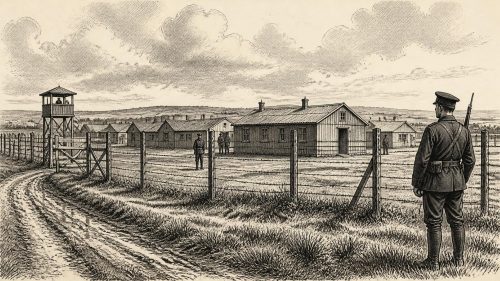
In 1957, Ireland faced economic decline, emigration and renewed border violence. The IRA’s failed Brookeborough attack killed Seán South and Fergal O’Hanlon, while subsequent violence prompted de Valera’s Fianna Fáil government, elected in March, to intern republicans at the Curragh. Despite constitutional commitment to unity, Dublin prioritised state authority. T. K. Whitaker’s analysis of protectionism, weak exports and unemployment initiated preparation for economic reform, alongside IMF and World Bank membership. Social legislation addressed health insurance, mental treatment, married women’s legal status and Gaeltacht employment. The Fethard-on-Sea boycott exposed religious intolerance, while theatre censorship and railway closures reflected rural contraction nationwide.
Read Article




