Architecture

Wellesly Bridge, Limerick (c.1840s)

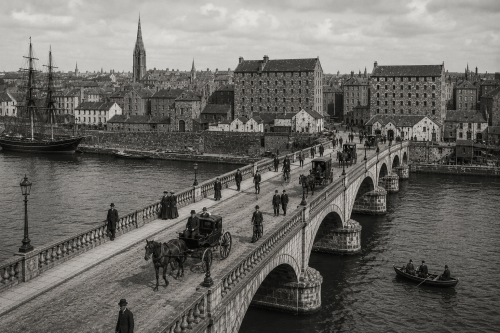
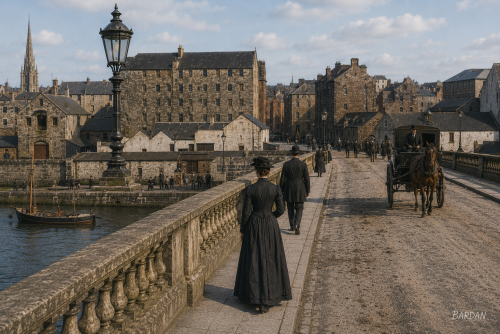
A sweeping view of Wellesley Bridge, now Sarsfield Bridge, crossing the River Shannon in Limerick City. The elegant 1835 structure rises with restrained neoclassical grace, its stone arches carrying traffic between the historic city centre and Thomondgate on the northern shore. Calm river water reflects the bridge’s pale masonry, while quays, rooftops, and distant activity suggest a city expanding beyond its old boundaries. Maritime details, mooring points, and riverside movement evoke Limerick’s trading past. The scene should feel dignified, atmospheric, and historically grounded, presenting the bridge as both active crossing and enduring architectural landmark.
Wellesly Bridge, Limerick (c.1840s)

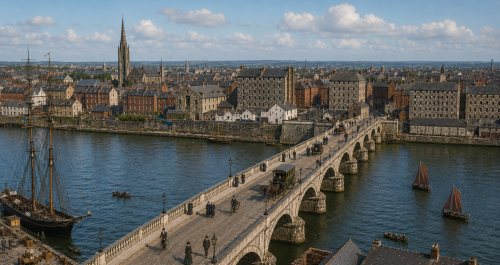
A sweeping view of Wellesley Bridge, now Sarsfield Bridge, crossing the River Shannon in Limerick City. The elegant 1835 structure rises with restrained neoclassical grace, its stone arches carrying traffic between the historic city centre and Thomondgate on the northern shore. Calm river water reflects the bridge’s pale masonry, while quays, rooftops, and distant activity suggest a city expanding beyond its old boundaries. Maritime details, mooring points, and riverside movement evoke Limerick’s trading past. The scene should feel dignified, atmospheric, and historically grounded, presenting the bridge as both active crossing and enduring architectural landmark.
Wellesly Bridge, Limerick (c.1840s)

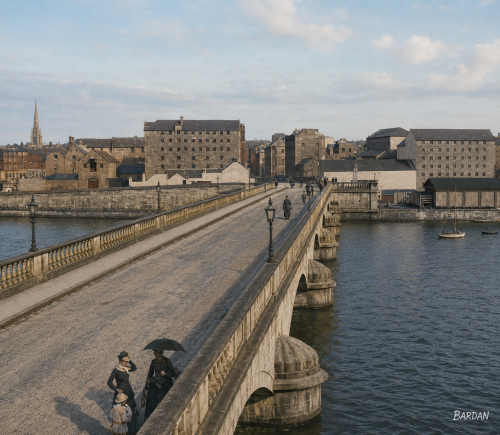
A sweeping view of Wellesley Bridge, now Sarsfield Bridge, crossing the River Shannon in Limerick City. The elegant 1835 structure rises with restrained neoclassical grace, its stone arches carrying traffic between the historic city centre and Thomondgate on the northern shore. Calm river water reflects the bridge’s pale masonry, while quays, rooftops, and distant activity suggest a city expanding beyond its old boundaries. Maritime details, mooring points, and riverside movement evoke Limerick’s trading past. The scene should feel dignified, atmospheric, and historically grounded, presenting the bridge as both active crossing and enduring architectural landmark.
Wellesly Bridge, Limerick (c.1840s)

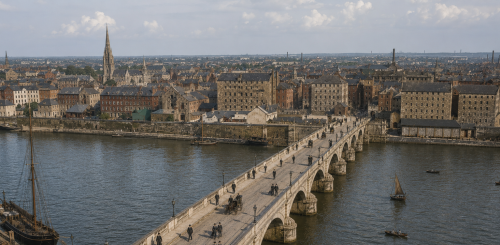
A sweeping view of Wellesley Bridge, now Sarsfield Bridge, crossing the River Shannon in Limerick City. The elegant 1835 structure rises with restrained neoclassical grace, its stone arches carrying traffic between the historic city centre and Thomondgate on the northern shore. Calm river water reflects the bridge’s pale masonry, while quays, rooftops, and distant activity suggest a city expanding beyond its old boundaries. Maritime details, mooring points, and riverside movement evoke Limerick’s trading past. The scene should feel dignified, atmospheric, and historically grounded, presenting the bridge as both active crossing and enduring architectural landmark.
Wellesly Bridge, Limerick (c.1840s)

A sweeping view of Wellesley Bridge, now Sarsfield Bridge, crossing the River Shannon in Limerick City. The elegant 1835 structure rises with restrained neoclassical grace, its stone arches carrying traffic between the historic city centre and Thomondgate on the northern shore. Calm river water reflects the bridge’s pale masonry, while quays, rooftops, and distant activity suggest a city expanding beyond its old boundaries. Maritime details, mooring points, and riverside movement evoke Limerick’s trading past. The scene should feel dignified, atmospheric, and historically grounded, presenting the bridge as both active crossing and enduring architectural landmark.
Limerick Boat Club

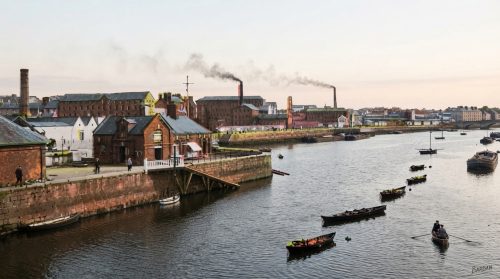
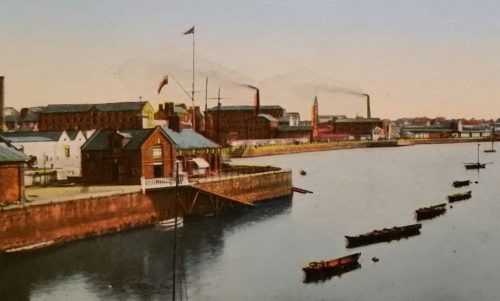
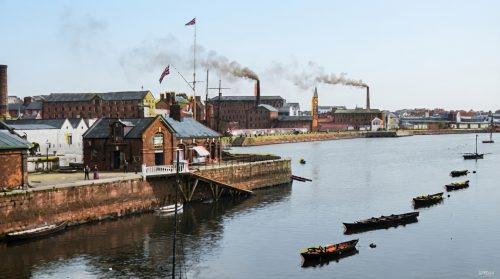
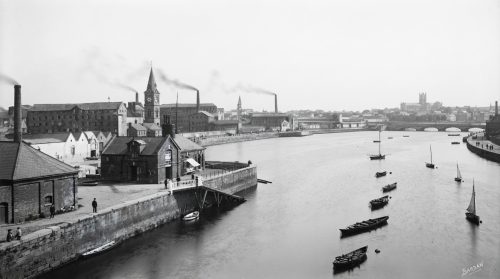
Limerick Boat Club, founded in 1870, ranks among Ireland’s oldest and most distinguished sporting institutions. For generations, it has introduced people to the pleasures and disciplines of rowing on the River Shannon, encouraging fitness, teamwork and a lasting appreciation of the water. The club’s striking red-brick Victorian clubhouse, standing directly beside the river, has become a familiar landmark on Limerick’s waterfront. Although rooted in a proud competitive tradition, the club places strong emphasis on recreational rowing and community participation. Its enduring presence reflects both the city’s deep connection with the Shannon and Limerick’s long, celebrated sporting heritage and civic identity.

Limerick’s Industrial Waterfront

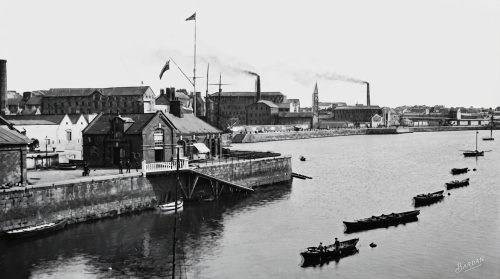
This view of Limerick City’s waterfront captures a busy industrial landscape beside the River Shannon. Factory buildings, warehouses and tall smoking chimneys dominate the skyline, reflecting the city’s long history of manufacturing and riverside commerce. In the foreground, timber buildings and a landing stage stand along the quay, while several small rowing boats move across the calm water. The scene combines industry, transport and recreation, illustrating the importance of the river to everyday life in Limerick. Smoke rising above the rooftops conveys the energy of a working city shaped by its factories, docks and waterways.