Architecture

Pery Square

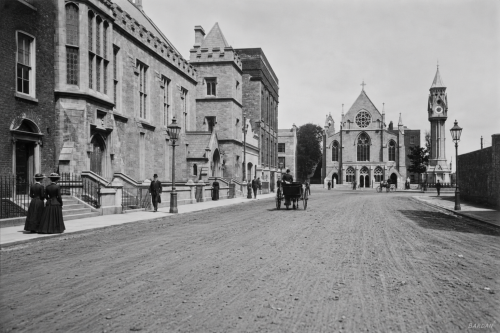
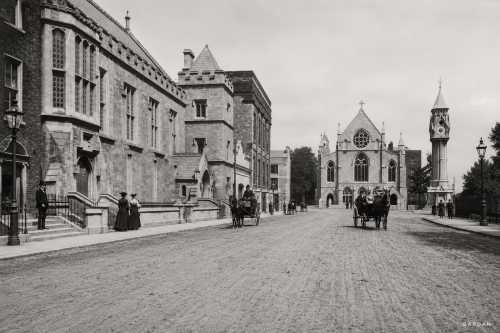
Around 1900, Pery Square presented one of Limerick’s most elegant urban settings, facing the newly opened People’s Park and framed by distinctive Georgian terraces. The celebrated Tontine Buildings, built between 1835 and 1838 as a speculative venture, gave the square a story as unusual as its architecture. Their shares, tied to named lives in the so-called Life and Death Lottery, were still gaining value as horse-drawn traffic, pedestrians, gas lamps, and civic buildings animated the street. The tontine was finally won in 1913 by Sophia Vanderkiste, closing a remarkable chapter in Limerick’s local social and architectural history.
Pery Square

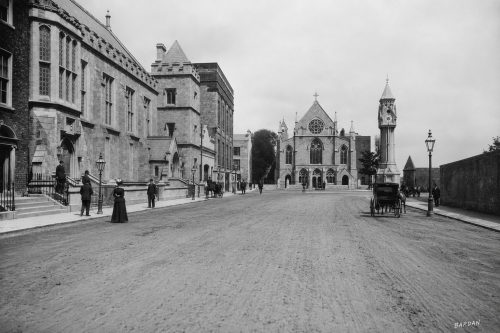
Around 1900, Pery Square presented one of Limerick’s most elegant urban settings, facing the newly opened People’s Park and framed by distinctive Georgian terraces. The celebrated Tontine Buildings, built between 1835 and 1838 as a speculative venture, gave the square a story as unusual as its architecture. Their shares, tied to named lives in the so-called Life and Death Lottery, were still gaining value as horse-drawn traffic, pedestrians, gas lamps, and civic buildings animated the street. The tontine was finally won in 1913 by Sophia Vanderkiste, closing a remarkable chapter in Limerick’s local social and architectural history.
Pery Square

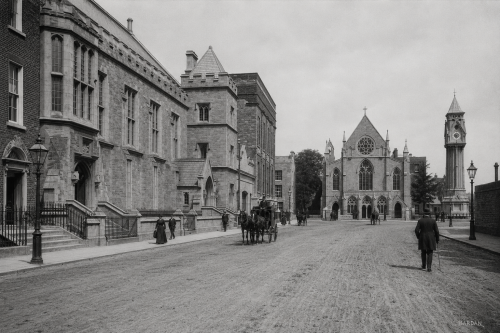
Around 1900, Pery Square presented one of Limerick’s most elegant urban settings, facing the newly opened People’s Park and framed by distinctive Georgian terraces. The celebrated Tontine Buildings, built between 1835 and 1838 as a speculative venture, gave the square a story as unusual as its architecture. Their shares, tied to named lives in the so-called Life and Death Lottery, were still gaining value as horse-drawn traffic, pedestrians, gas lamps, and civic buildings animated the street. The tontine was finally won in 1913 by Sophia Vanderkiste, closing a remarkable chapter in Limerick’s local social and architectural history.
Pery Square

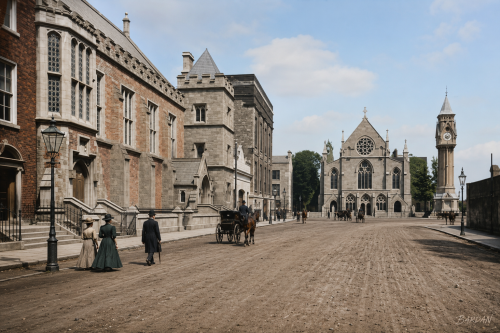
Around 1900, Pery Square presented one of Limerick’s most elegant urban settings, facing the newly opened People’s Park and framed by distinctive Georgian terraces. The celebrated Tontine Buildings, built between 1835 and 1838 as a speculative venture, gave the square a story as unusual as its architecture. Their shares, tied to named lives in the so-called Life and Death Lottery, were still gaining value as horse-drawn traffic, pedestrians, gas lamps, and civic buildings animated the street. The tontine was finally won in 1913 by Sophia Vanderkiste, closing a remarkable chapter in Limerick’s local social and architectural history.
Pery Square

Around 1900, Pery Square presented one of Limerick’s most elegant urban settings, facing the newly opened People’s Park and framed by distinctive Georgian terraces. The celebrated Tontine Buildings, built between 1835 and 1838 as a speculative venture, gave the square a story as unusual as its architecture. Their shares, tied to named lives in the so-called Life and Death Lottery, were still gaining value as horse-drawn traffic, pedestrians, gas lamps, and civic buildings animated the street. The tontine was finally won in 1913 by Sophia Vanderkiste, closing a remarkable chapter in Limerick’s local social and architectural history.
King John’s Castle (1922)

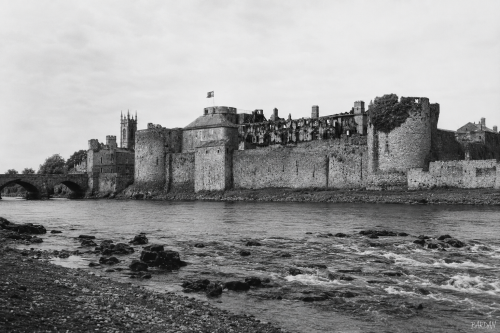
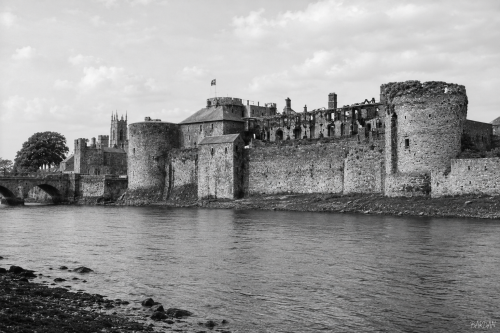
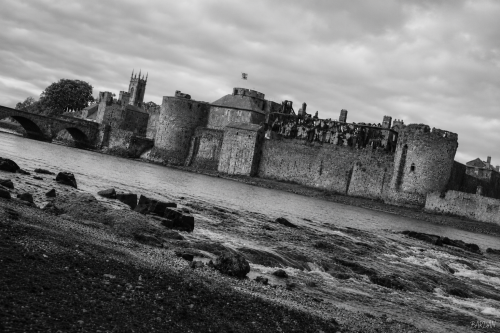
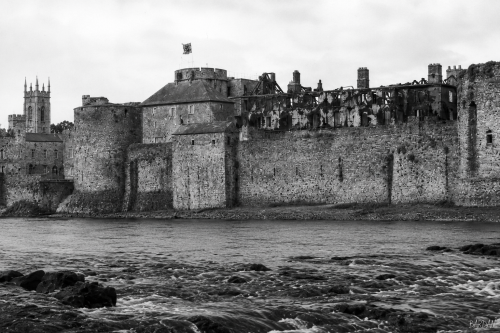
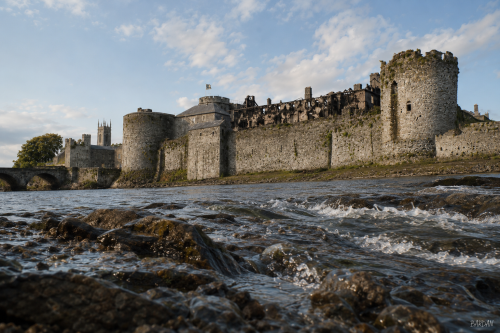
King John’s Castle stands beside the River Shannon at Curragower Falls, with broken water, river rocks and the castle’s stone frontage visible across the scene. The round towers, curtain walls and riverside defences remain central, while the burned Castle Barracks appears roofless and blackened within the enclosure. Thomond Bridge is visible to the left, with nearby trees, older buildings and a church tower rising beyond the castle walls. The river surface shows ripples, reflections and shallow movement below the fortifications. The image presents the castle after damage, set within the wider early twentieth century Limerick urban riverside landscape after 1922.

King John’s Castle (1922)

King John’s Castle stands beside the River Shannon at Curragower Falls, with broken water, river rocks and the castle’s stone frontage visible across the scene. The round towers, curtain walls and riverside defences remain central, while the burned Castle Barracks appears roofless and blackened within the enclosure. Thomond Bridge is visible to the left, with nearby trees, older buildings and a church tower rising beyond the castle walls. The river surface shows ripples, reflections and shallow movement below the fortifications. The image presents the castle after damage, set within the wider early twentieth century Limerick urban riverside landscape after 1922.

King John’s Castle (1922)

King John’s Castle stands beside the River Shannon at Curragower Falls, with broken water, river rocks and the castle’s stone frontage visible across the scene. The round towers, curtain walls and riverside defences remain central, while the burned Castle Barracks appears roofless and blackened within the enclosure. Thomond Bridge is visible to the left, with nearby trees, older buildings and a church tower rising beyond the castle walls. The river surface shows ripples, reflections and shallow movement below the fortifications. The image presents the castle after damage, set within the wider early twentieth century Limerick urban riverside landscape after 1922.

King John’s Castle (1922)

King John’s Castle stands beside the River Shannon at Curragower Falls, with broken water, river rocks and the castle’s stone frontage visible across the scene. The round towers, curtain walls and riverside defences remain central, while the burned Castle Barracks appears roofless and blackened within the enclosure. Thomond Bridge is visible to the left, with nearby trees, older buildings and a church tower rising beyond the castle walls. The river surface shows ripples, reflections and shallow movement below the fortifications. The image presents the castle after damage, set within the wider early twentieth century Limerick urban riverside landscape after 1922.

King John’s Castle (1922)

King John’s Castle stands beside the River Shannon at Curragower Falls, with broken water, river rocks and the castle’s stone frontage visible across the scene. The round towers, curtain walls and riverside defences remain central, while the burned Castle Barracks appears roofless and blackened within the enclosure. Thomond Bridge is visible to the left, with nearby trees, older buildings and a church tower rising beyond the castle walls. The river surface shows ripples, reflections and shallow movement below the fortifications. The image presents the castle after damage, set within the wider early twentieth century Limerick urban riverside landscape after 1922.