1901

Militia Mobilised

The South African War entered everyday life in Limerick during 1900 when the Royal Limerick County Militia was embodied for extended military service. Since the army reforms of 1881, the historic county force had formed the 5th Battalion of the Royal Munster Fusiliers and maintained its local headquarters at Strand Barracks. Its mobilisation connected families throughout Limerick city and county with the wider demands of an imperial conflict. Although the battalion did not campaign against the Boers as a complete unit, its men undertook duties that released regular soldiers for service elsewhere.

Legal Resistance

Limerick Harbour Commissioners instructed the Dublin solicitor George Fottrell to organise formal opposition to renewed proposals for railway amalgamation. The decision, reported on 2 January 1900, also authorised him to retain an experienced King’s Counsel to represent the harbour authority during the expected parliamentary struggle. Commissioners had resisted a similar scheme during the previous year and regarded its revival as a direct threat to the commercial independence of Limerick. By securing legal expertise at an early stage, they ensured that the port’s objections would be supported by evidence, parliamentary procedure and professional advocacy rather than confined to local resolutions.

Shannon Opposition

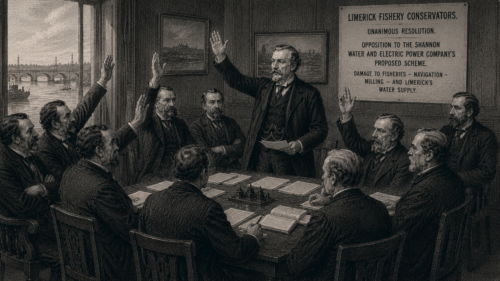
The surviving newspaper evidence dates this report to 2 January 1900 rather than 1 January, although the meeting itself may have occurred immediately beforehand. The Limerick Fishery Conservators, presided over by Lord Massy, unanimously resolved to oppose the Shannon Water and Electric Power Company’s proposed parliamentary bill. Promoters sought authority to harness Shannon water near Lough Derg and carry it through engineered channels to generate electricity at Clonlara. The Conservators regarded the project as a serious threat to interests already dependent upon the river and resolved to organise opposition before Parliament granted the company extensive powers.

Inquiry Announced

The Inspectors of Irish Fisheries announced that they would hold an official inquiry in Limerick on 30 January 1900 into the works proposed by the Shannon Water and Electric Power Syndicate. Notice of the hearing was sent to Limerick County Council as opposition widened among fishery owners, navigational interests and public authorities. The inquiry offered affected parties an opportunity to place technical evidence and local objections before officials responsible for protecting Irish fisheries. It also moved the controversy beyond public resolutions, requiring the promoters to answer detailed questions about water diversion, river levels and the consequences of their proposed generating works.

Takeover Opposed

Limerick Corporation unanimously authorised formal opposition to the proposed sale of the Waterford, Limerick and Western Railway to the Great Southern and Western Railway. At a special meeting reported on 5 January 1900, William L. Stokes, JP, moved that the Corporation’s solicitor be empowered to resist the scheme and take every necessary step on the city’s behalf. Councillor O’Brien seconded the motion. Several interested citizens attended beyond the council barrier, reflecting the strength of public concern surrounding the renewed amalgamation bill. The resolution was carried unanimously and received applause from those observing the proceedings.

Shannon Defence

On 2 January 1900, the Limerick Fishery Conservators unanimously opposed the scheme promoted by the Shannon Water and Electric Power Company. Meeting under Lord Massy’s chairmanship, the members viewed the proposed parliamentary bill as a direct threat to interests dependent upon the river. Their objections extended beyond salmon fishing to navigation, milling and the public water supply of Limerick. The Conservators feared that private promoters seeking to harness the Shannon for electricity might secure broad powers before the consequences for existing river users had been fully investigated or adequately protected.

Railway Resistance

On 2 January 1900, the Freeman’s Journal reported that the Limerick Harbour Commissioners had again engaged Mr Fottrell, a Dublin solicitor, to organise opposition to the renewed railway amalgamation scheme. He was also instructed to retain senior counsel on the Commissioners’ behalf. The proposed arrangement would absorb the Waterford, Limerick and Western Railway into the larger Great Southern and Western Railway system. By appointing legal representatives before the parliamentary contest developed further, the Harbour Commissioners signalled that they regarded the scheme not as a private commercial transaction, but as a matter affecting the future prosperity of Limerick and its port.

Purchase Delayed

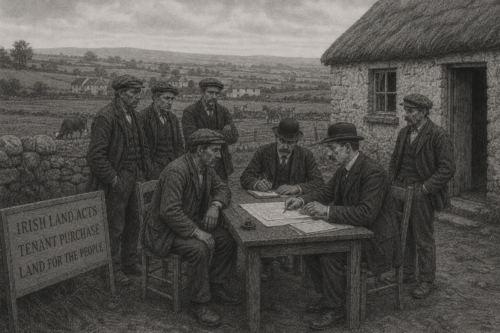
Tenant purchase continues under the existing Irish Land Acts, allowing some farmers to replace rent payments with annual instalments towards ownership of their holdings. The principle has won broad support among tenants who believe possession of the soil would provide greater independence, security and confidence in improving their farms. Yet the number of completed sales remains insufficient to satisfy many rural communities. In County Limerick, farmers continue to wait upon negotiations between landlords, tenants, the Irish Land Commission and the Treasury, while political organisers argue that a reform intended to settle the land question is proceeding far too slowly.