Takeover Opposed(c.1900s)
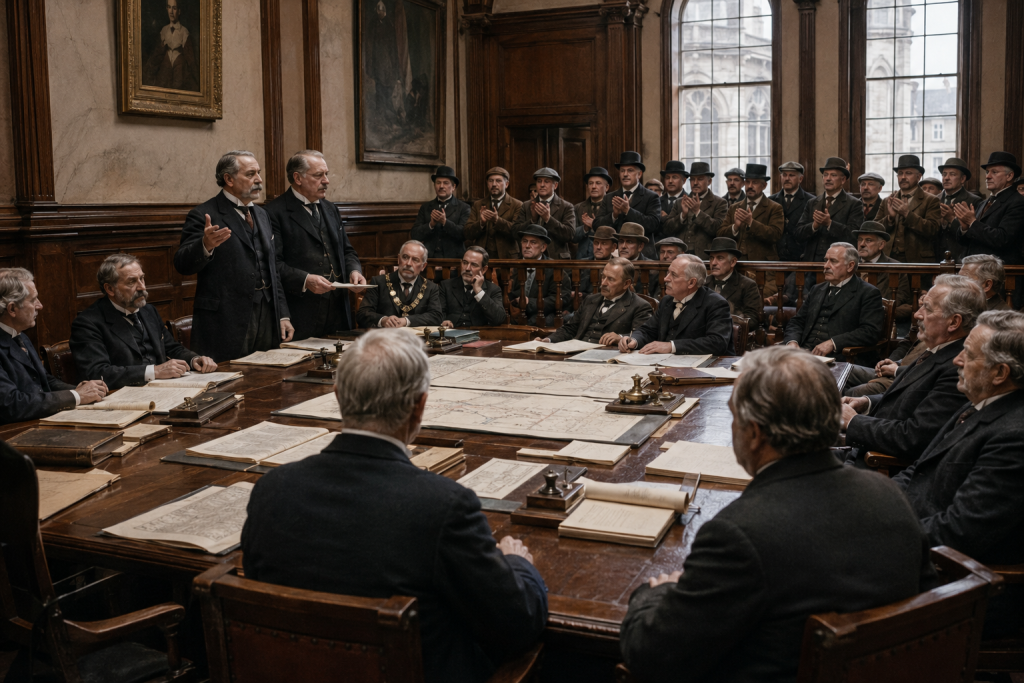
Limerick Corporation unanimously authorised formal opposition to the proposed sale of the Waterford, Limerick and Western Railway to the Great Southern and Western Railway. At a special meeting reported on 5 January 1900, William L. Stokes, JP, moved that the Corporation’s solicitor be empowered to resist the scheme and take every necessary step on the city’s behalf. Councillor O’Brien seconded the motion. Several interested citizens attended beyond the council barrier, reflecting the strength of public concern surrounding the renewed amalgamation bill. The resolution was carried unanimously and received applause from those observing the proceedings.
The Corporation confined its decision to the Great Southern and Western proposal, rejecting a suggestion that the resolution should also cover a possible purchase by the Midland Great Western Railway or another company. Alexander Shaw, invited to address the meeting, argued that the new bill differed little from the unsuccessful measure promoted during 1899. He warned councillors against accepting promises and guarantees merely because they appeared reassuring in the company’s proposals. In his view, safeguards written into legislation might later prove ineffective, while the commercial consequences of surrendering an independent railway could endure for generations.
Opponents feared that absorption would strengthen the Great Southern and Western Railway’s control over transport throughout southern and western Ireland. The Waterford, Limerick and Western system connected Limerick with Waterford, Sligo, Tralee, Foynes and important agricultural districts. Its independence offered at least some competitive restraint upon freight charges, routes and commercial priorities. Corporation members were therefore concerned that a larger undertaking might favour Dublin or other ports, alter rates and direct traffic away from Limerick. The dispute involved more than railway ownership: merchants, harbour interests, workers and ratepayers believed the city’s future prosperity could be shaped by decisions made within a distant corporate headquarters.
John F. Power subsequently addressed the meeting in favour of amalgamation, demonstrating that opinion among prominent Limerick citizens was not entirely uniform. Supporters could point to the financial strength, integrated services and promised improvements available through a larger railway company. The Corporation nevertheless accepted the opposing case without a dissenting vote. Stokes claimed that an overwhelming majority of citizens resisted the sale, while Shaw urged cooperation with the Harbour Commissioners, chambers of commerce and other public bodies. Legal opposition would be costly, but councillors concluded that the expense was small compared with the losses the city might suffer under an effective railway monopoly.
The Corporation’s campaign did not ultimately prevent the takeover. Parliamentary debate continued through the summer, with opponents warning that amalgamation would extinguish useful competition and supporters arguing that the Waterford, Limerick and Western Railway lacked the strength to compete effectively. The Great Southern and Western and Waterford, Limerick and Western Railways Amalgamation Act received approval in August 1900, and the absorption took effect at the beginning of 1901. Limerick Corporation’s unanimous resolution nevertheless recorded a determined municipal defence of local commercial independence, placing the elected city authority alongside harbour and business interests resisting railway concentration.
- Irish Times, “Waterford Railway Purchase: Action of Limerick Corporation,” 5 January 1900, p. 3.
- Limerick Corporation Council minutes, January 1900, Limerick Corporation Collection, Limerick Archives.
- House of Commons Debates, “Great Southern and Western and Waterford, Limerick, and Western Railway Companies Amalgamation Bill [Lords],” 1 August 1900, vol. 87.
- Reports from the Joint Select Committee on the Great Southern and Western and Waterford, Limerick, and Western Railway Companies Amalgamation Bill, Parliamentary Papers, 1900, paper 196, vol. X.
- Great Southern and Western and Waterford, Limerick and Western Railways Amalgamation Act 1900, 63 & 64 Vict., c. ccxlvii.
- Limerick Harbour Commissioners Collection, IE LA P2, board and secretary records concerning opposition to railway amalgamation, Limerick Archives.
- Gerard Hannan, “Limerick — January 1900,” transcription and source notes reproducing the Corporation proceedings and identifying the Irish Times report of 5 January 1900.