Archived: 30 October 2026
Abstract
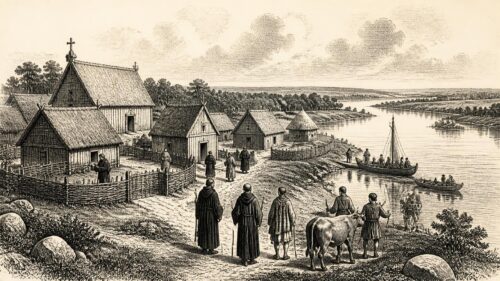
Conventionally dated to 768, the annals record transitions rather than a national crisis in Ireland. Dub Innrecht, Uí Briúin king of Connacht, died from bloody flux, creating an undocumented succession question but not evidence of epidemic or civil war. Ecclesiastical leadership changed with the deaths of Aedán of Lismore, the senior abbot at Clonmacnoise, Fer dá Crích son of Suibne at Armagh, and Coibdenach of Cell Tóma. Eithne of Brega, styled queen of Tara’s kings, was praised for penance. These selective notices illuminate intertwined dynastic, religious and economic authority in a rural, fragmented Ireland connected to Britain through learned networks.
Read Article
Archived: 31 October 2026
Abstract
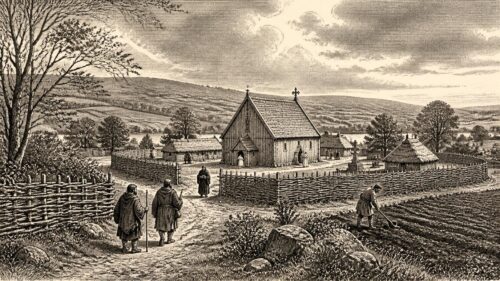
In 763, Domnall Midi of Clann Cholmáin, king of Tara, died at Durrow on 20 November, ending a southern Uí Néill ascendancy. Niall Frossach of Cenél nÉogain then began to rule, restoring the leading overkingship to the northern Uí Néill amid a contested political order rather than a unified monarchy. Annals also record Connacht’s severe but unexplained defeat at Cuilnech Mór and fighting between Munster peoples. Deaths of abbots and clerics at several major churches reveal an extensive ecclesiastical network. A daytime darkening of the sun was noted, though its cause and meaning remain unknown. Kingship, warfare and church intertwined.
Read Article
Archived: 31 October 2026
Abstract
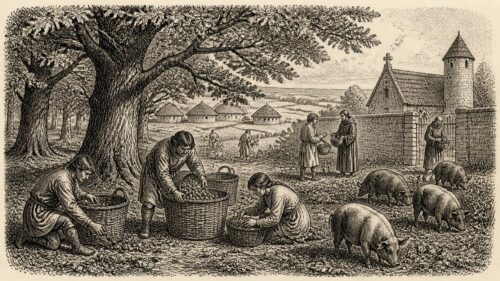
In 760, Irish annals recorded famine alongside an exceptional acorn crop, highlighting food insecurity despite local abundance and unequal access to resources. Political change followed the death of Leinster ruler Muiredach, while a battle at Belach Gabráin exposed rivalry between Leinster and Osraige. Ecclesiastical institutions were equally entangled in conflict: communities of Clonmacnoise and Birr fought, and a bishop was killed at Kildare’s altar, reportedly prompting a liturgical restriction. Death notices for rulers and churchmen reveal networks spanning Ireland. Though chronologically uncertain and selective, the annals portray a divided, interconnected society shaped by scarcity, dynastic competition, church power, and violence.
Read Article


