Membership is completely free, giving members unlimited access to all available resources, services, features, and benefits without any restrictions or fees.
Welcome back. Sign in to continue enjoying unlimited access to all available resources, services, features, and member benefits at no cost.
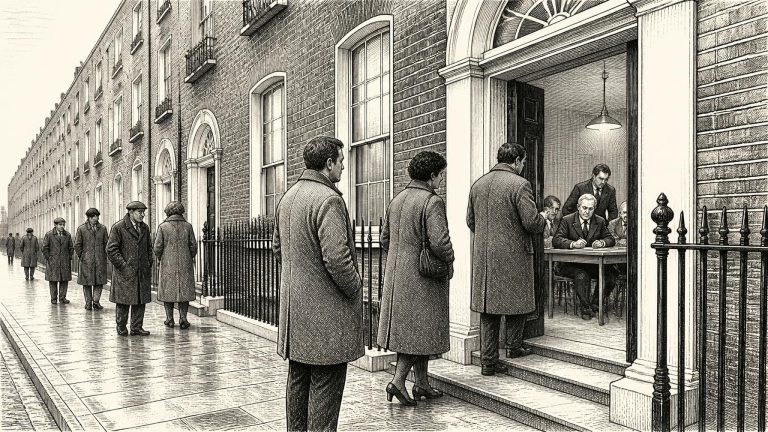
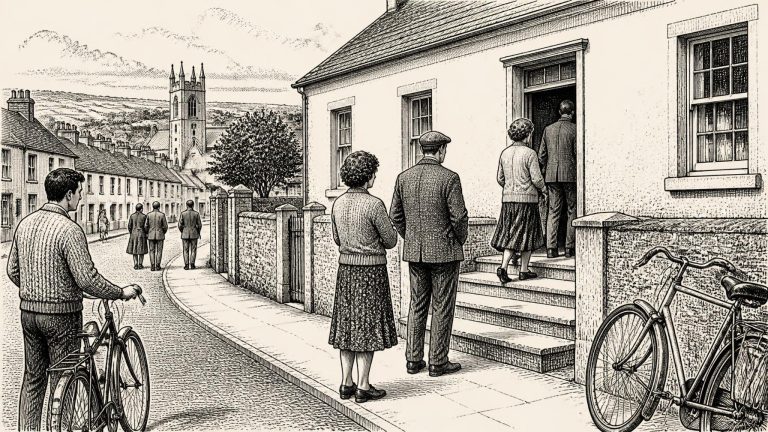
The Republic’s general election of Thursday 15 June was the immediate political turning point. Charles Haughey’s Fianna Fáil remained the largest party, winning 77 seats in the 166-seat Dáil, but it fell short of an overall majority. Fine Gael increased its representation to 55 seats, while Labour rose to 15 and the Workers’ Party to seven. The Progressive Democrats, founded in 1985 after a breakaway led by Desmond O’Malley, suffered a sharp electoral decline from their 1987 high, returning only six TDs. Nonetheless, their small parliamentary group acquired exceptional importance because Fianna Fáil needed a partner.
On 11 January John Hume, leader of the Social Democratic and Labour Party, met Gerry Adams, president of Sinn Féin. The encounter was exceptional. Hume led a constitutional nationalist party committed to peaceful politics; Sinn Féin was closely associated with the Provisional IRA’s armed campaign. Both men said afterwards that a third party had prompted the meeting and that they would report to their organisations. Declassified Irish official material shows that Taoiseach Charles Haughey was informed of the contact and did not disapprove. Further private discussions continued between January and August.
The immediate political setting was the fall of Garret FitzGerald’s Fine Gael–Labour coalition. On 20 January, Labour ministers would not support the government’s proposed budget, particularly its projected cuts in health and social welfare. The Dáil was dissolved the following day. This was the fourth general election of the 1980s, a frequency which conveyed the fragility of government in a decade defined by recession, debt and emigration.
The Fine Gael–Labour coalition led by Taoiseach Garret FitzGerald entered 1986 struggling to reconcile reforming ambitions with a harsh fiscal environment. Public debt, heavy interest payments, unemployment and renewed emigration constrained policy and fostered a sense that the country’s difficulties were structural rather than temporary. An Economic and Social Research Institute study published in November, The National Debt and Economic Policy in the Medium Term, captured the central preoccupation: debt was not merely an accounting problem but a limit on the State’s room for manoeuvre.
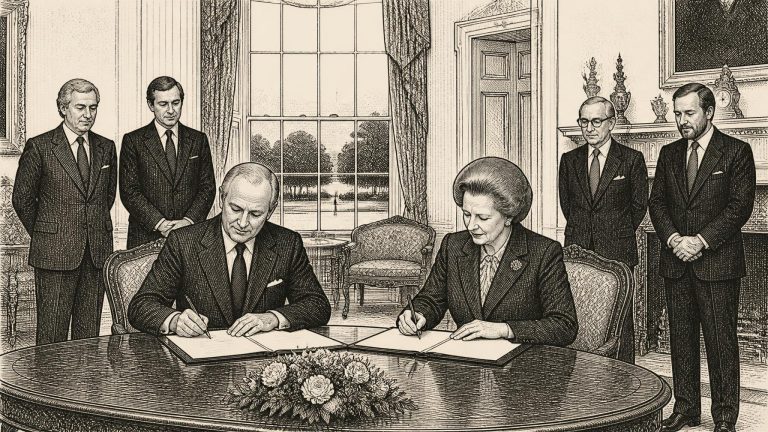
The Agreement’s central political fact was carefully framed. Britain confirmed that Northern Ireland’s constitutional position would not change without the consent of a majority of its people. Ireland, in return, gained a permanent channel through which to express views on political, legal, security and cross-border matters. An Anglo-Irish Intergovernmental Conference, supported by a secretariat based at Maryfield near Belfast, was to meet regularly. In areas where Northern Ireland lacked devolved government, Dublin could make proposals and put forward its concerns, especially on policies affecting the nationalist minority.