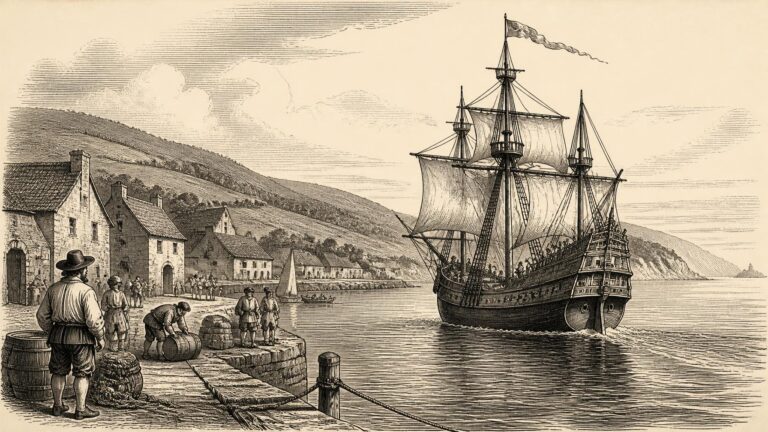
Ralegh’s Cork Departure
James I was king in 1617, and Ireland was governed in his name by Sir Oliver St John, lord deputy since the previous year. The island had emerged from the Nine Years’ War without a fresh general rebellion, but peace did not mean continuity. Dublin Castle’s authority depended increasingly on sheriffdoms, courts, land surveys, patents, military garrisons and individual interventions in local disputes. A letter of 10 April illustrates this administrative reach. The English privy council asked St John to investigate claims made by Florence MacCarthy concerning mortgaged and occupied lands in Munster. MacCarthy’s petition referred to losses suffered during ‘the troubles’ and to his own restraint in England. It is a small, specific record, but an instructive one: landholding, debt, wartime dispossession and access to royal officials could all be entangled in one lawsuit.