Archived: 26 October 2026
Abstract
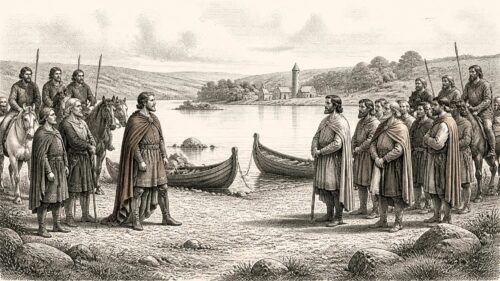
In 997, Brian Bóruma of Munster and Máel Sechnaill mac Domnaill of Tara met at Port Dá Chaineóc, probably near Lough Ree, and divided Ireland symbolically into Leth Moga and Leth Cuinn. The accord recognised Brian’s southern authority and Máel Sechnaill’s northern and midland pre-eminence without creating fixed states or peace. Transfer of Leinster and Dublin hostages gave Brian crucial leverage. Dublin remained an influential, diverse trading port, beginning coinage around this time. Elsewhere, warfare, plundering and political mutilation continued, while ecclesiastical successions mattered publicly. The settlement marked Brian’s rise, but later conflict determined his eventual wider dominance across Ireland.
Read Article
Archived: 26 October 2026
Abstract
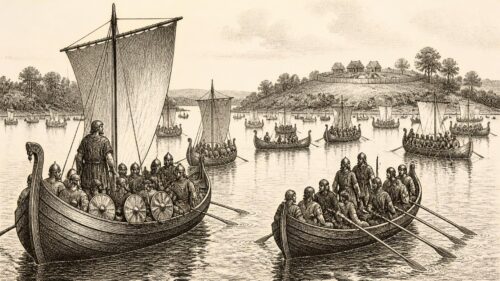
In 988, Brian son of Cennétig, Munster’s dominant ruler, launched a fleet of 300 vessels onto Lough Ree, using the Shannon waterways to raid Mide and reach Uisneach. The expedition demonstrated mobilisation and challenged the political landscape dominated by Máel Sechnaill of Tara, but did not establish Brian’s rule over Ireland. A detachment of twenty-five boats entering Connacht suffered heavy losses, although it killed Muirgius, a Connacht royal heir; Dúnlang, a prominent ally, also died. Differing annalistic year systems complicate dating. The campaign formed part of Brian’s wider waterborne strategy, revealing ambition, logistical capacity, and the resilience of rival kingdoms.
Read Article
Archived: 26 October 2026
Abstract
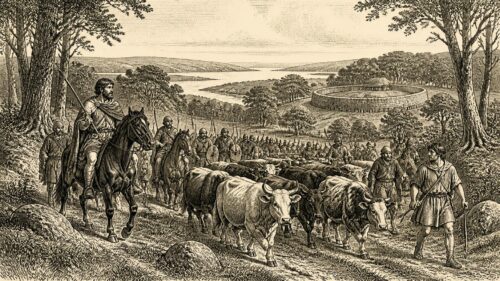
In 985, Ireland remained divided among competing regional kingships rather than united under a single state. Máel Sechnaill of Mide raided Connacht, destroying crannógs and killing chieftains, while internal conflict included the death of Fearghal of the Fiachra kindred. In Munster, Brian son of Cennétig retaliated after Déisi men stole three hundred cattle from his mercenaries, devastating the territory and pursuing Domnall son of Faelán to Waterford. An abundant mast crop aided rural livestock husbandry. Leinster’s king, Diarmait son of Uathmarán, died. Annals securely date these events to 985, illustrating warfare, resources, local authority and unstable political relationships across Ireland.
Read Article

