
Archived: 11 October 2026
Abstract
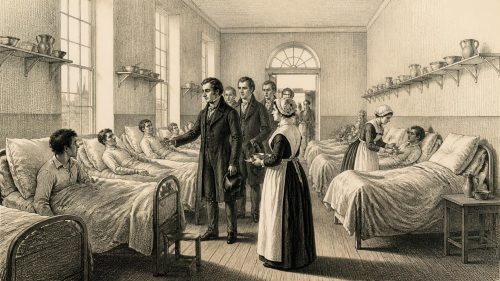
In 1819, Ireland faced continuing fever, hunger and unemployment after the post-war downturn and bad seasons. Sir John Newport’s Commons committee investigated contagious disease and labouring poverty, linking epidemic conditions to destitution while favouring regulated charity, fever hospitals and work over an Irish poor law. The Fisheries Act sought employment and food through managed fisheries, but offered limited immediate relief. Henry Grattan’s Catholic emancipation motion narrowly failed, confirming enduring political exclusion. John Devereux recruited an Irish Legion for Bolívar’s cause, though recruits suffered overseas. Belfast founded the Irish Harp Society, while Ribbonism reflected rural tension. The year exposed persistent insecurity.
Read Article
Archived: 11 October 2026
Abstract
In 1817, Ireland faced severe scarcity, unemployment and typhus amid poor harvests and post-Napoleonic depression, though not an island-wide famine comparable to the Great Famine. Dublin fever surged in September, prompting Dr Steevens’ Hospital to open emergency wards for labourers, artisans and servants. Relief depended on fragmented charities, local bodies and government employment schemes, while new legislation addressed public works, grand-jury finance and institutional care. Fiscal integration with Britain advanced, and Catholic emancipation remained unresolved. Despite crisis, the Royal Canal reached Cloondara, Dunleary harbour construction began, temperance emerged in Skibbereen, and O’Reilly published an Irish-English dictionary, carefully preserving linguistic knowledge.
Read Article
Archived: 11 October 2026
Abstract
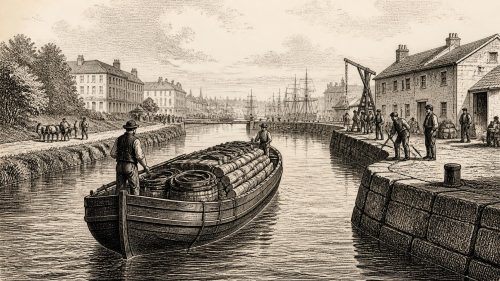
In 1804, Ireland remained shaped by the legacy of 1798, the Union and war with France. James Corcoran’s guerrilla band was destroyed near Enniscorthy, while transported Irish prisoners invoked Vinegar Hill during the failed Castle Hill rebellion in New South Wales. Invasion fears prompted a gun tower at Sutton and Edgeworth’s short-lived Dublin–Galway semaphore. Economic integration advanced when The Ranger completed the commercial Grand Canal passage from the Shannon to Dublin. Cork Street Fever Hospital admitted its first patients, providing isolation and care in the Liberties. These developments reveal governance, defence, infrastructure and philanthropy amid unresolved political and social grievances.
Read Article


