Archived: 4 October 2026
Abstract
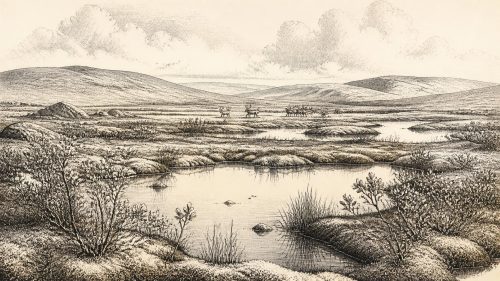
30,291 BCE is a modern label rather than a recoverable Irish historical year. At Derryvree, County Fermanagh, freshwater silts and organic deposits between glacial tills indicate a cold, open, tundra-like wetland during a broad MIS 3 interval, although radiocarbon calibration cannot date a precise moment. Plants included sedges, grasses, mosses, dwarf willow and aquatic species. Cave fauna elsewhere, notably Castlepook, records mammoth, reindeer, giant deer and predators, but not a contemporaneous census. Climatic shifts preceded later ice-sheet expansion, which destroyed or buried evidence. No secure human occupation is known; a possibly cut-marked reindeer bone offers only tentative Upper Palaeolithic evidence.
Read Article

Archived: 29 September 2026
Abstract
At roughly 30,501 BCE, Ireland lay within the climatically unstable Late Pleistocene, not a precisely knowable historical year. Derryvree, County Fermanagh, preserves freshwater sediments between glacial tills, indicating a temporary ice-free, periglacial landscape of wetlands, open ground and tundra vegetation. Its radiocarbon date spans a broad calibrated range, underscoring chronological uncertainty. Ice extent varied regionally before the later Last Glacial Maximum. Castlepook Cave, County Cork, contains mixed faunal remains, including mammoth, giant deer, reindeer, bear and hyaena, from different periods. A possibly cut-marked reindeer bone suggests brief human activity, but no settled population, farming, society or permanent occupation is established.
Read Article
Archived: 27 September 2026
Abstract
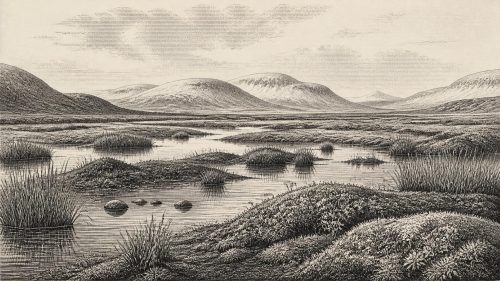
The nominal date 30,601 BCE cannot identify an Irish event, but falls within the broad age range of Derryvree’s freshwater deposits in modern County Fermanagh. Sediments between two till layers record a cold, locally ice-free interstadial wetland before renewed glaciation. Mosses, sedges, bogbean and Arctic-alpine plants indicate open, treeless tundra-like conditions, although seasonal liquid water sustained life. Cave remains at Castlepook reveal varied Ice-Age fauna, but accumulated over long periods and cannot reconstruct one moment. A cut-marked reindeer bone may indicate human activity, yet proves neither settlement nor society. Environmental change, culminating in ice-sheet expansion, is the period’s clearest story.
Read Article

Archived: 10 September 2026
Abstract
Labelled 31,827 BCE only for modern chronology, this period belongs broadly to later Marine Isotope Stage 3, when Ireland experienced unstable Ice Age climates before maximum glaciation. At Derryvree, County Fermanagh, freshwater silts between glacial tills, dated approximately 36,900–31,700 calibrated BP, reveal cold, marshy tundra-steppe supporting aquatic plants, insects and local ecological variation. Castlepook Cave, County Cork, preserves MIS 3 fauna including mammoth, giant deer, reindeer, horse, hyaena and Arctic species, demonstrating changing animal habitats. Possible tool damage on a reindeer bone suggests, but cannot establish, human activity. Lower seas aided movement uncertainly; no secure Palaeolithic occupation evidence exists yet.
Read Article

