Archived: 8 October 2026
Abstract
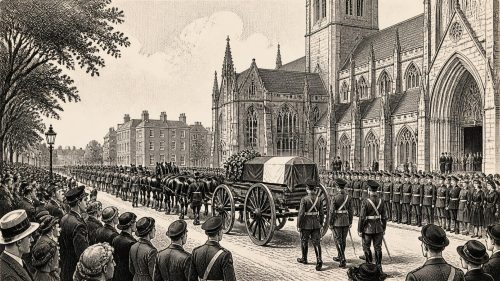
In 1949 Ireland became a republic, ending the Crown’s remaining external role, while Britain’s Ireland Act reinforced Northern Ireland’s constitutional position within the United Kingdom. Southern political leaders united publicly against partition, but efforts to link reunification with NATO membership failed. Post-war recovery remained uneven, with shortages, emigration, rural poverty and extensive state regulation continuing alongside electrification, statistical development and welfare administration. Housing, health and public services expanded gradually. Douglas Hyde’s funeral honoured a founder of cultural nationalism whilst exposing denominational divisions in public ceremony. The year combined republican assertion with enduring partition, social constraints, institutional growth and cultural ambition.
Read Article
Archived: 9 October 2026
Abstract
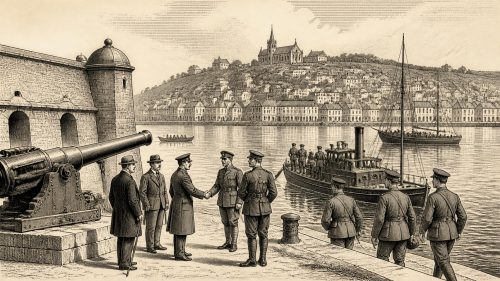
In 1938, the new Constitution acquired practical force as Ireland developed its institutions and position. Douglas Hyde, cultural revivalist and Church of Ireland scholar, became first President, symbolising an inclusive national identity, though disputes persisted. April agreements ended the Economic War: Ireland paid £10 million, Britain removed special duties, and the Treaty Ports at Cork Harbour, Berehaven and Lough Swilly returned to Irish control. Fianna Fáil then won an overall majority. Labour legislation addressed shop workers’ conditions, but poverty, emigration and agricultural dependence continued. Partition remained unchanged despite discussions with Britain and Northern Ireland, while port recovery strengthened future neutrality.
Read Article
Archived: 9 October 2026
Abstract
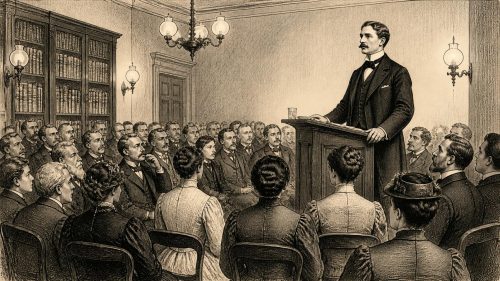
In 1892, Ireland’s general election confirmed anti-Parnellite dominance, with Justin McCarthy’s federation winning seventy-two seats against nine for John Redmond’s faction, while nationalist division persisted. Liberal victory returned Gladstone to office, making Home Rule possible but not yet enacted. Belfast’s Ulster Unionist Convention demonstrated organised resistance, and Edward Carson entered Parliament. Rural labourers founded Knights of the Plough, demanding land, wages and housing. St Macartan’s Cathedral was dedicated in Monaghan. Douglas Hyde’s Dublin address, The Necessity for De-Anglicising Ireland, urged cultural renewal through language and tradition. Census reports documented social change; Belfast also hosted Ireland’s international football match against England.
Read Article

