Membership is completely free, giving members unlimited access to all available resources, services, features, and benefits without any restrictions or fees.
Welcome back. Sign in to continue enjoying unlimited access to all available resources, services, features, and member benefits at no cost.
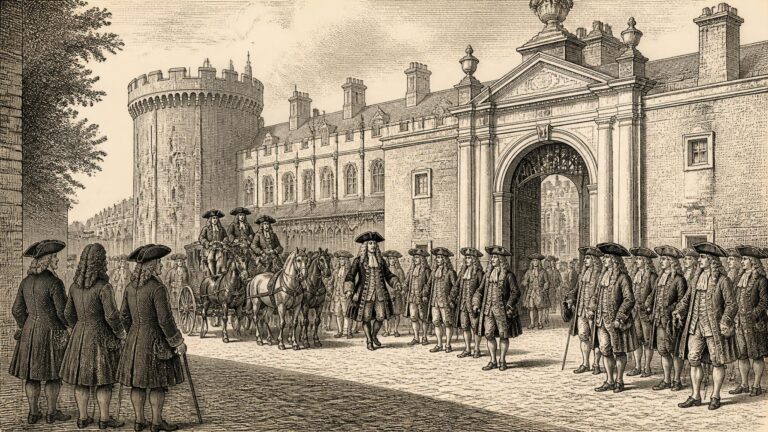
Queen Anne had succeeded William III in 1702, and James Butler, second duke of Ormond, was lord lieutenant in Ireland during 1704. His government operated in a kingdom still marked by the Williamite wars of 1689–91, confiscated estates and the political victory of the Church of Ireland. The Irish parliament was overwhelmingly Protestant in membership and outlook. Catholics were already excluded from parliament and many offices; Presbyterian and other Protestant dissenters also faced disabilities under the established religious order. The legislation of 1704 nevertheless concentrated especially on Catholics, whom Protestant politicians associated with the defeated Jacobite cause and with the Catholic powers fighting Britain and its allies in the War of the Spanish Succession.
In February, Queen Anne appointed James Butler, second duke of Ormond, lord lieutenant of Ireland. The appointment mattered because Ormond was not merely an official sent from London. He was an immensely wealthy Anglo-Irish magnate, heir to a name with deep political and territorial roots in Ireland, and he possessed connections in both houses of the Irish parliament. Anne’s ministers hoped that his standing could make a difficult parliamentary session manageable.
On 13 April Richard Butler was appointed lord deputy to act during his father’s absence. Ormond and his duchess sailed from Ireland on 3 May, and Arran was sworn in shortly afterwards. The distinction matters. Ormond did not surrender the lord lieutenancy: he remained the king’s senior representative and the decisive connection between Irish administration and the court. Arran, however, was physically present to chair government, receive petitions, oversee officials and communicate with England. His appointment was also dynastic. Since the death of Arran’s elder brother, Thomas, earl of Ossory, in 1680, Arran had become the principal adult son available to sustain the duke’s political and familial interests.
The central firmly dated event was Plunkett’s death at Tyburn on 1 July 1681 in the English and Irish calendar then in use. England and Ireland still followed the Julian calendar; the corresponding Gregorian date was 11 July. The distinction explains why modern accounts sometimes give different July dates for the same execution.
In 1669, Irish government changed hands, though not in a manner that promised a clean break. On 14 February Charles II announced his intention to remove James Butler, duke of Ormond, from the lord lieutenancy. Ormond had been the dominant figure in Restoration Ireland since taking office in 1662: an exceptionally well-connected Protestant magnate, a royalist survivor of the wars, and the architect of much of the practical settlement that followed them. His replacement was John, Lord Robartes, formally appointed lord lieutenant on 3 May. The transfer matters because it exposed a central fact of Restoration rule: Ireland was governed from Dublin, but decisive political calculations were made at the English court.
The Act of Settlement of 1662 had attempted to reconcile claims that could not all be met from the land available. Cromwellian soldiers and financial ‘adventurers’ had received Irish estates after the 1650s conquest. Protestant royalists who had lost out during the Commonwealth also expected recompense. So did some Catholic proprietors who had remained loyal to the Stuart crown, qualified under earlier peace agreements, or could establish legal ‘innocence’ under the exacting post-war rules. Each claim rested on a different account of service, suffering and loyalty; all competed for the same confiscated land.