

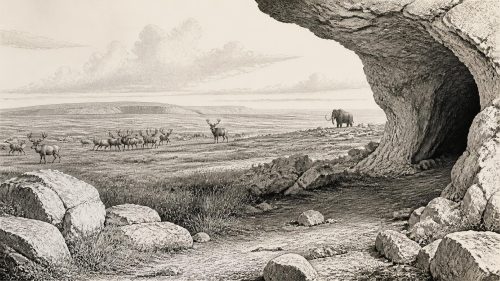
Cork’s Mammoth-Steppe Mosaic
Archived: 15 September 2026
Abstract
Around 31,674 BCE, Ireland lay within the variable MIS 3 phase of the last glacial period, before the Last Glacial Maximum. Rather than a uniformly frozen landscape, it contained regionally diverse open habitats of grasses, sedges, shrubs and wet ground, shaped by changing ice and lower seas. Castlepook Cave in north Cork preserves bones of mammoth, reindeer, giant deer, hyaena and other cold-adapted animals, indicating a dynamic food web, though deposits span long periods. Sediments elsewhere provide botanical evidence. A marked reindeer femur may indicate human visitation, but remains contested. No evidence supports permanent settlement, polities, beliefs or continuous occupation.