Membership is completely free, giving members unlimited access to all available resources, services, features, and benefits without any restrictions or fees.
Welcome back. Sign in to continue enjoying unlimited access to all available resources, services, features, and member benefits at no cost.
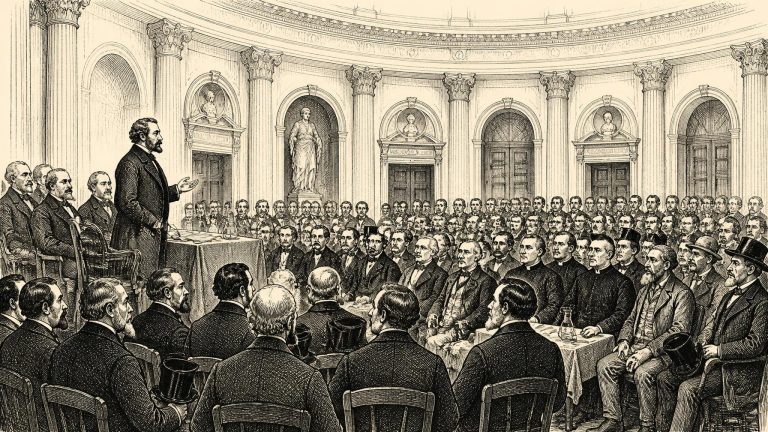
The Irish university question had long been inseparable from denominational division. Trinity College Dublin possessed ancient wealth, prestige and a Protestant institutional inheritance. The Queen’s Colleges at Belfast, Cork and Galway, created in the 1840s and linked through the Queen’s University, offered non-denominational instruction. Yet many Catholic bishops and lay leaders regarded the latter arrangement as inadequate, and regarded a Catholic university education under Catholic supervision as essential. The Catholic University, associated above all with John Henry Newman in an earlier phase, did not possess the secure public endowment or degree-granting position its advocates wanted.
On 1 January, a lighthouse was established on Fastnet Rock, some 6.5 kilometres south-west of Cape Clear. It replaced the older Cape Clear light, whose elevated position was too often defeated by mist. The decision had acquired added urgency after the loss of the American packet ship Stephen Whitney near Crookhaven in December 1847. Fastnet lay on a major Atlantic approach, familiar to vessels carrying emigrants, imported goods and passengers between Ireland, Britain and the wider world.
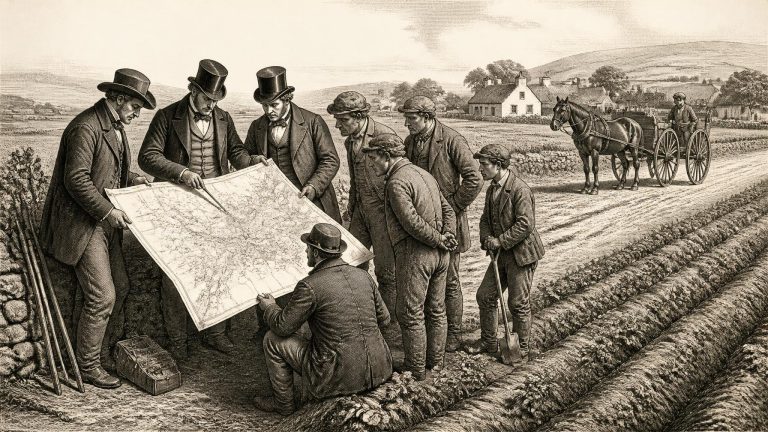
In 1838 Ireland was being newly described, counted and redesigned by the state, even as much of the population lived with severe insecurity. The year did not bring a single dramatic Irish rebellion or constitutional settlement. Its importance lies instead in a cluster of firmly dated measures and reports that exposed the condition of the country and created institutions which would shape daily life for generations. Parliament passed the Irish Poor Law on 31 July. On 15 August it converted tithes into a rent-charge. In Cork, Father Theobald Mathew made temperance a mass public cause. And, in June, the final report of the Irish Railway Commissioners offered a startlingly detailed account of population, food, traffic and economic weakness, while proposing a railway future that was still largely unrealised.