
Welcome to Emerald Archives
Emerald Archives presents Ireland’s story one reference year at a time, from the deep prehistoric past to the modern era. Each article explores the evidence, people, places and developments associated with a particular year and places them within their wider historical setting. The collection brings together archaeology, politics, society, religion, culture, conflict, everyday life and changing landscapes in one continuously expanding timeline. New articles appear here as the archive grows. You can also explore the full Irish History Timeline, search the archive directly, or use Explore to move through the collection by period and subject.
Start Exploring
Choose a route into Ireland’s past: follow the newest additions, find a particular year or subject, or browse every available period.
2020–2029 CE
Éowyn and Martin’s Return
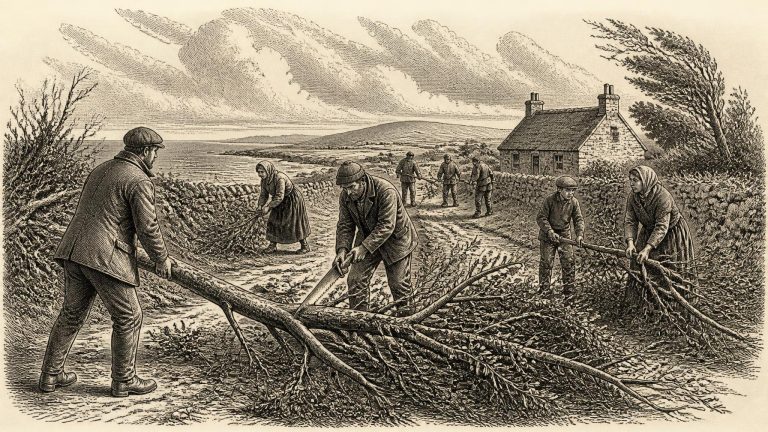
On 23 January, Dáil Éireann nominated Micheál Martin of Fianna Fáil as Taoiseach, and President Michael D. Higgins appointed him accordingly. Martin returned to an office he had previously held from 2020 to 2022. The new administration brought Fianna Fáil and Fine Gael together again, supported by the Regional Independent Group; Simon Harris of Fine Gael became Tánaiste. Its formation represented continuity as much as alteration. The two large parties of the centre-right retained control of government after the 2024 general election, but the inclusion of independents underlined the importance of local and regional priorities in an increasingly fragmented parliamentary landscape.
The Two No Votes
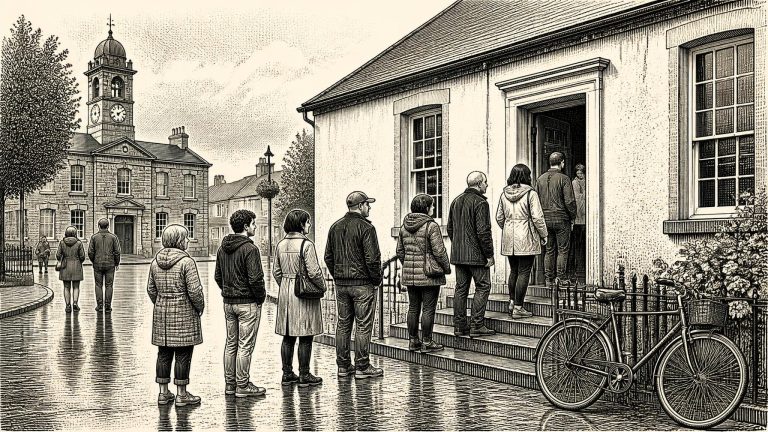
On 8 March, voters rejected both proposed amendments to Bunreacht na hÉireann concerning family and care. The Family Amendment would have widened the Constitution’s understanding of the family beyond one founded on marriage, while the Care Amendment would have replaced language referring to women’s duties in the home with a recognition of family care. Both proposals emerged from the wider process of constitutional reflection on gender equality. Yet the campaign exposed disagreement over the wording, the legal consequences of recognising care, and whether the proposed replacement language gave sufficient practical value to carers and disabled people.
Parnell Square and Five Million
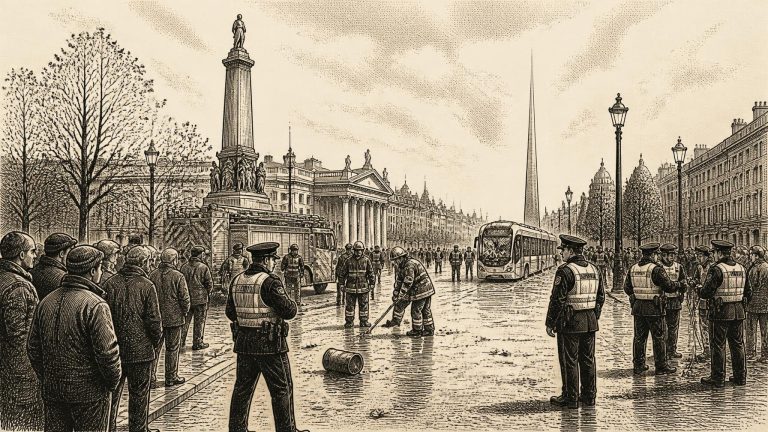
In 2023, Ireland confronted a revealing contrast: a prosperous, expanding State whose central public question was whether ordinary people could find a secure place within it. On 30 May the Central Statistics Office published the first headline results of Census 2022. The census had counted 5,149,139 people on 3 April 2022, the first population above five million since the nineteenth century. The statistic belonged to the preceding year, but its publication gave 2023 a powerful demographic landmark. Ireland had grown by 387,274 people, or 8.1 per cent, since 2016; net migration accounted for more of that increase than natural change.
Five Million and Stormont
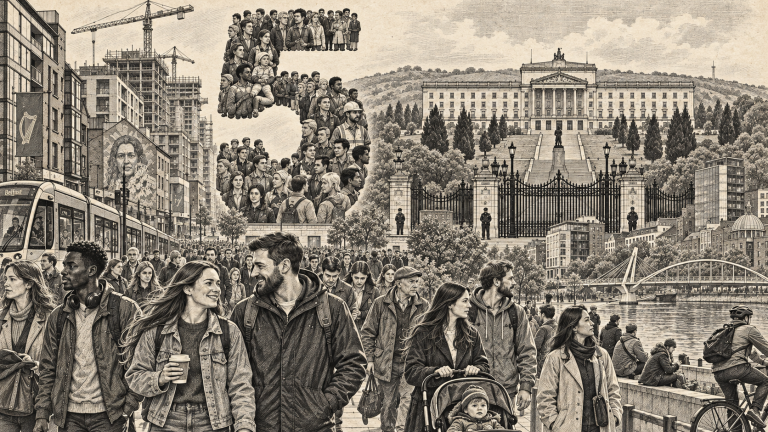
The year began under the pressure of the Omicron wave. On 5 January, the Government described infection levels as exceptionally high, even as the booster campaign offered considerable protection against severe illness. The priority was to maintain schools, hospitals and essential services while daily routines remained constrained. That context makes the speed of the subsequent reopening more striking. From 6 a.m. on 22 January, capacity limits, early closing for hospitality, Covid passes for many venues and restrictions on nightclubs were removed. A phased return to workplaces followed. Mandatory mask rules in most remaining regulated settings ended on 28 February, although public-health advice continued to urge caution, especially around vulnerable people.
Tuam, Passes and Protocol
The Republic began the year under stringent public-health restrictions following the severe winter wave of COVID-19. Household visits, travel, retail, hospitality, cultural events and much ordinary recreation were curtailed. Schools gradually resumed in March, while the reopening of construction, some outdoor activity and later retail brought visible changes during the spring. These were not straightforward returns to pre-pandemic routines: masks, distancing, capacity limits, testing, isolation and the calculation of personal risk remained embedded in daily life.
Two Kilometres From Home
The general election of 8 February produced no commanding winner. Sinn Féin won the largest share of first-preference votes, while Fianna Fáil emerged with the largest number of Dáil seats, narrowly ahead of Fine Gael. The result reflected deep dissatisfaction with housing costs, homelessness and pressures on health services, as well as a striking appetite for political change. It also demonstrated the limits of a campaign: Sinn Féin’s unexpectedly strong vote came despite standing too few candidates to convert all its support into seats.